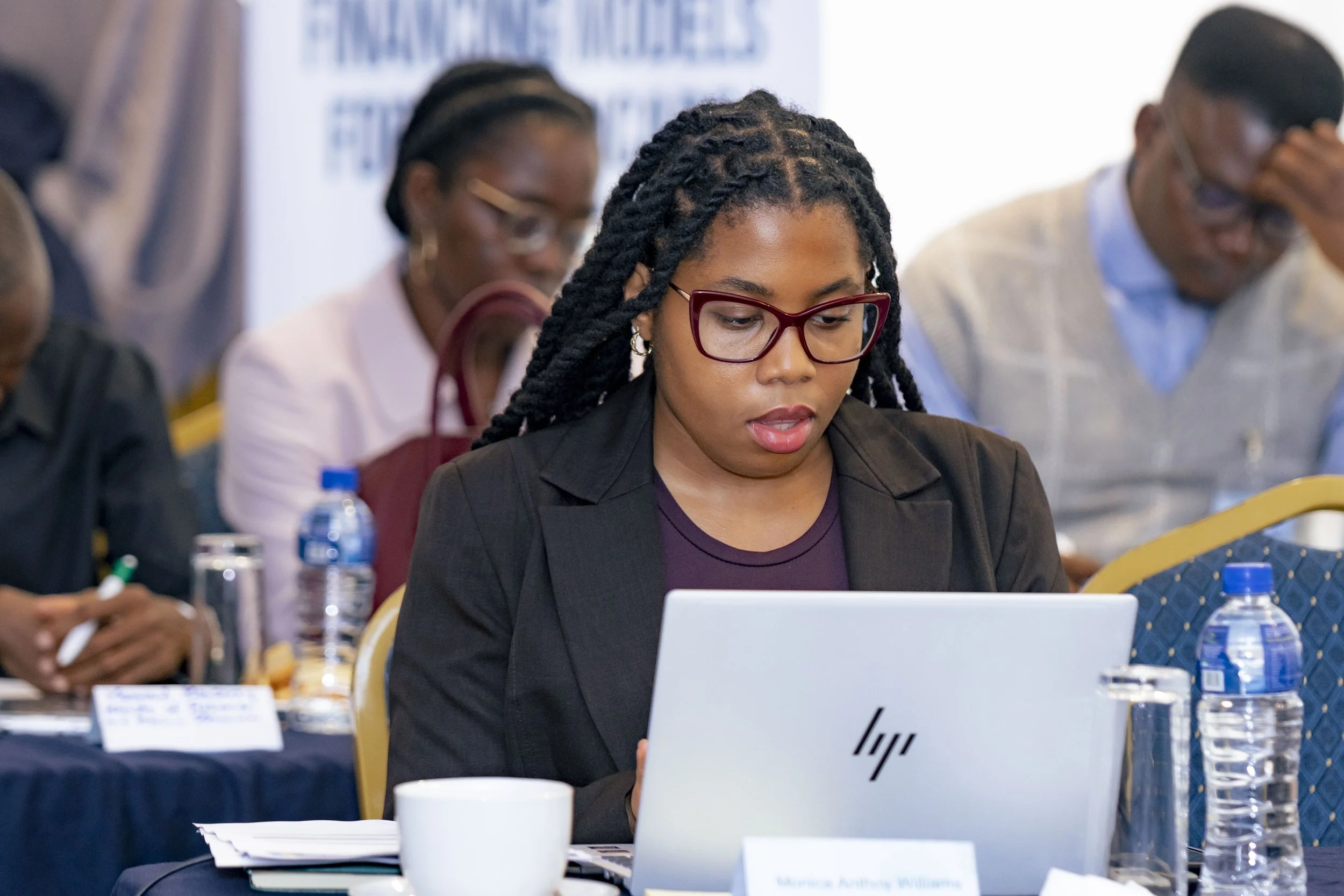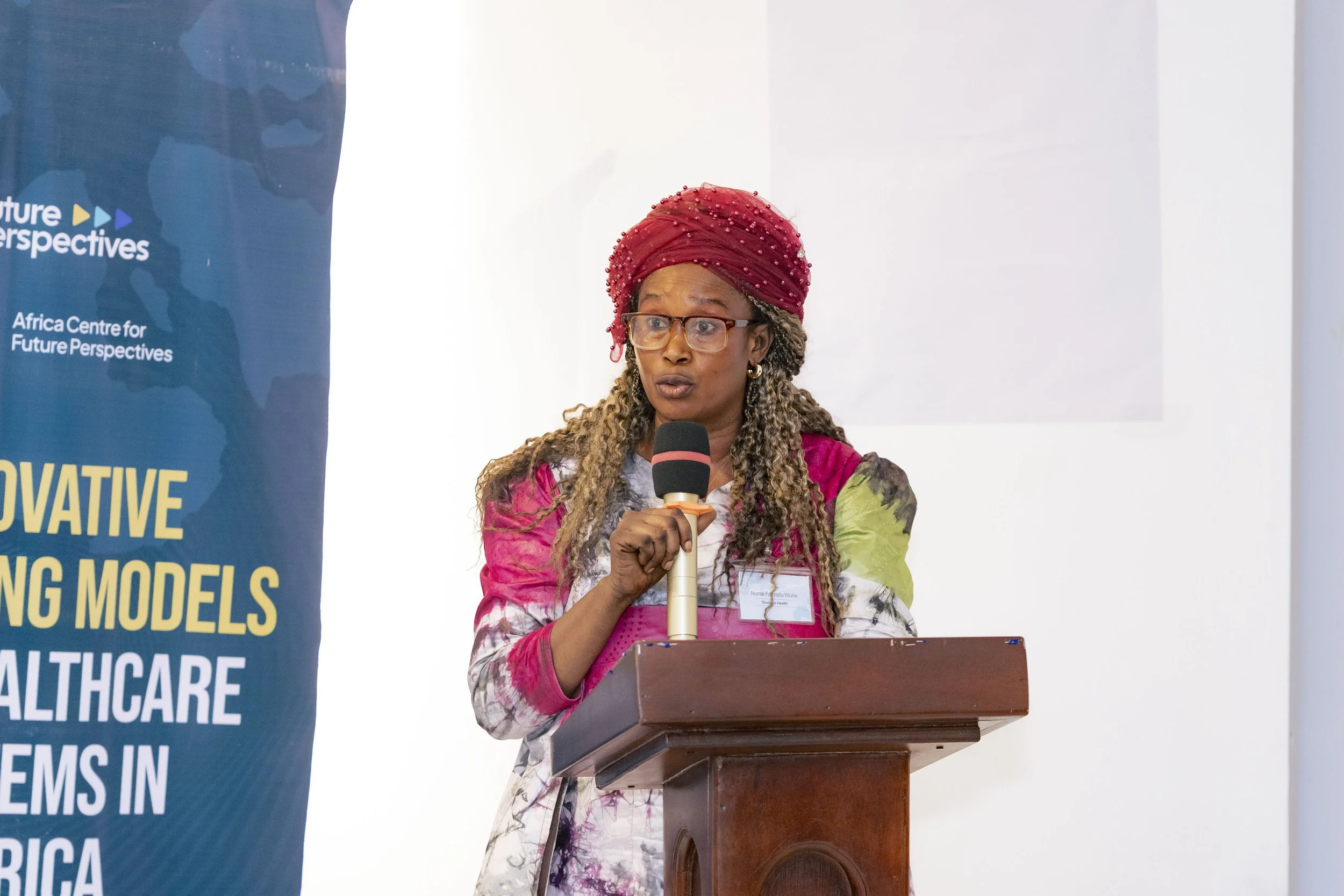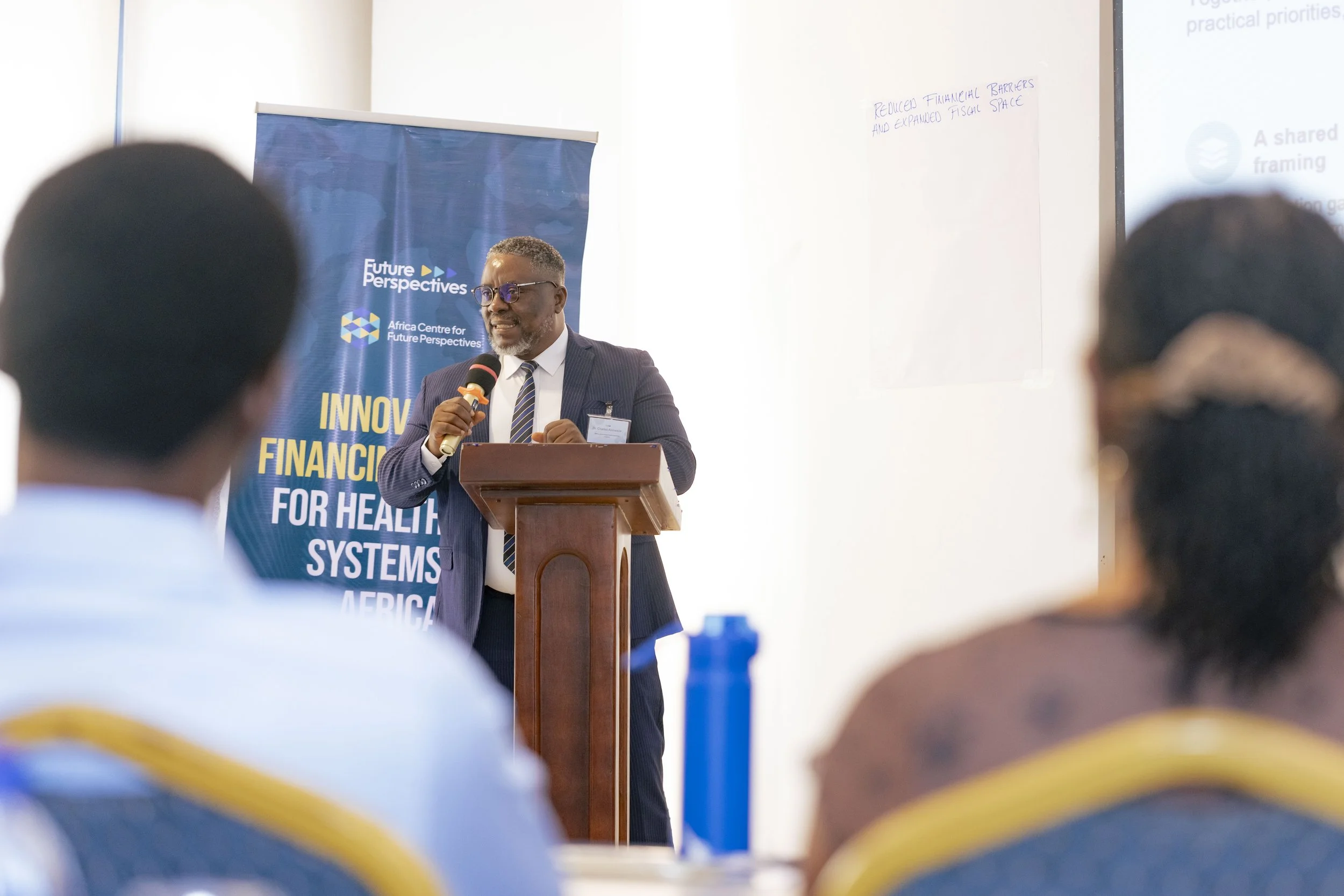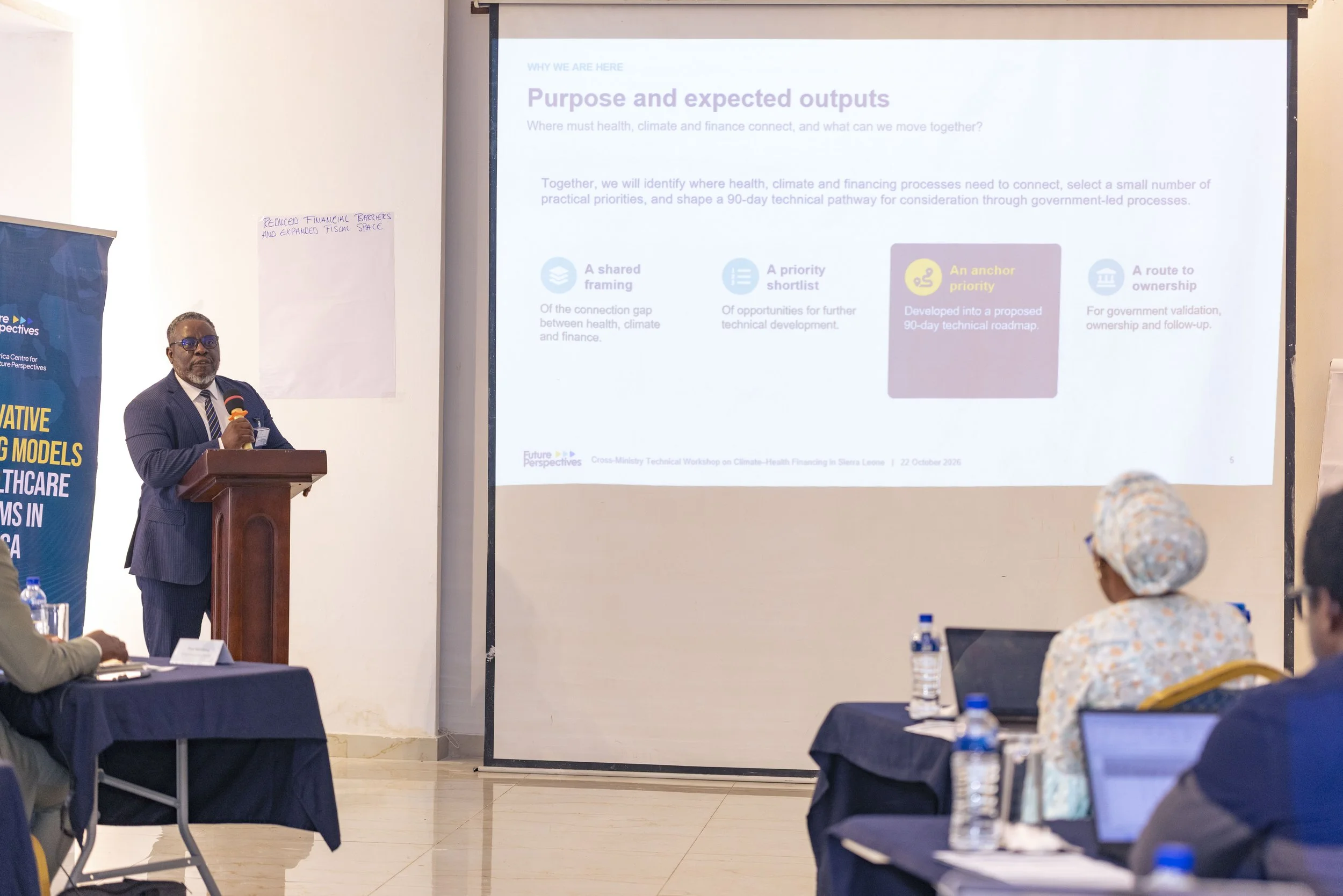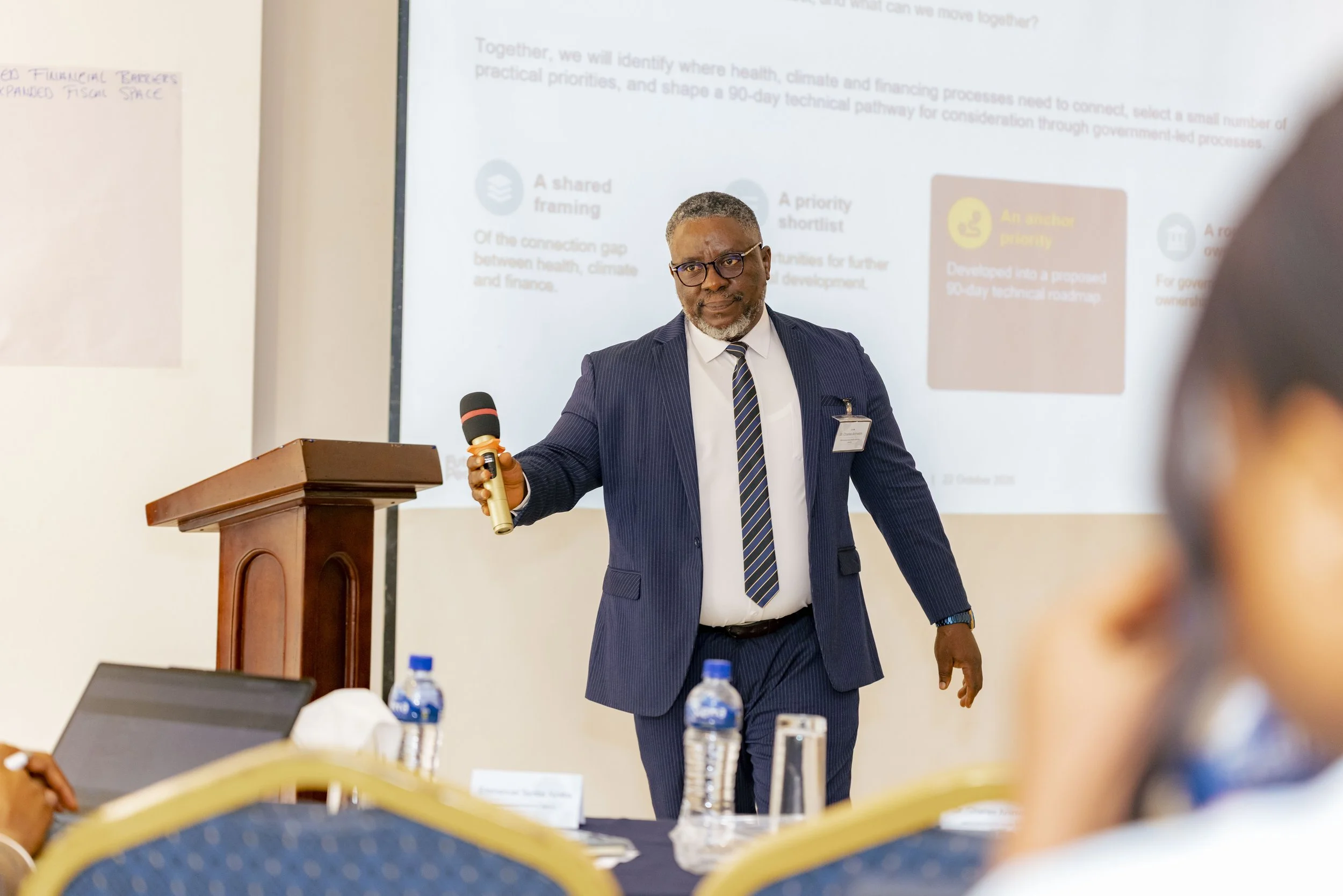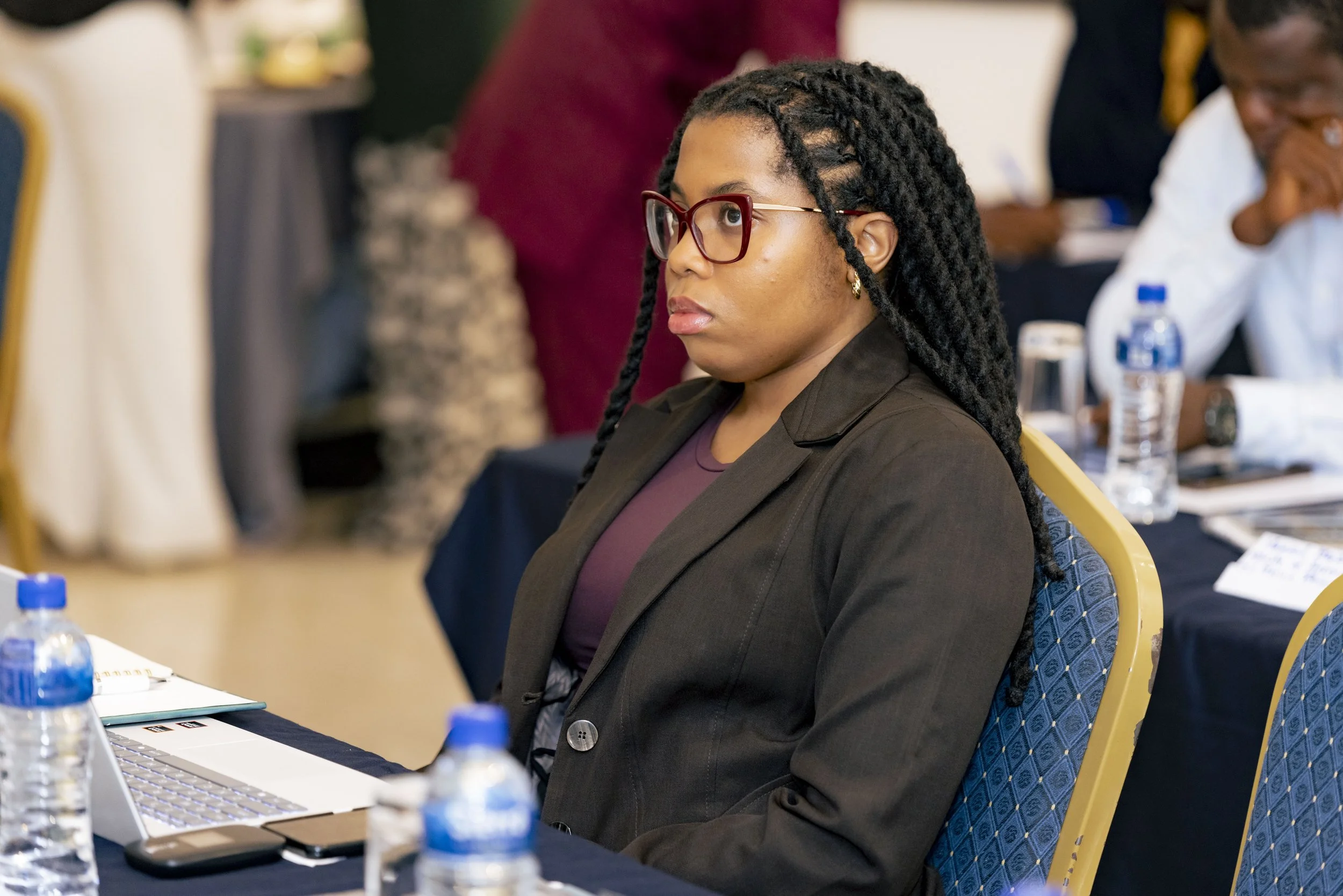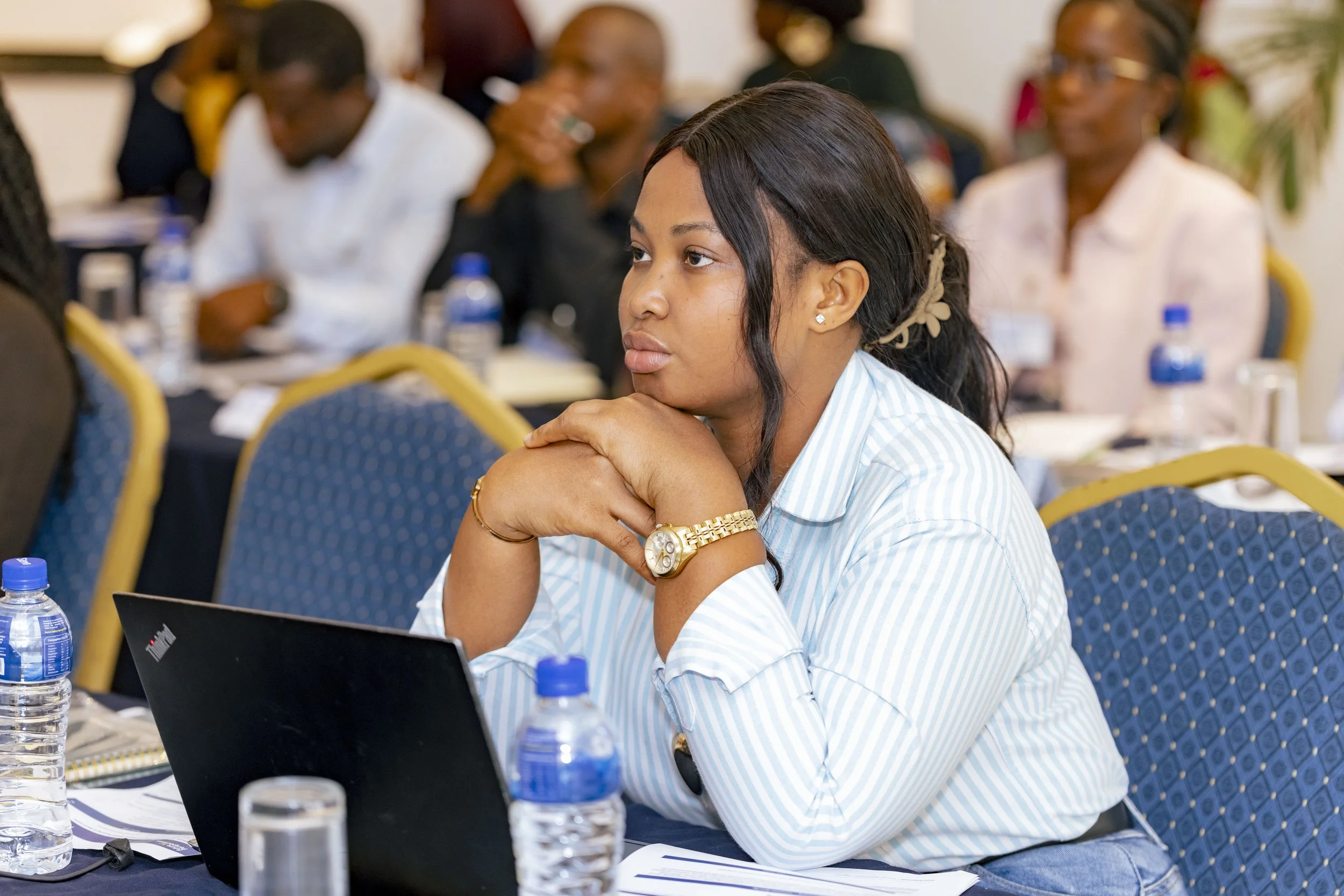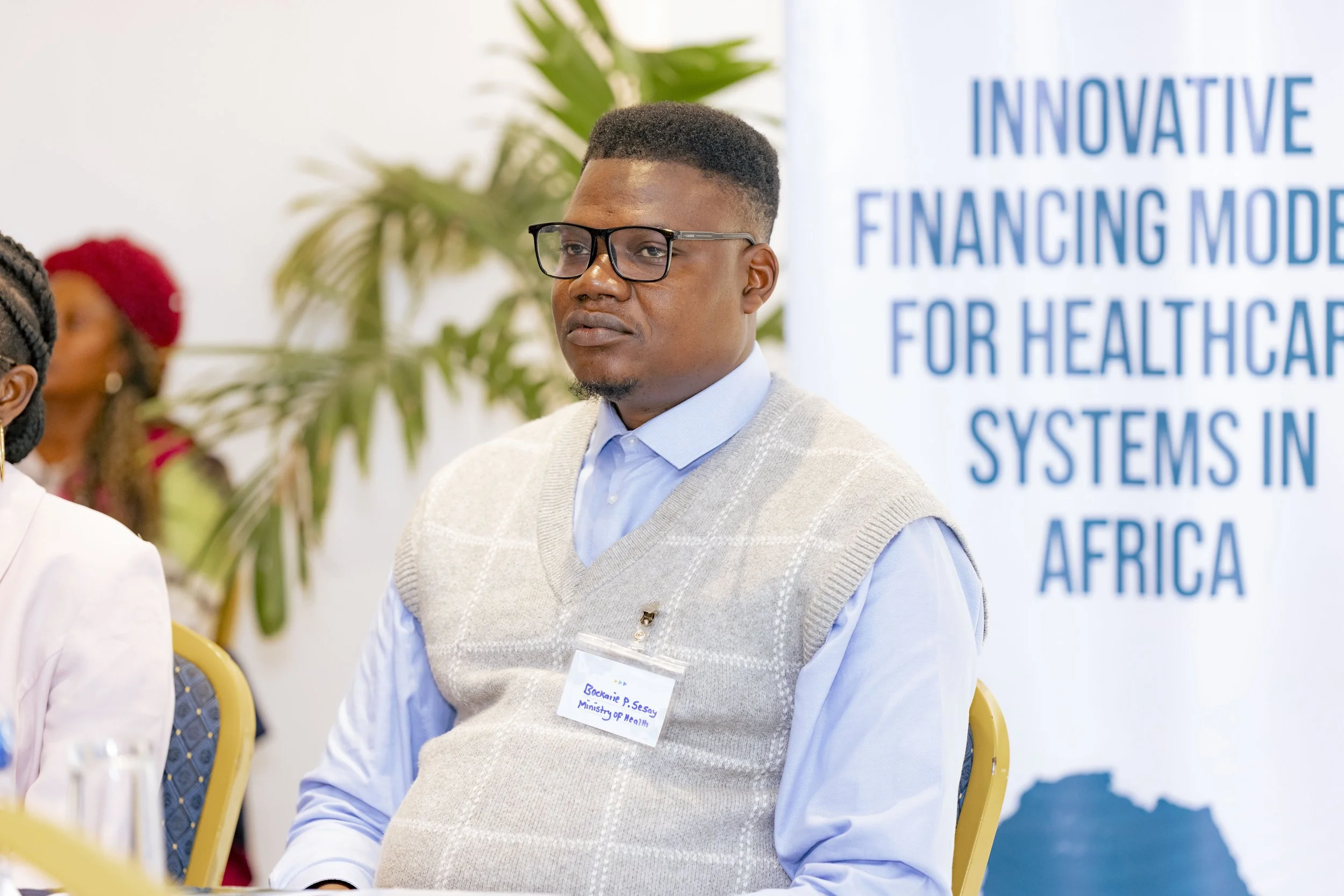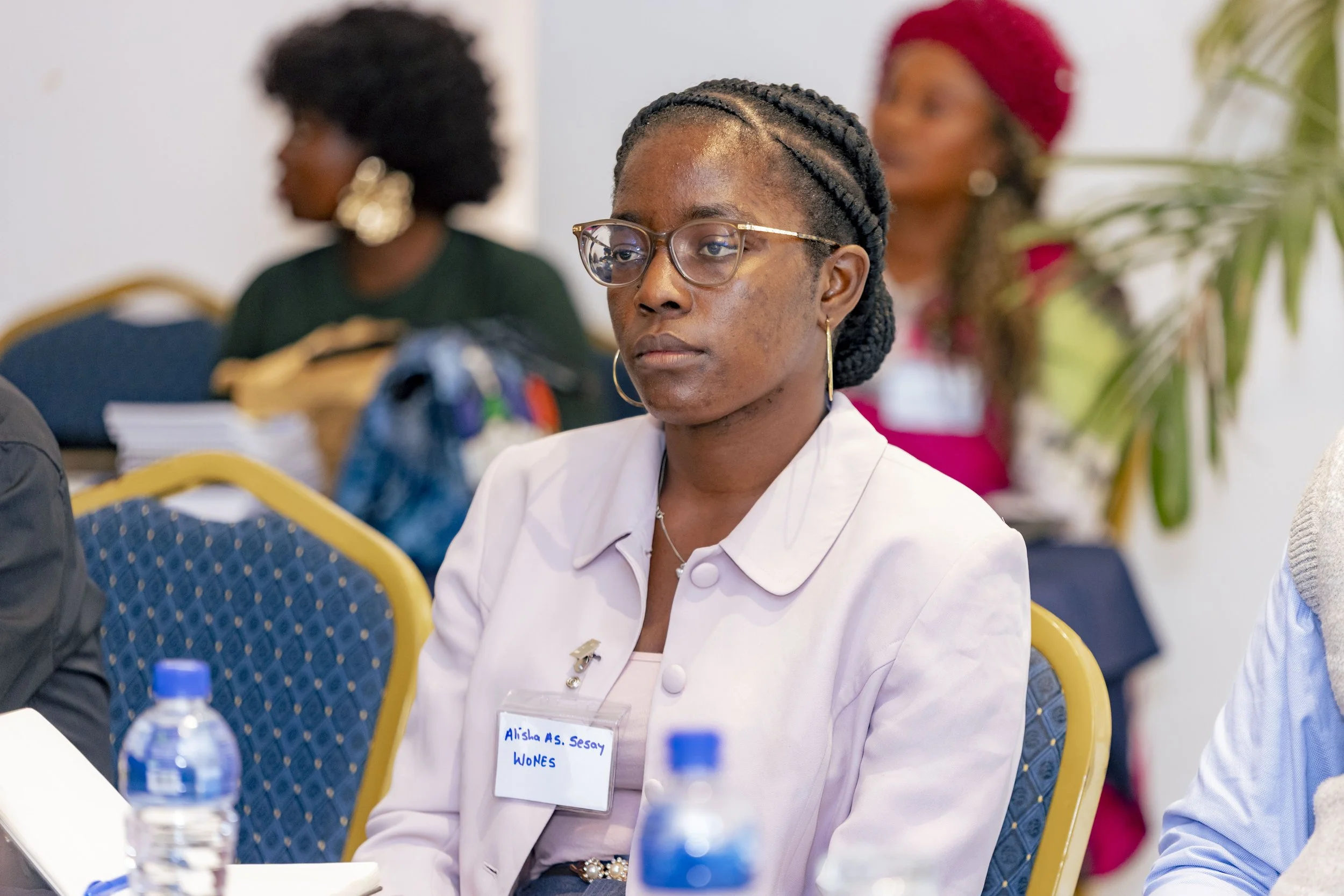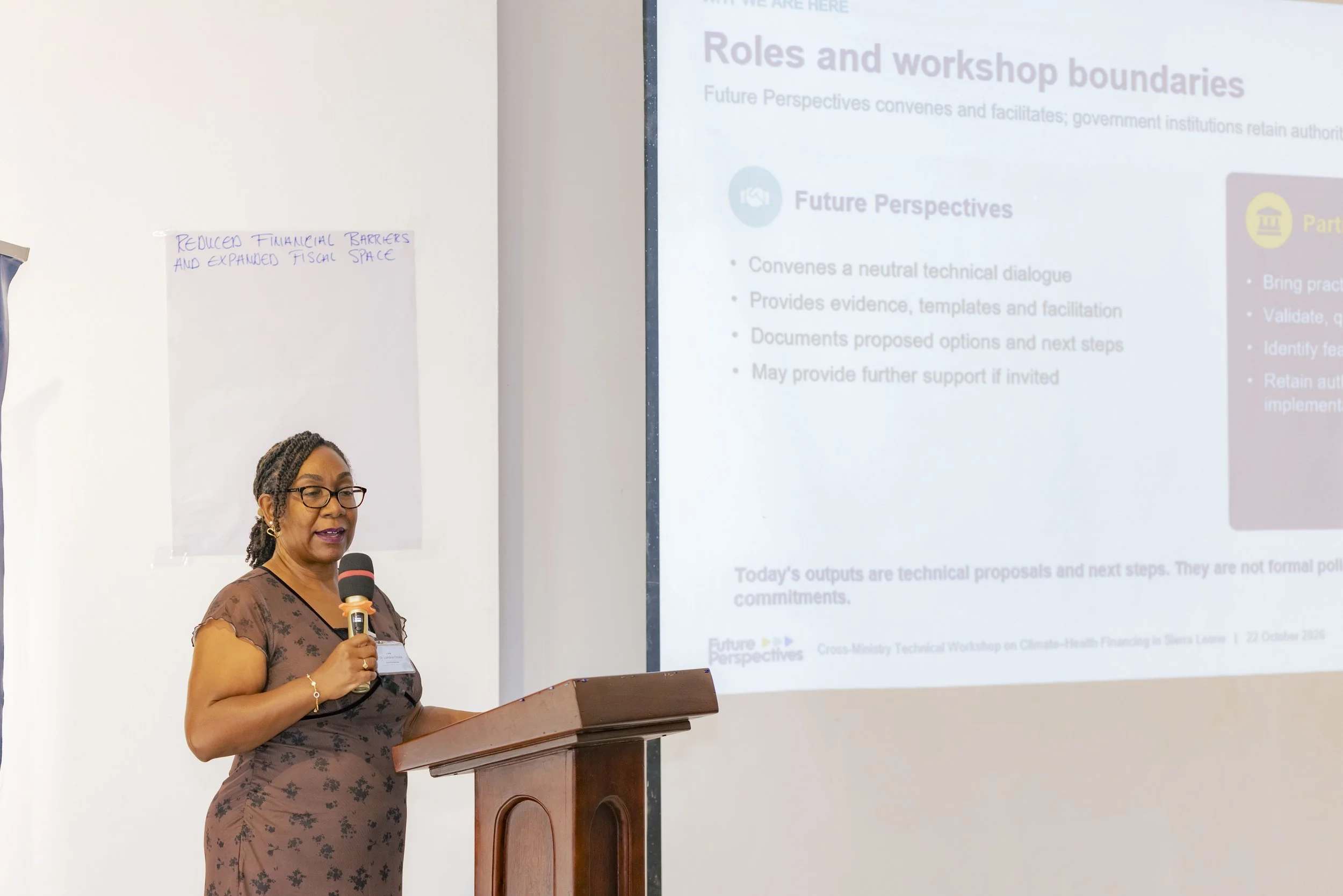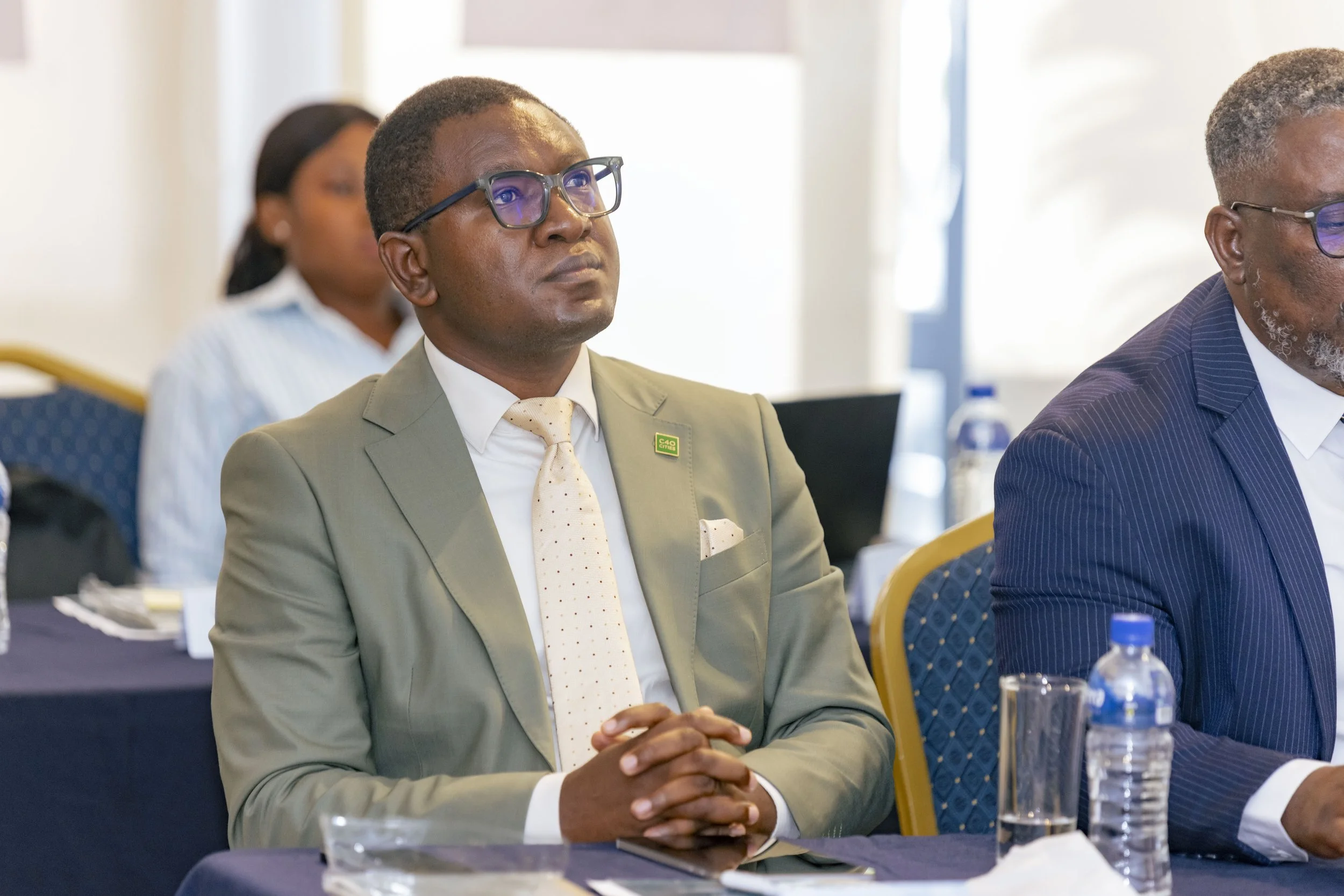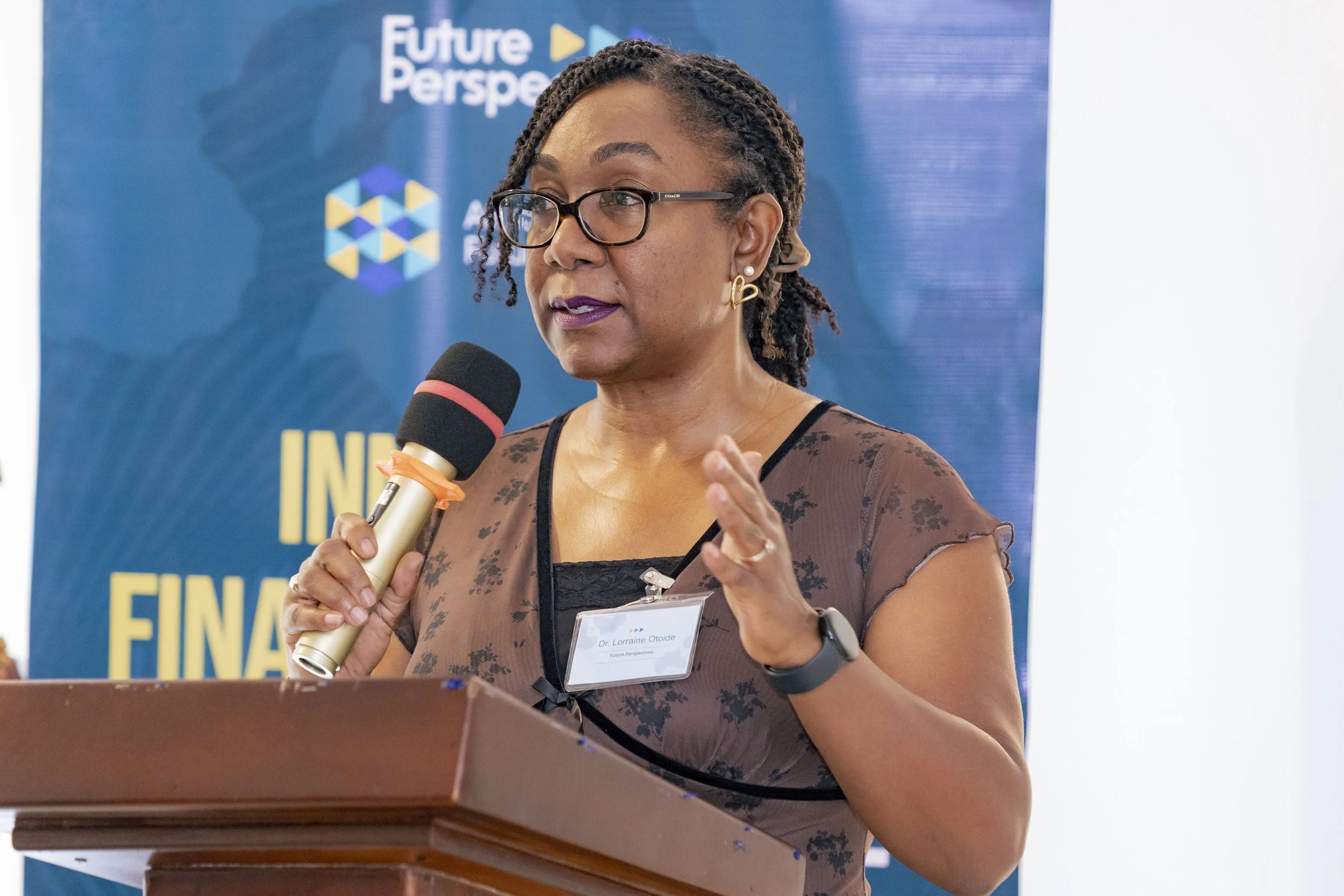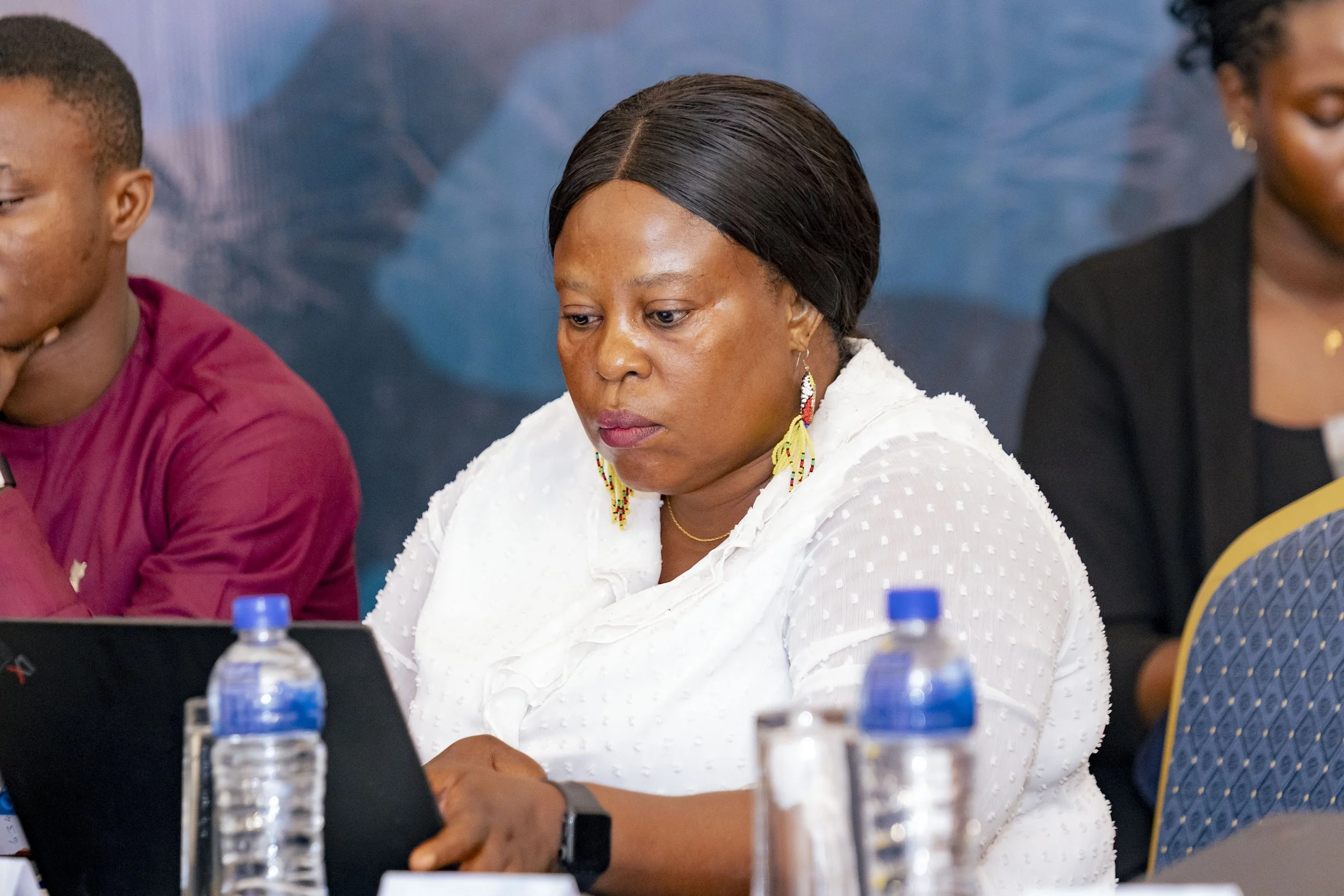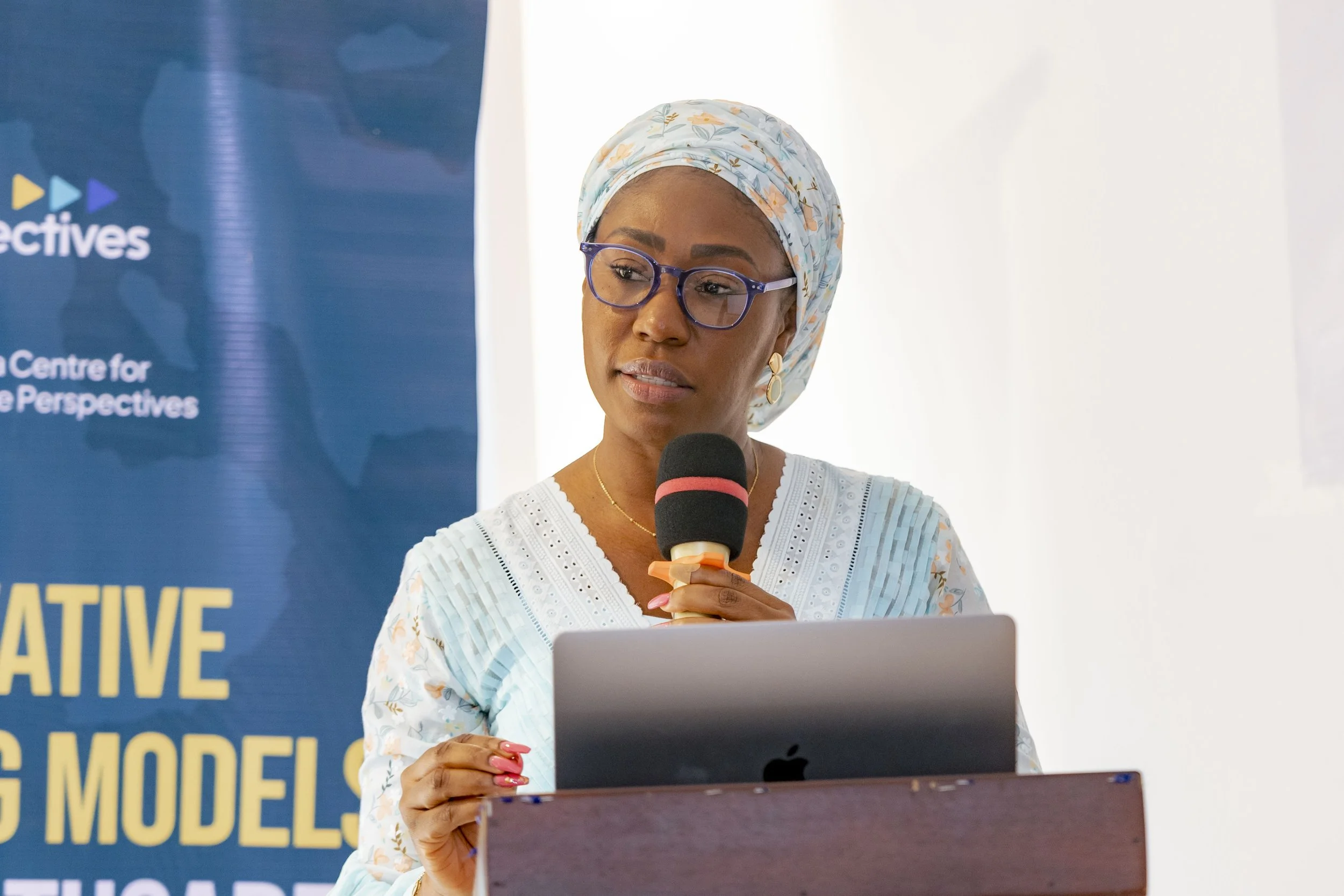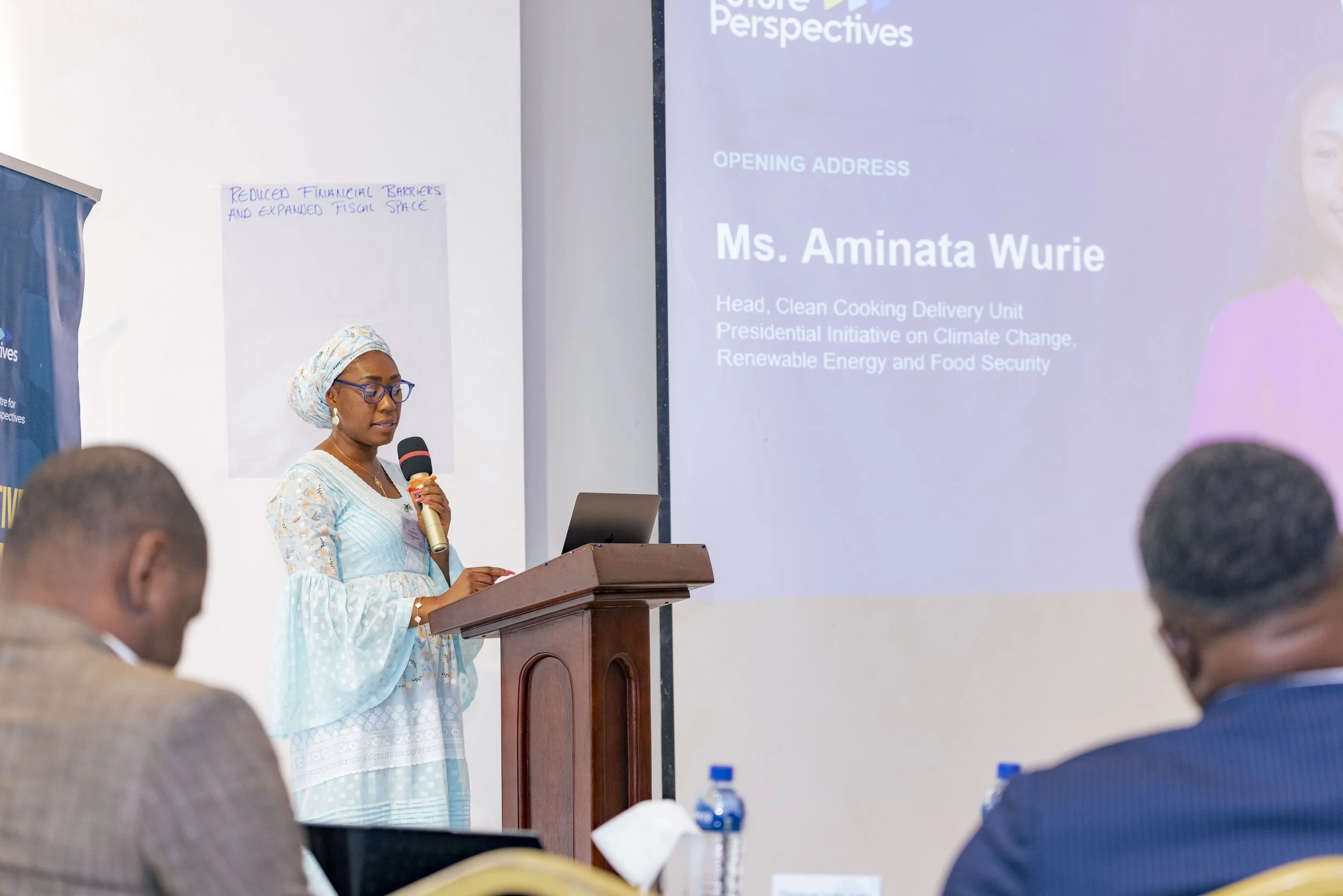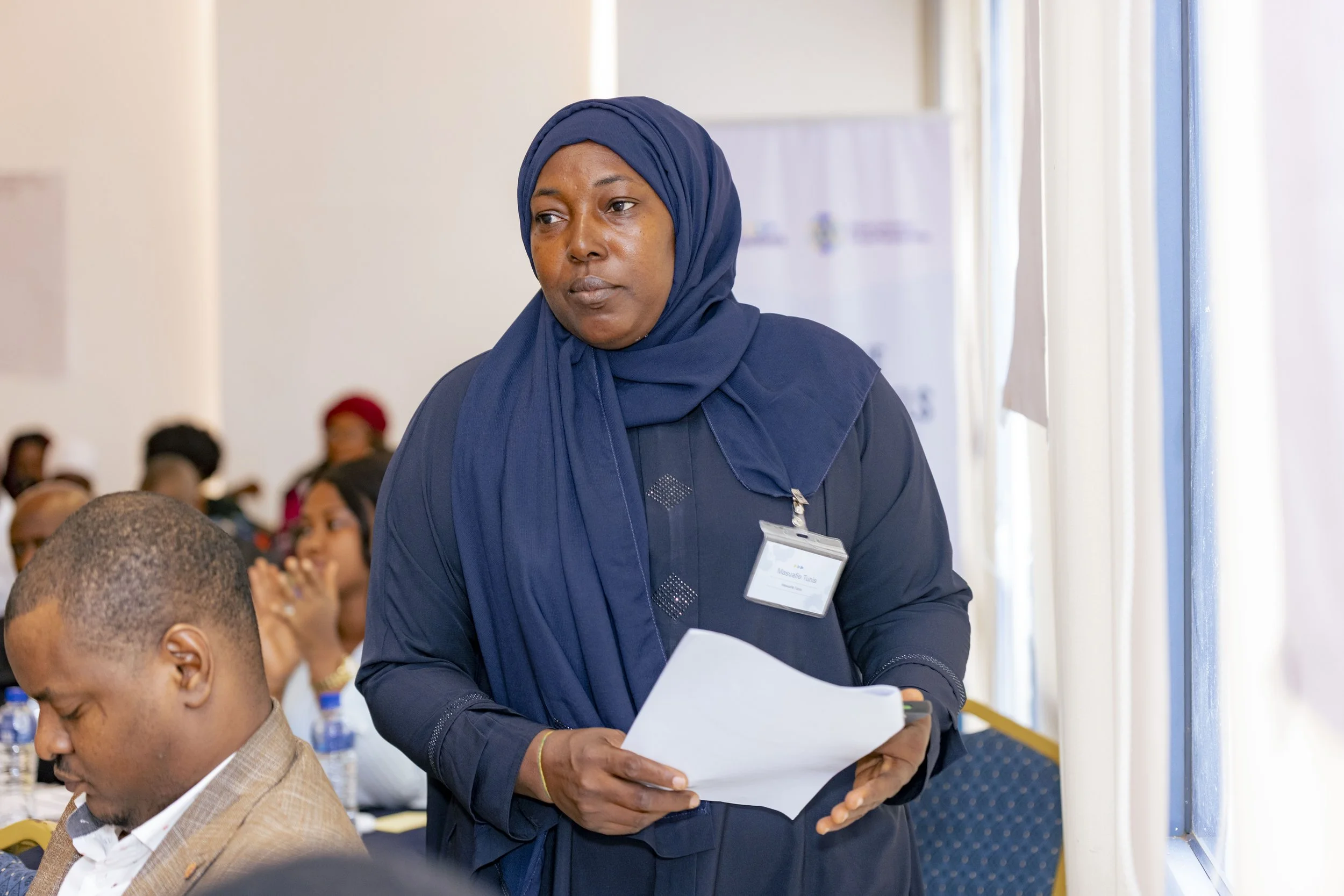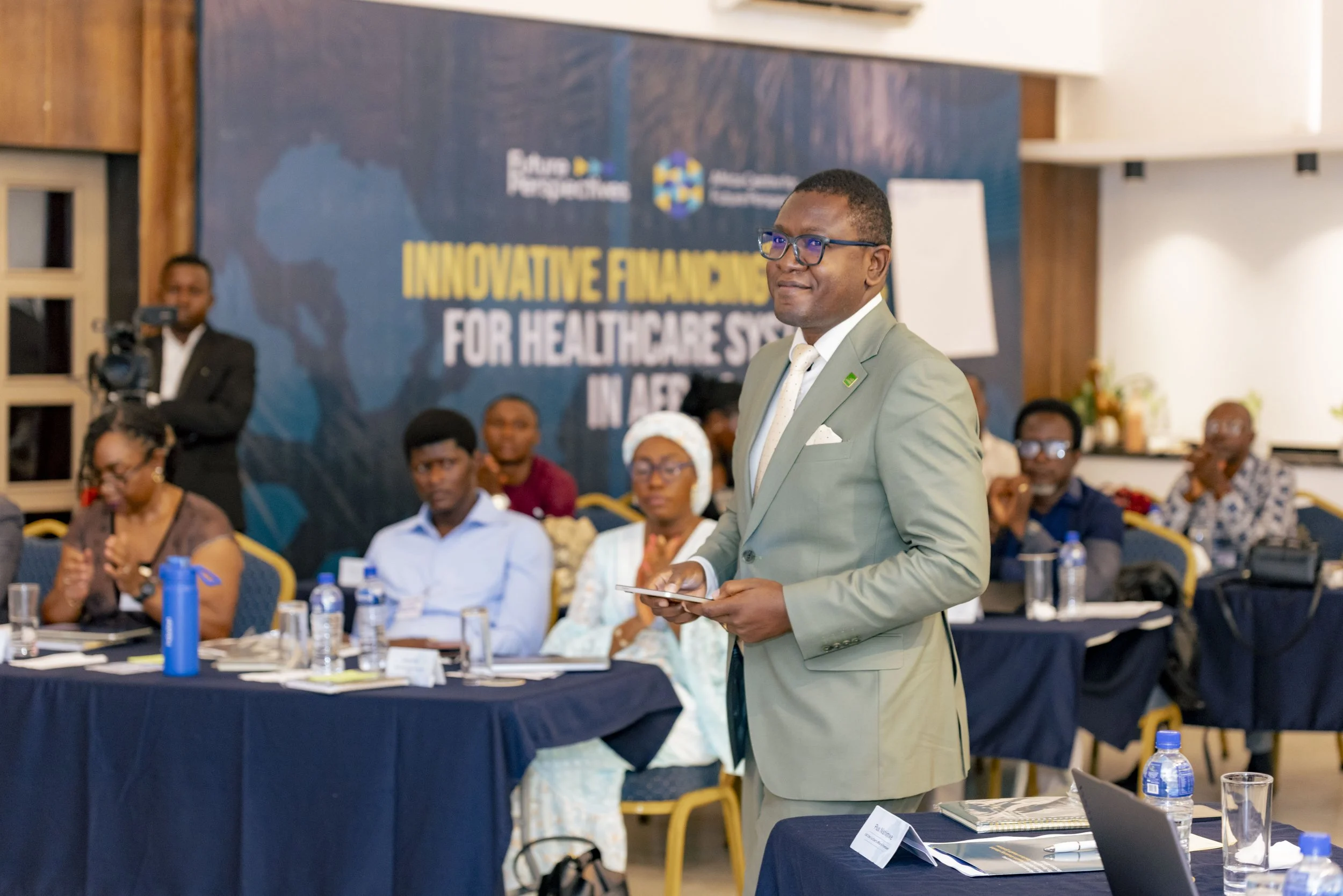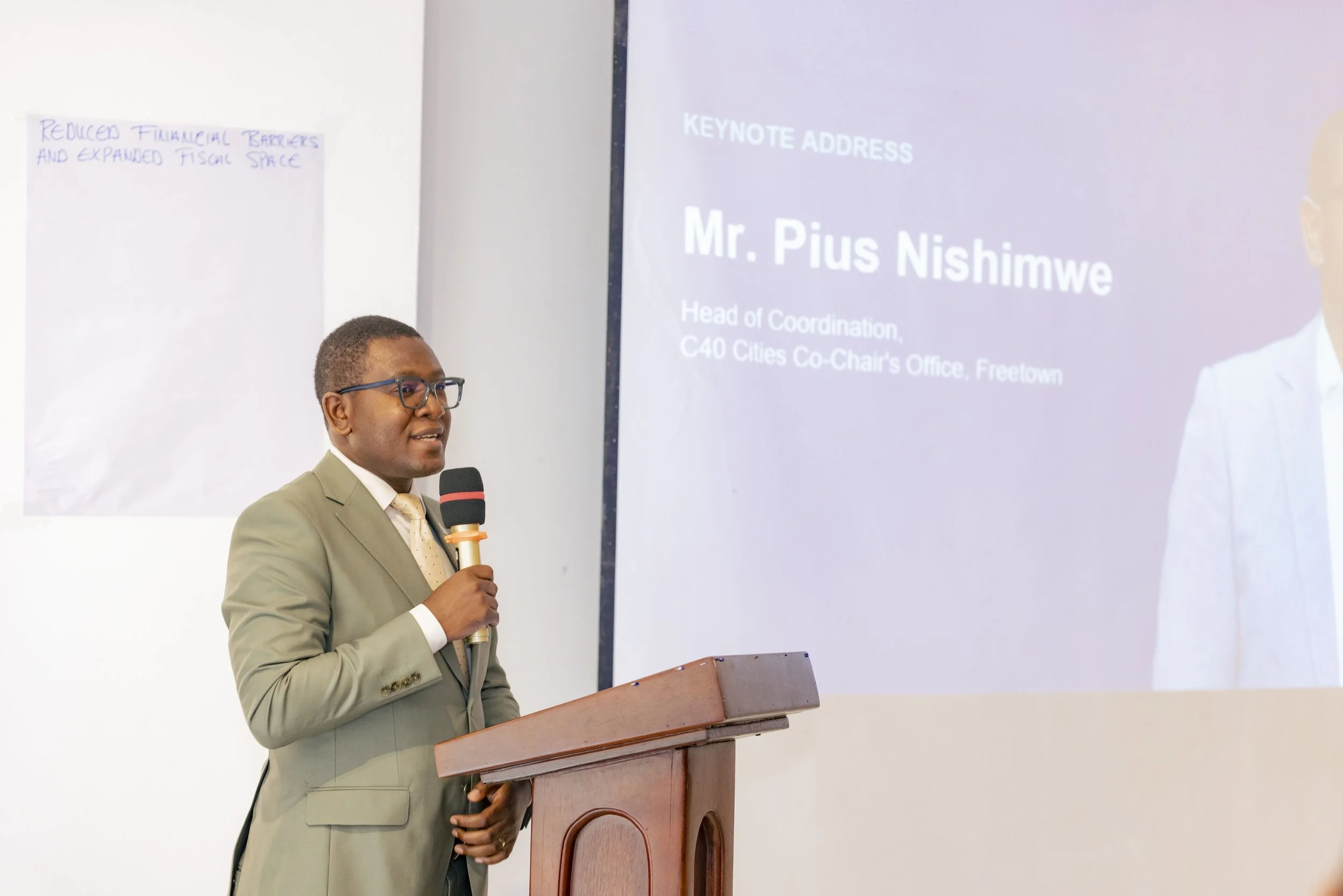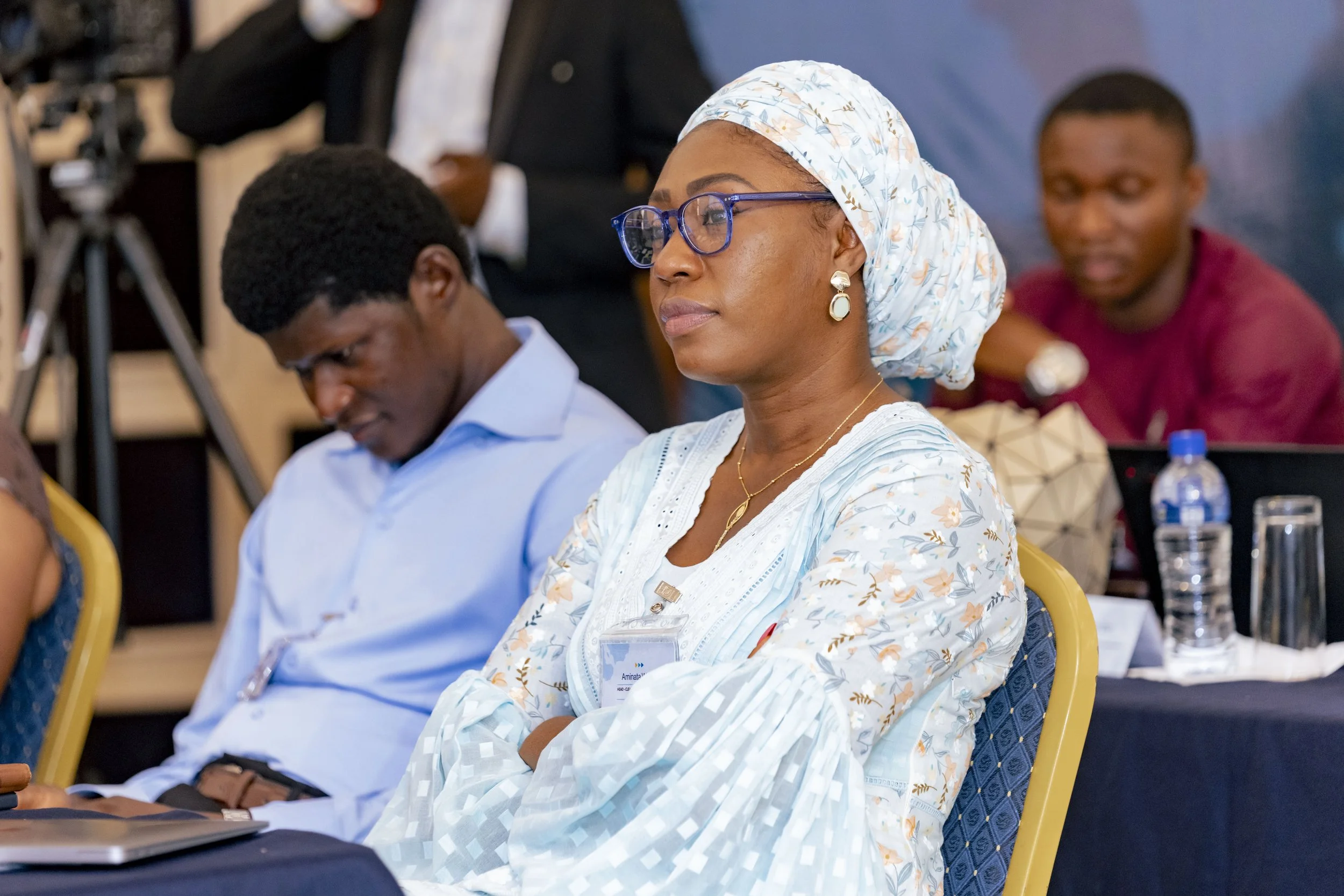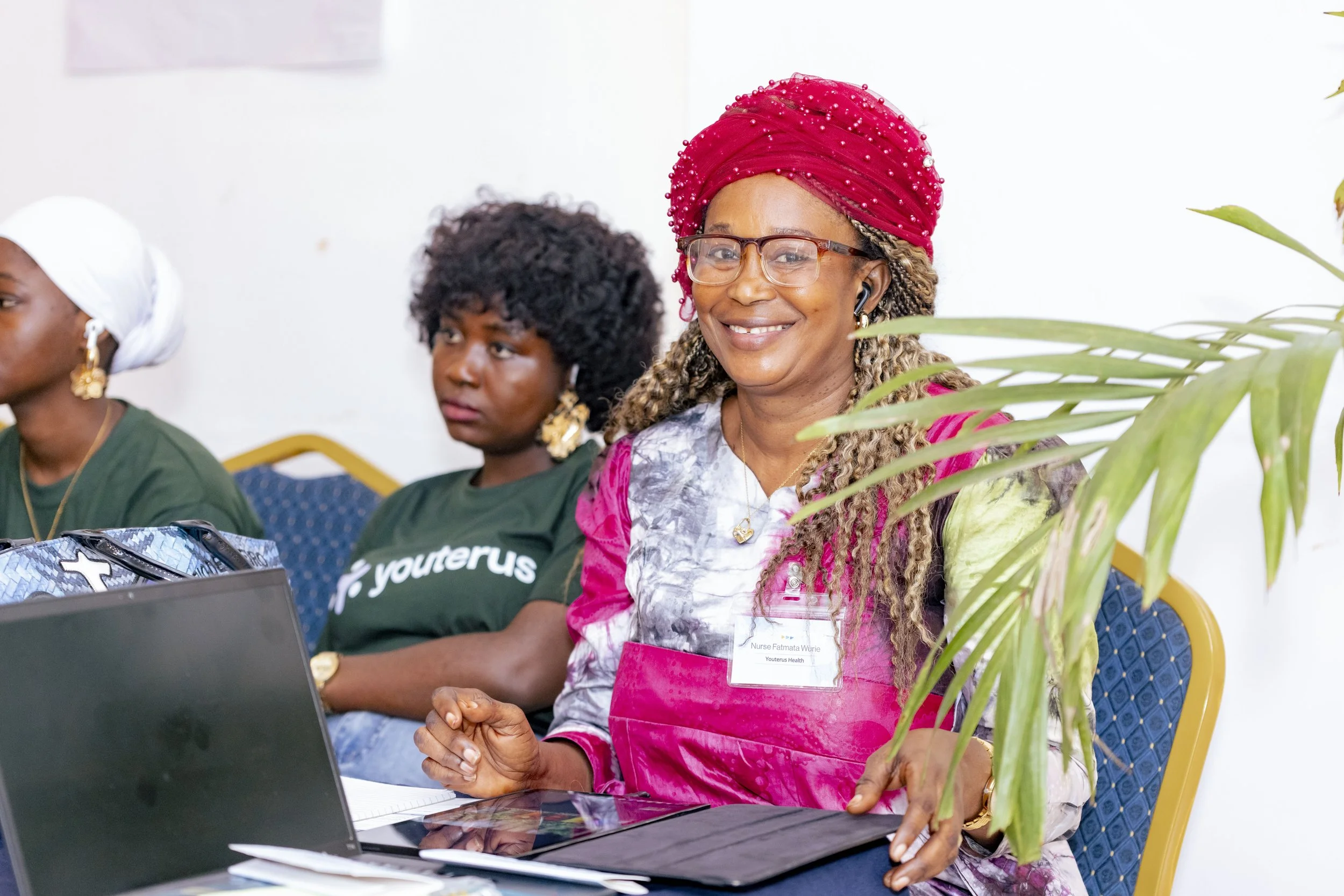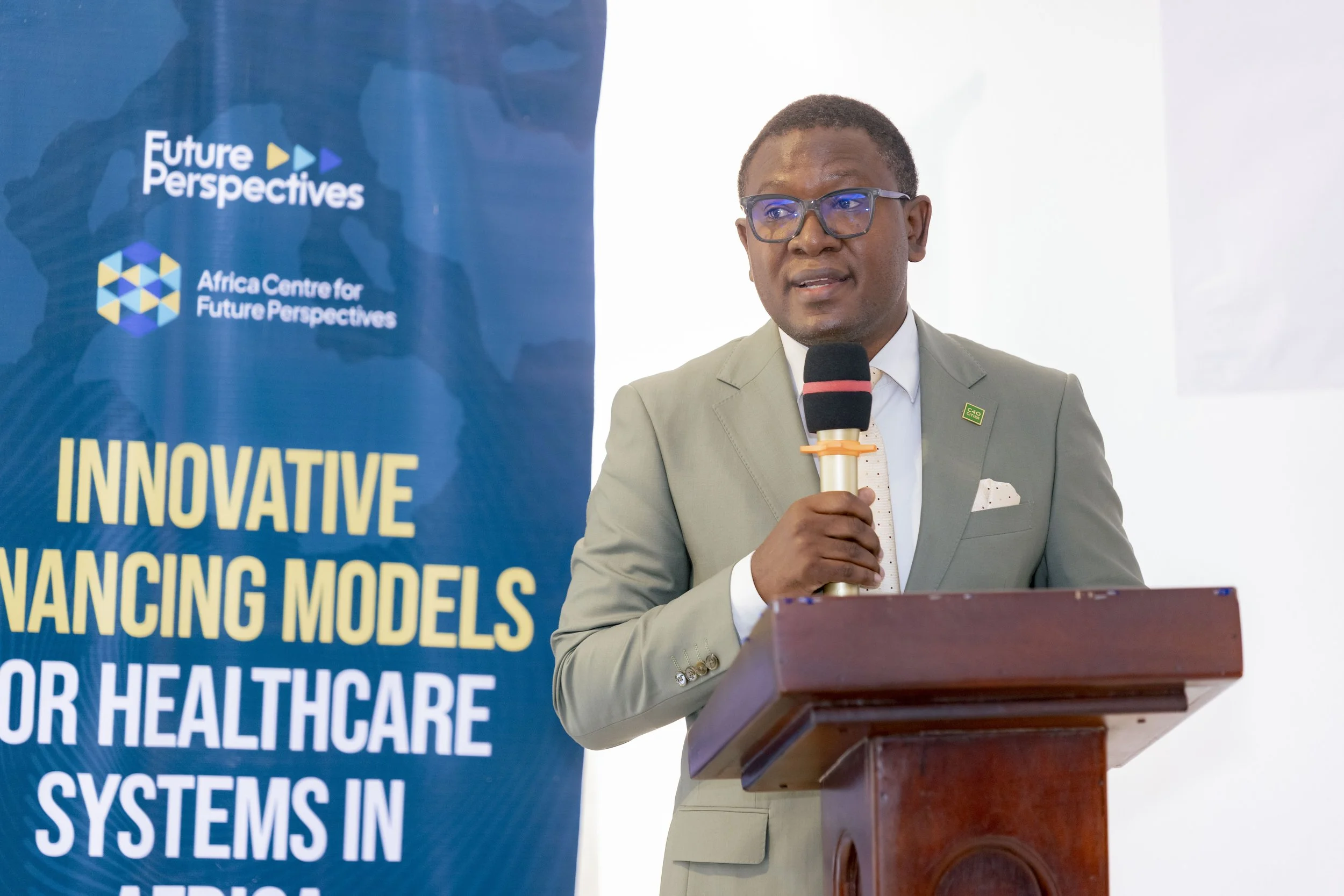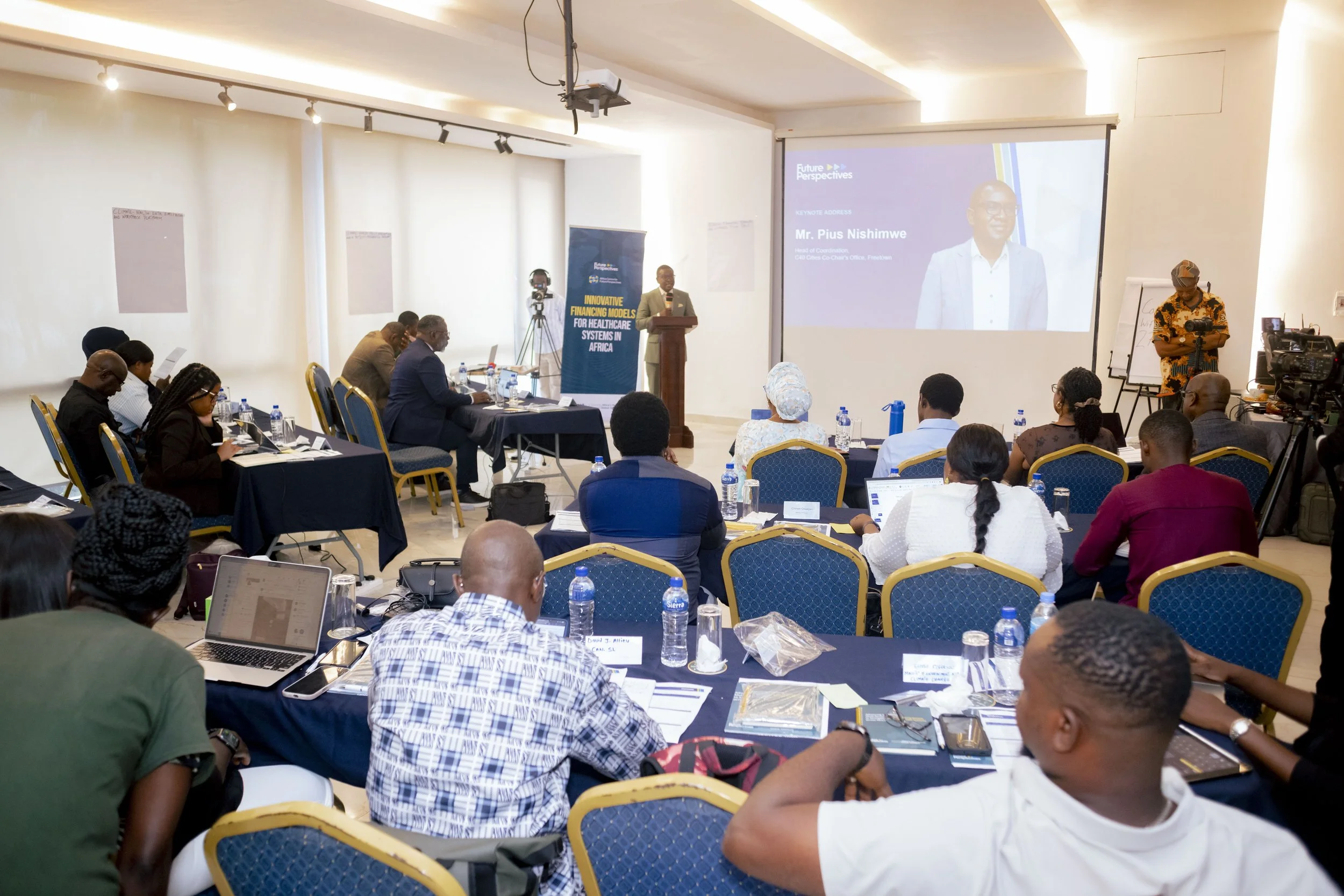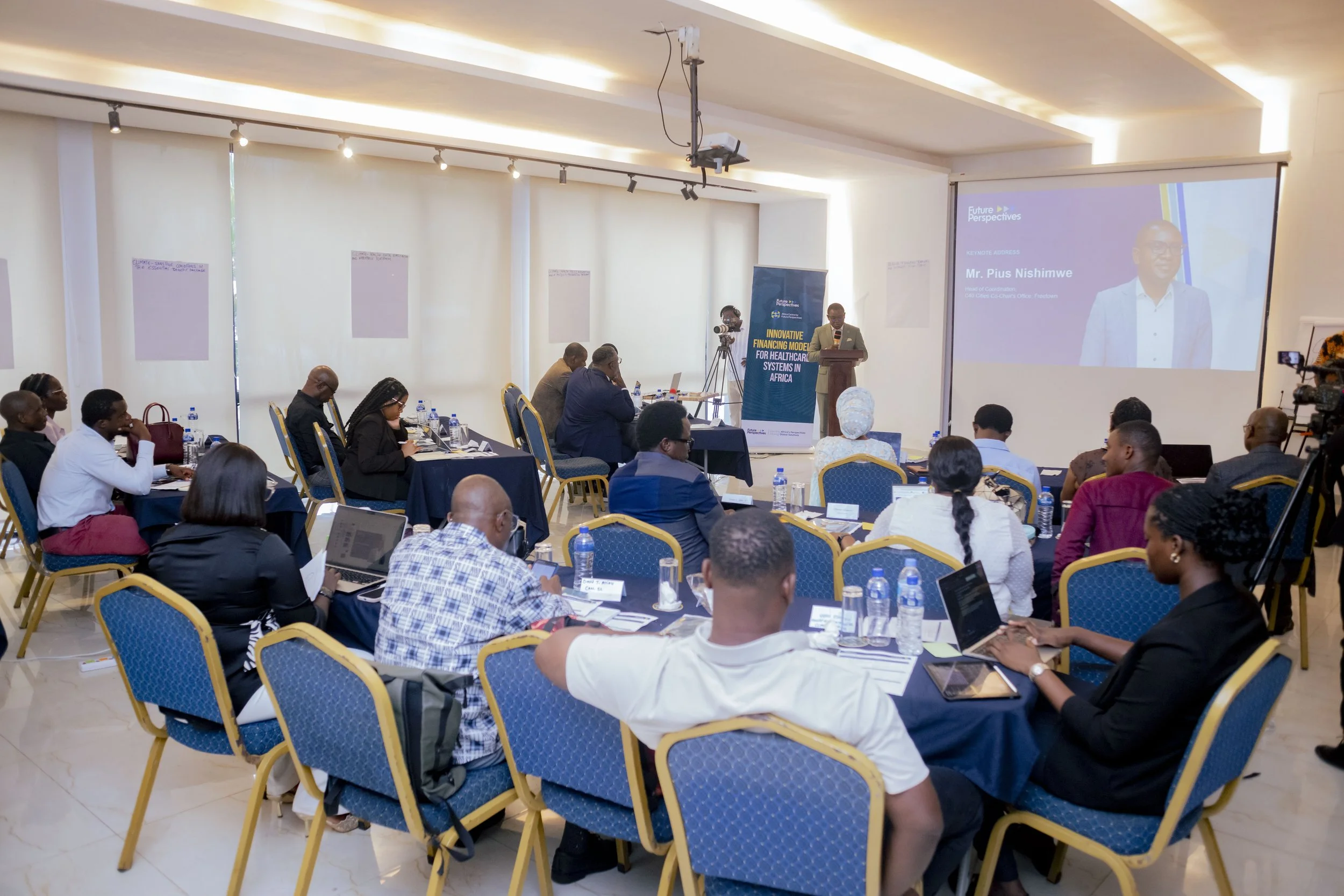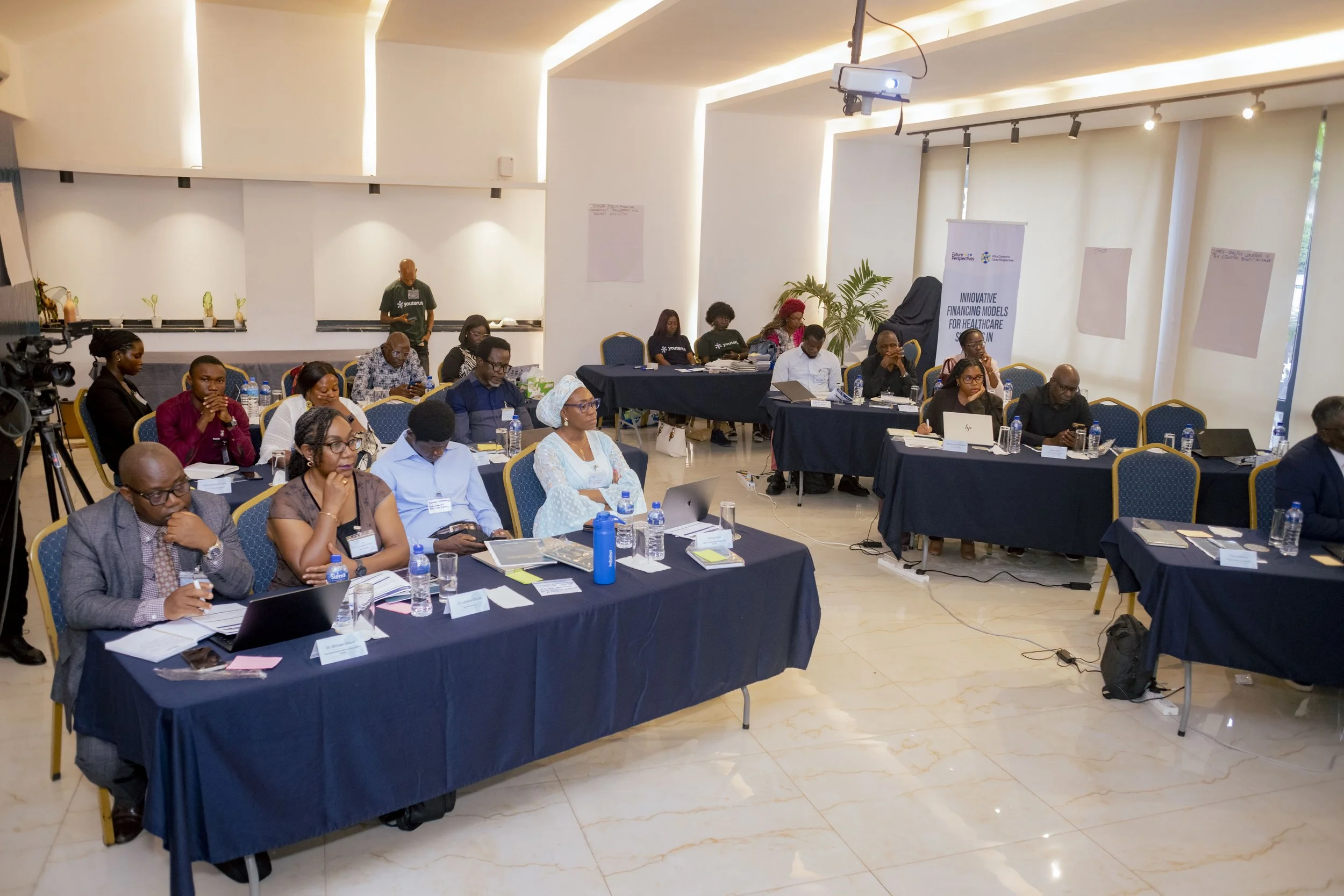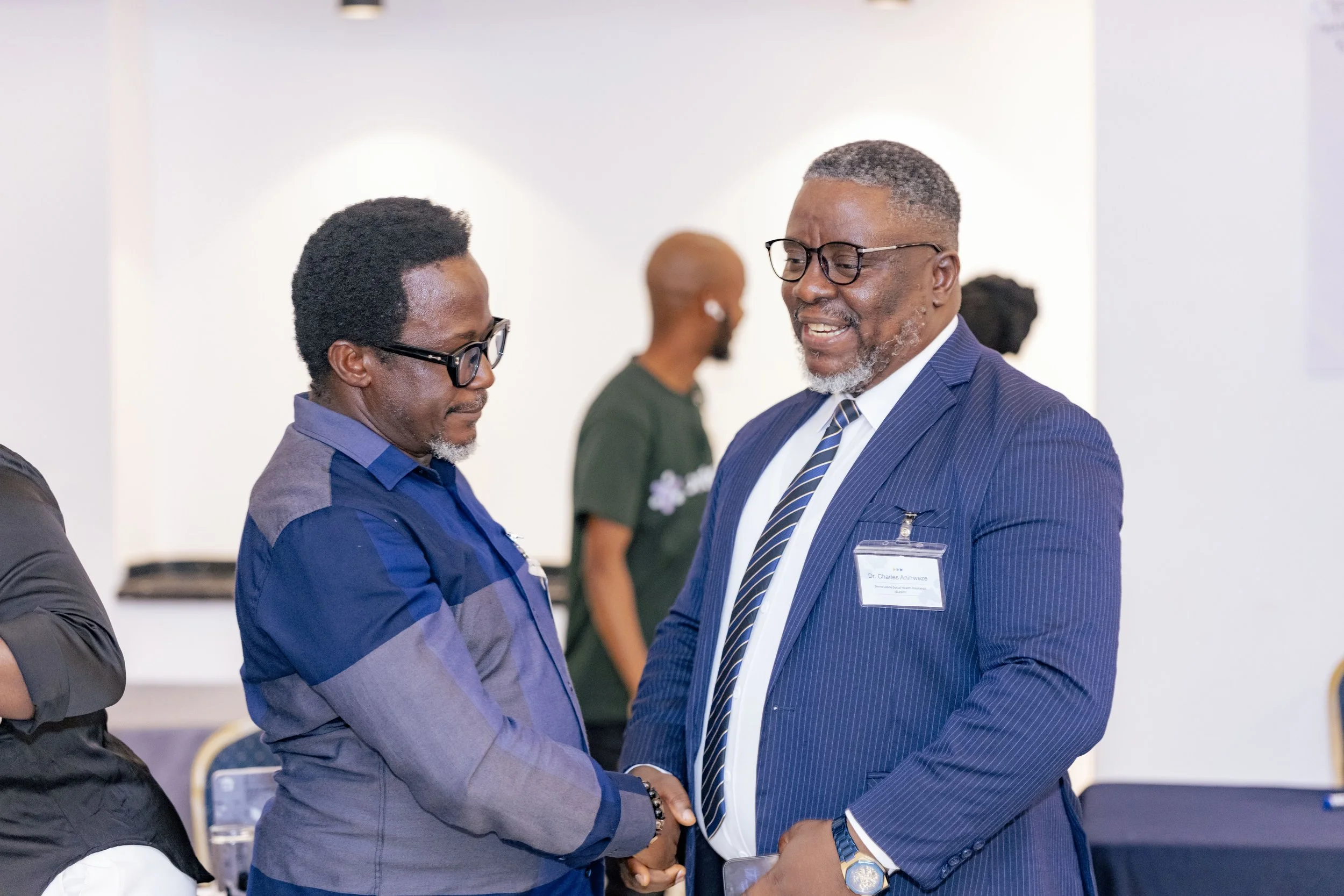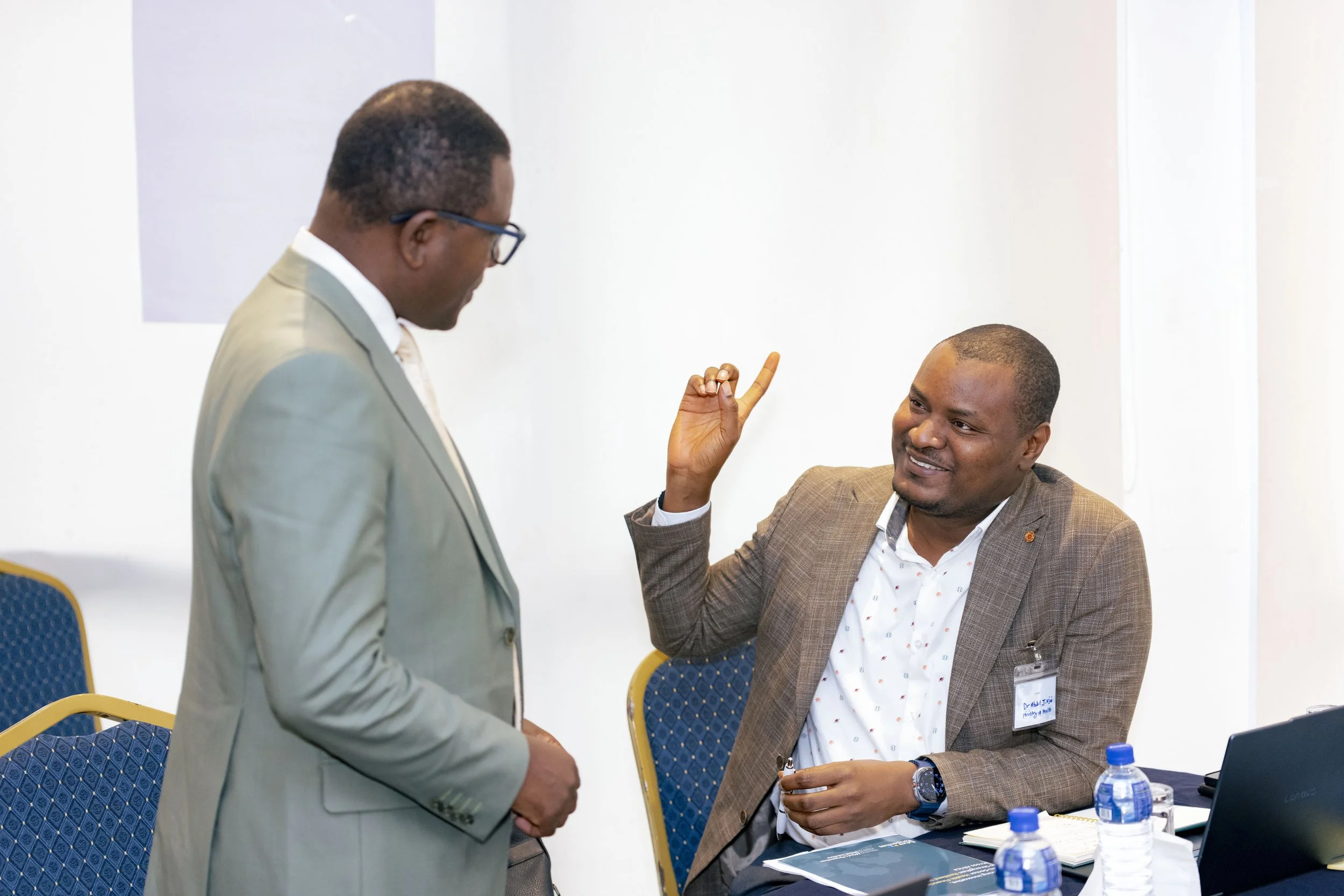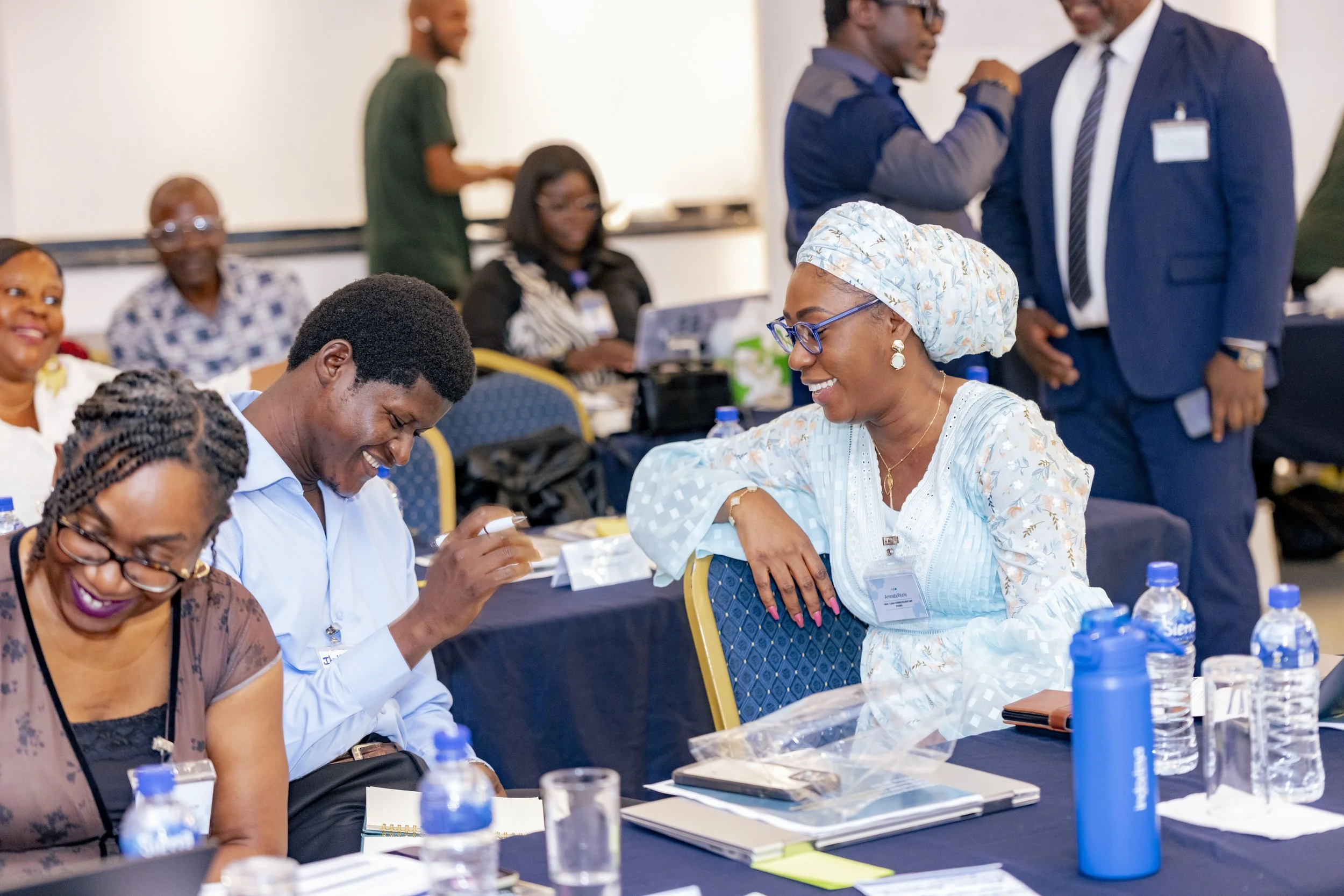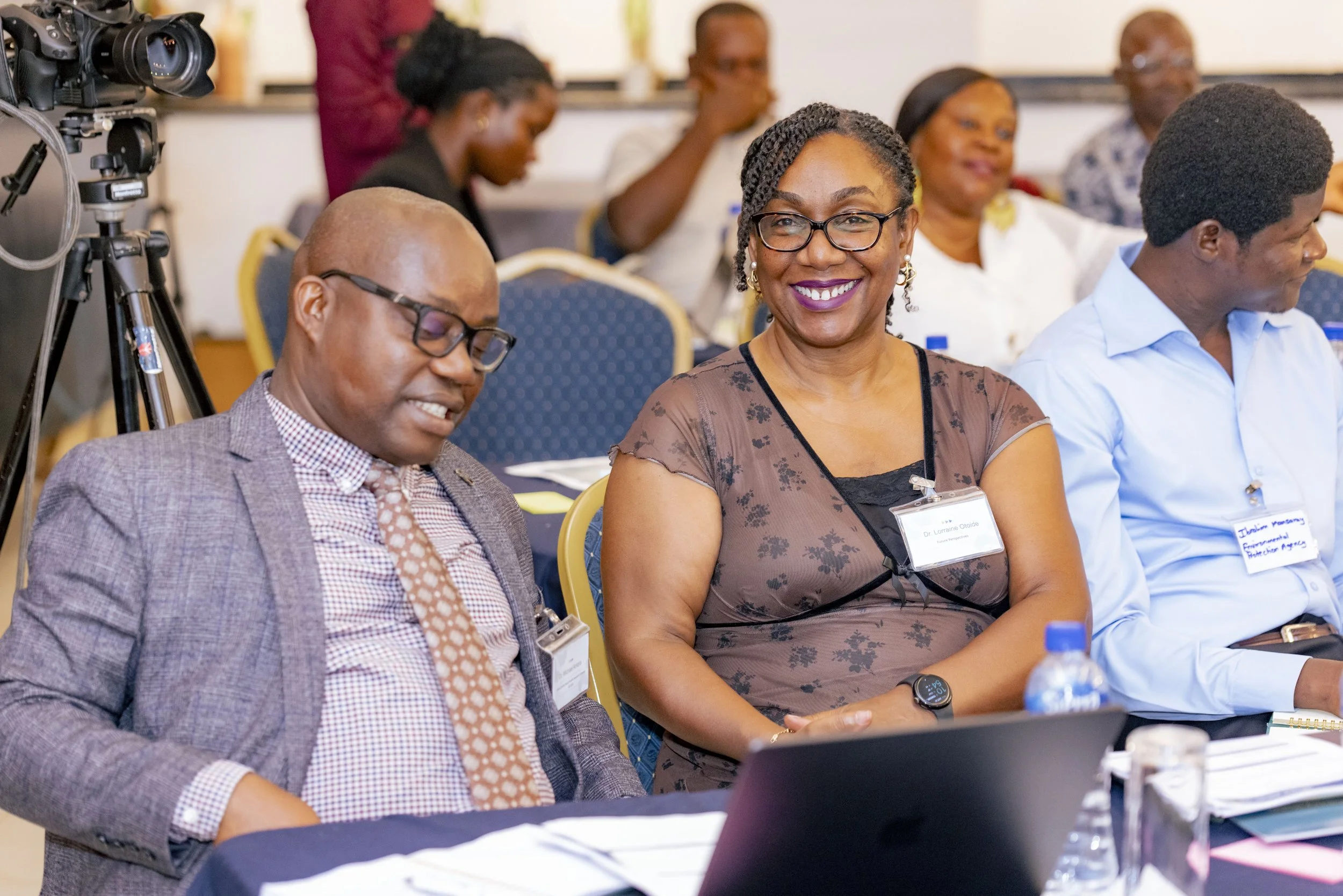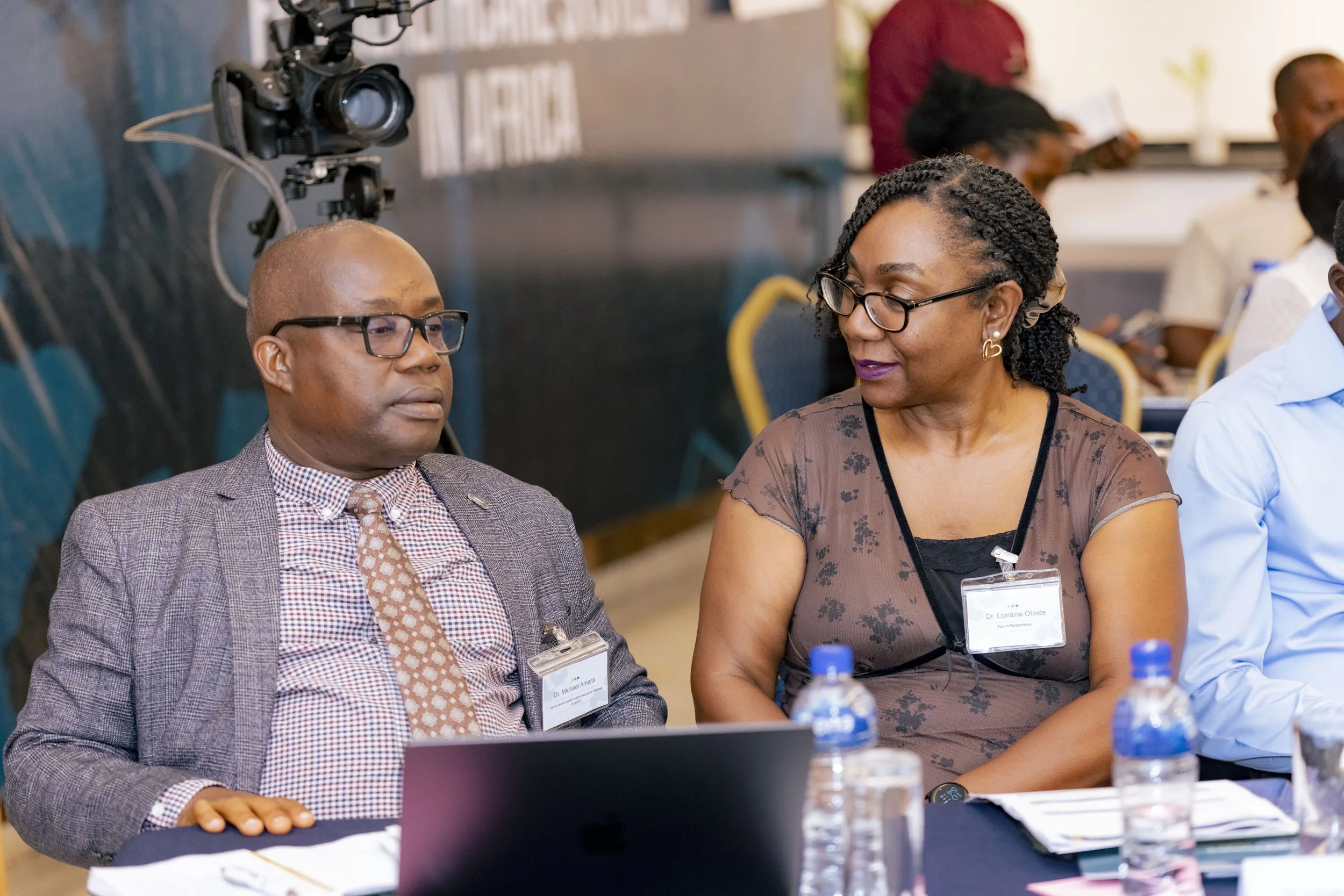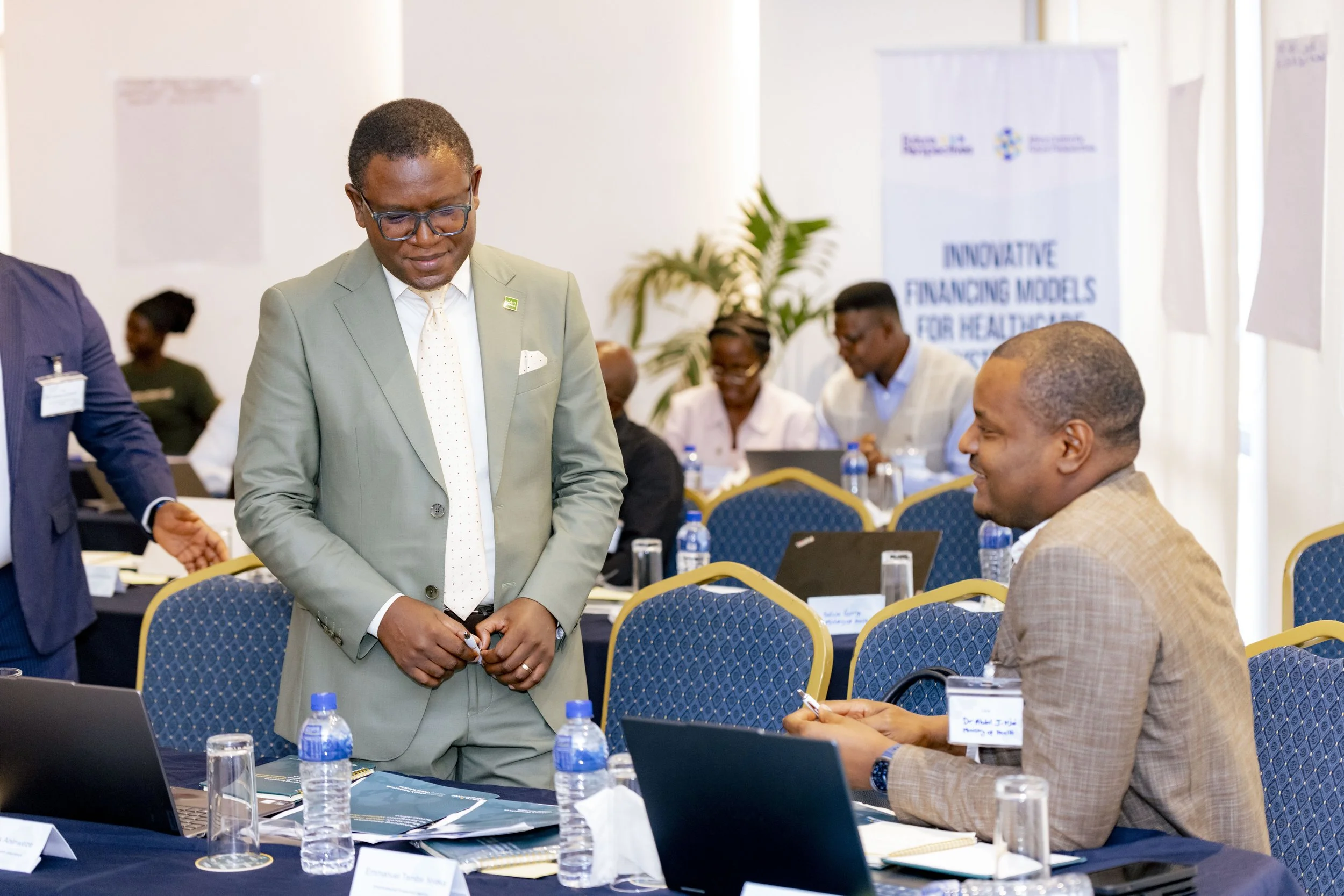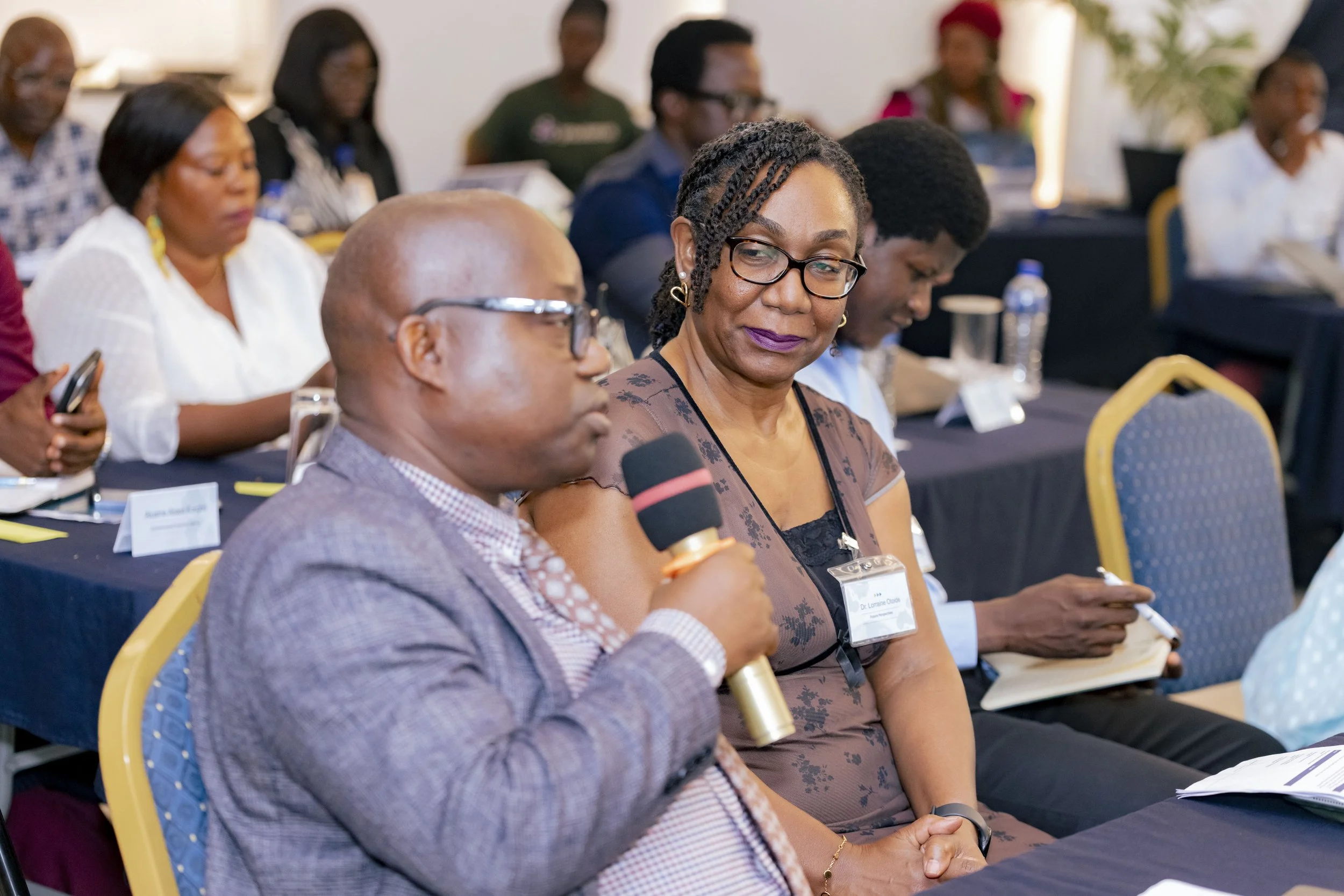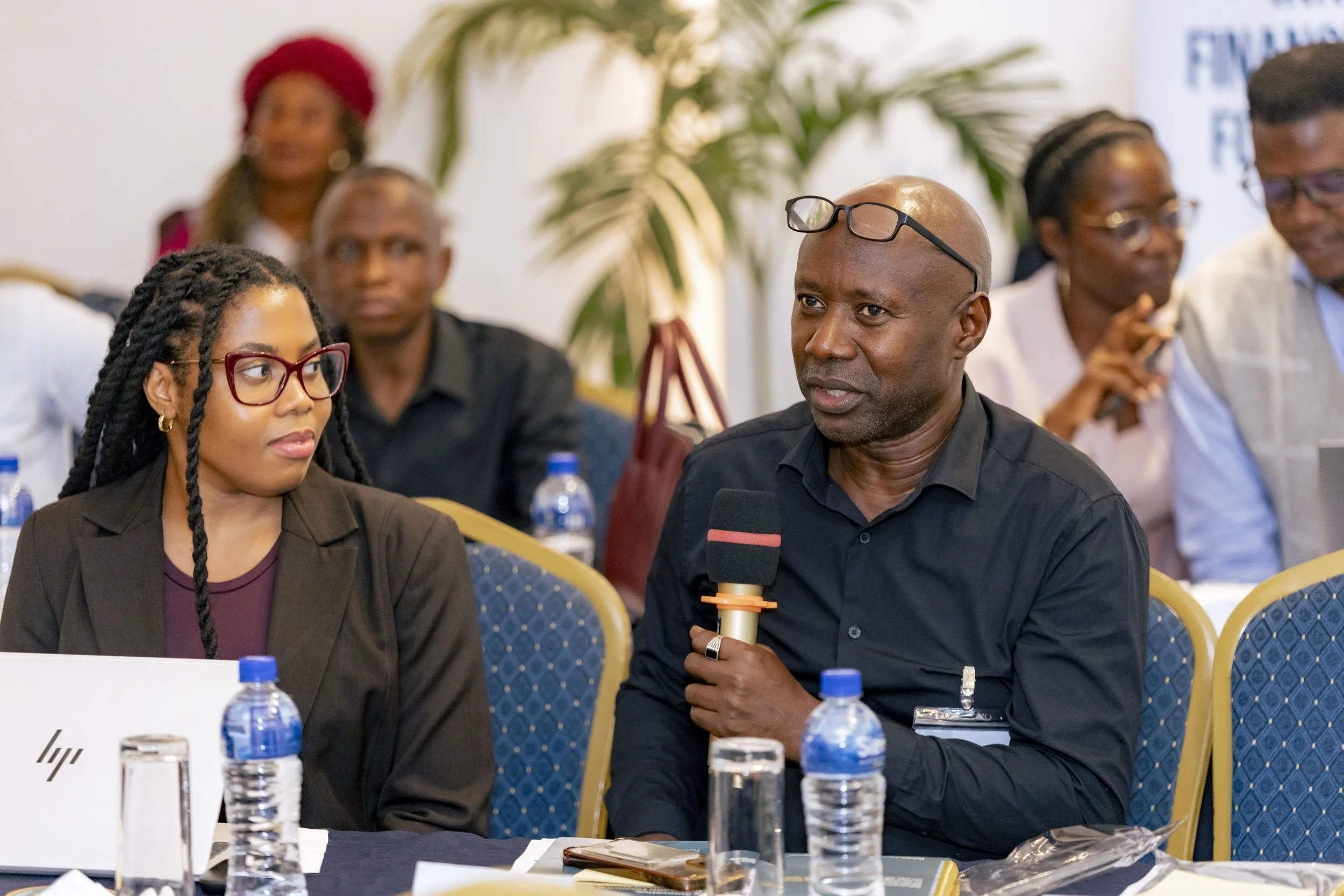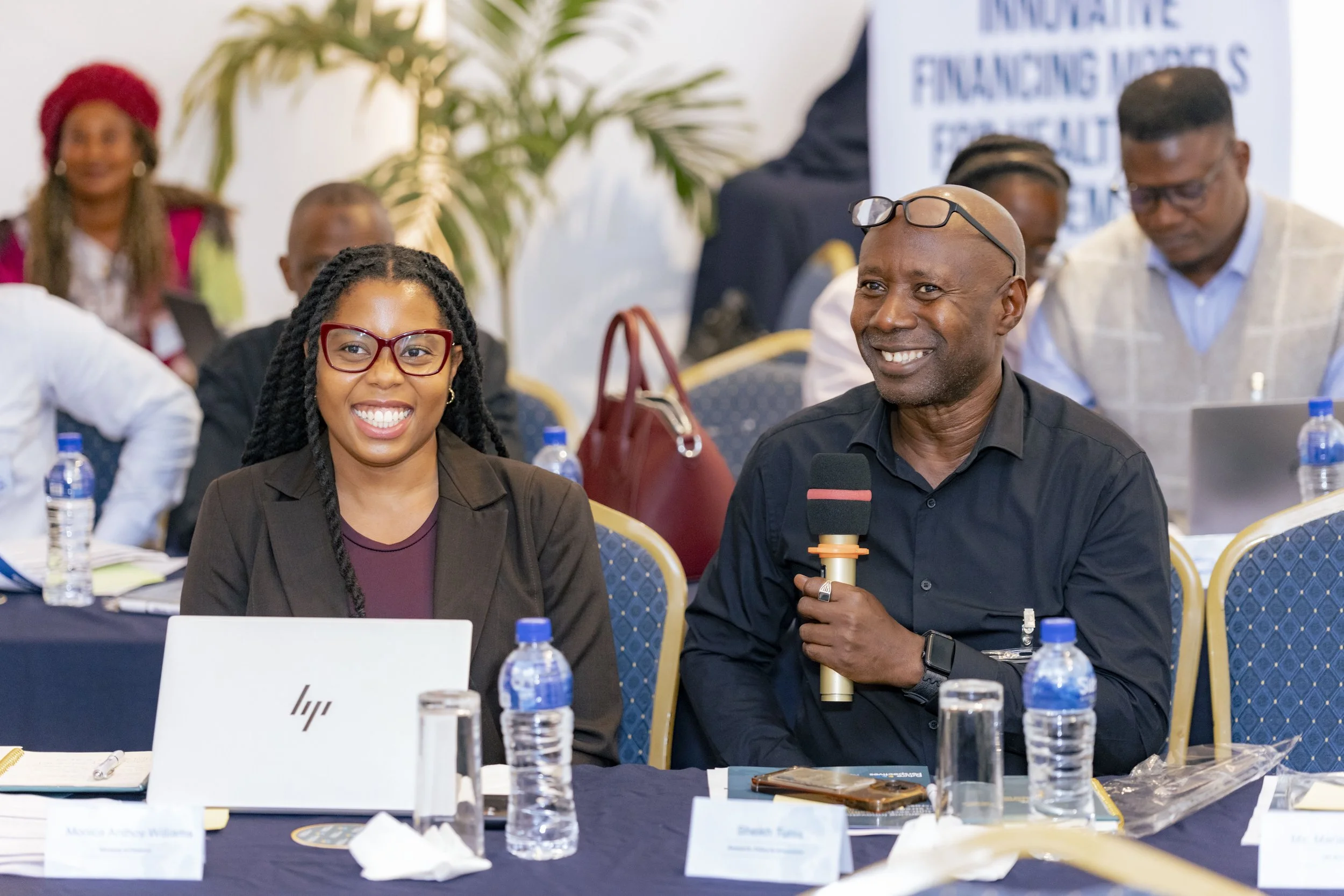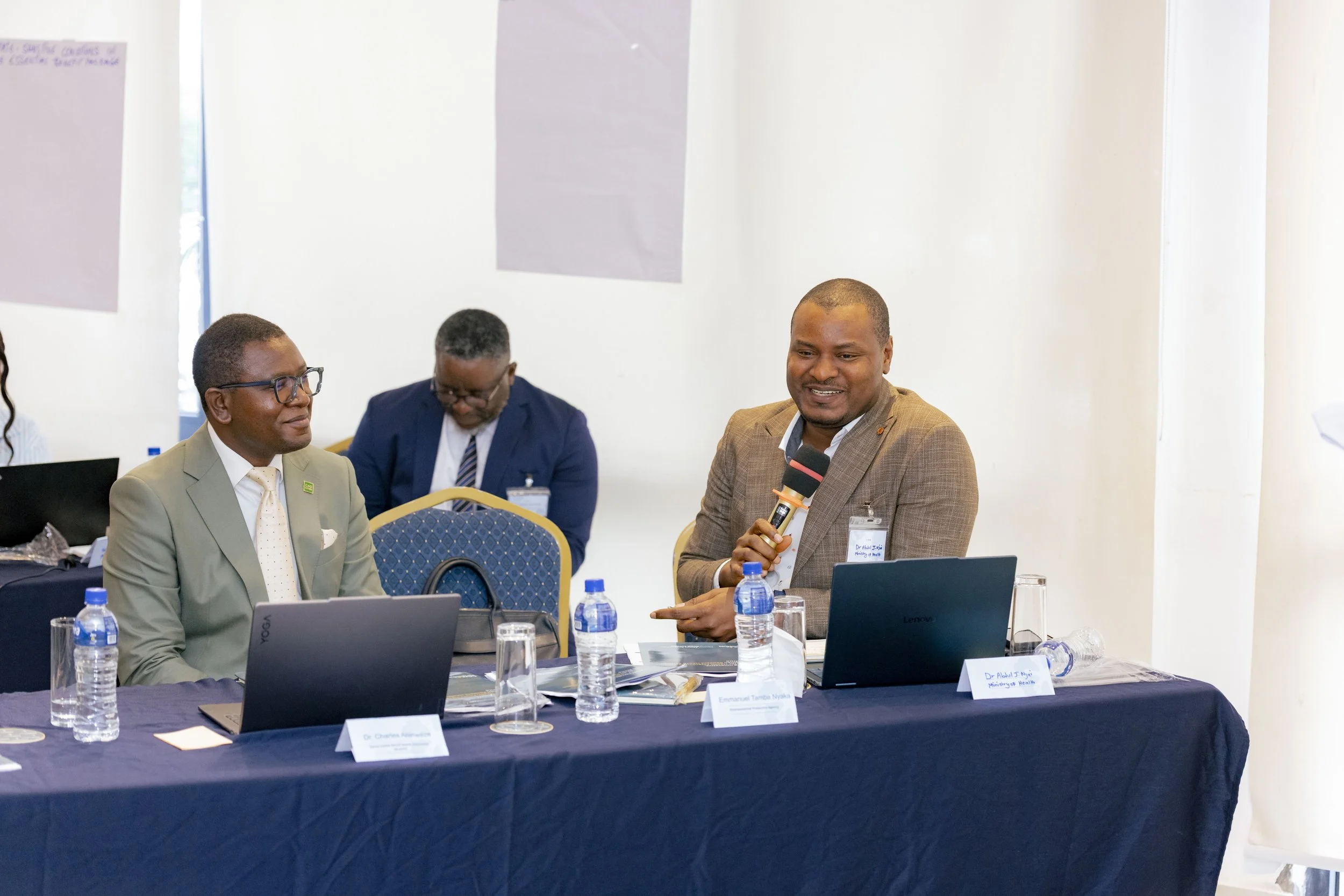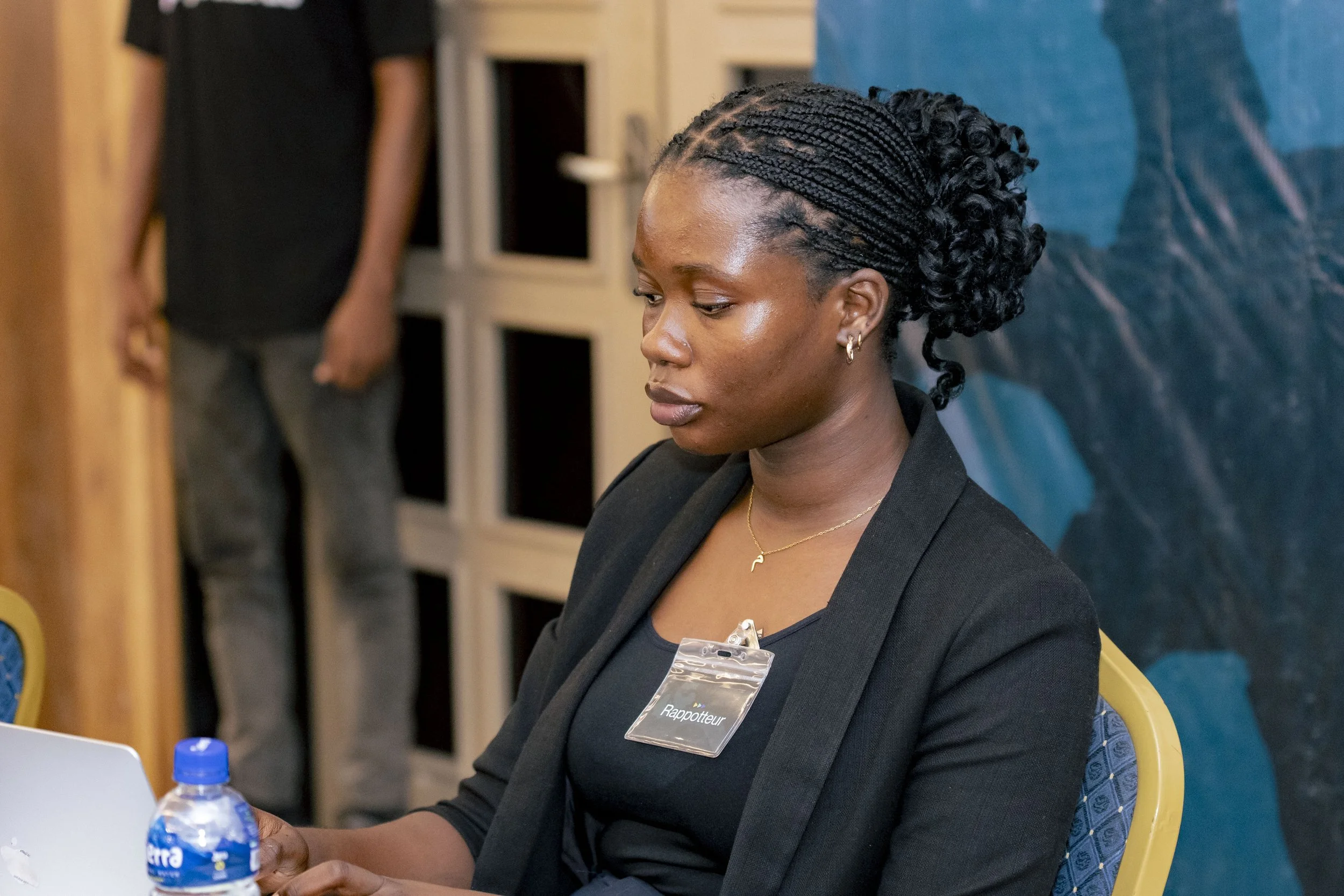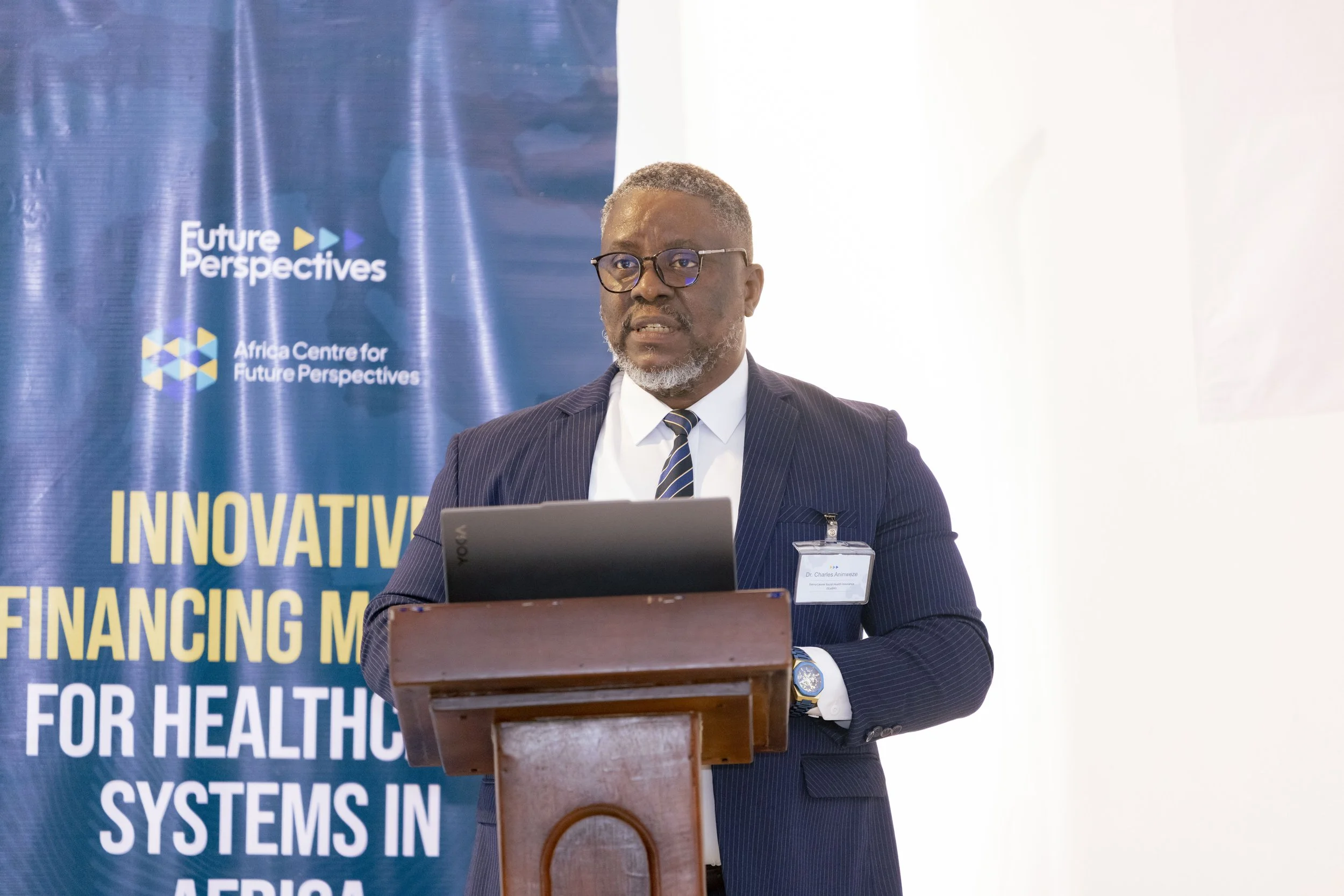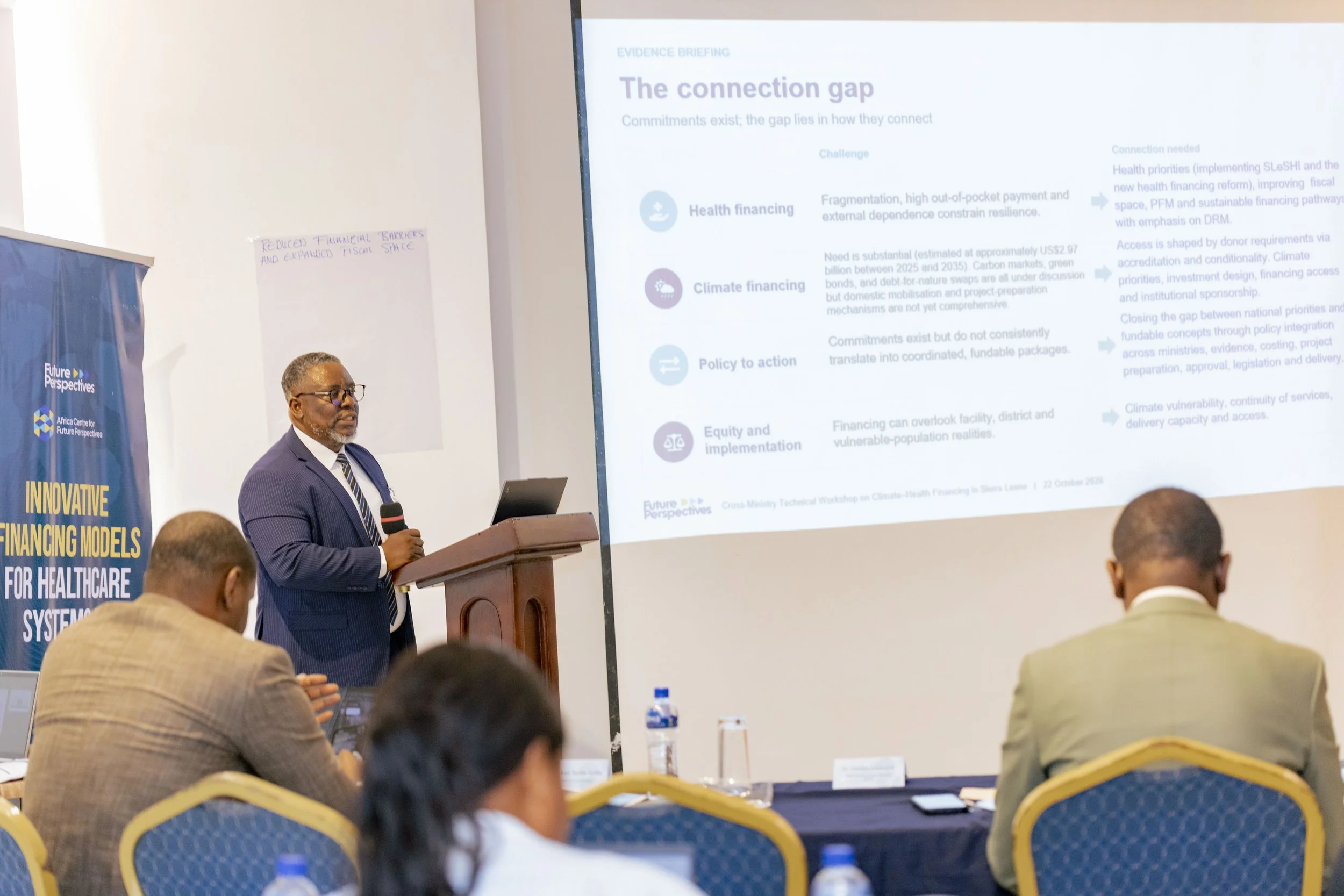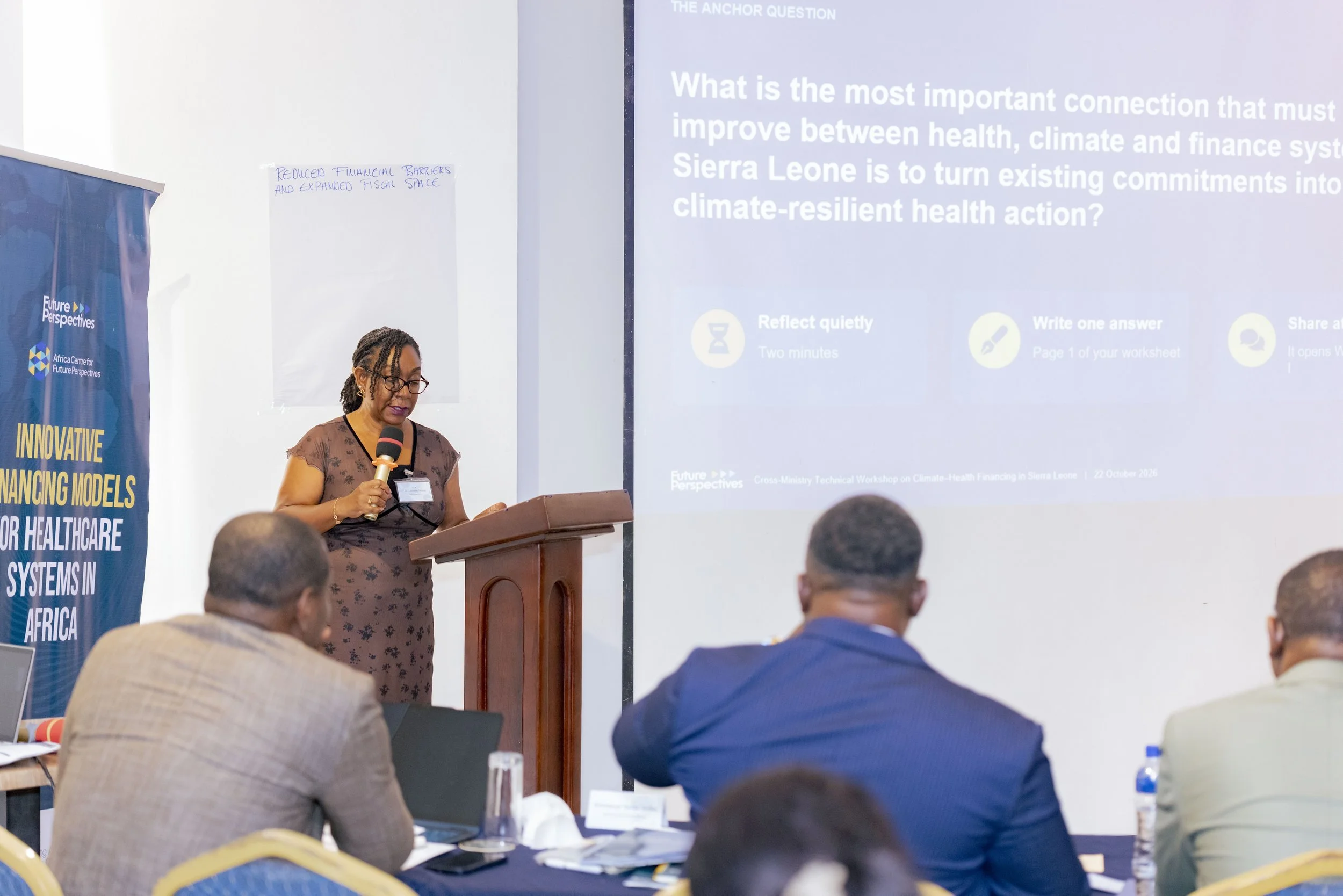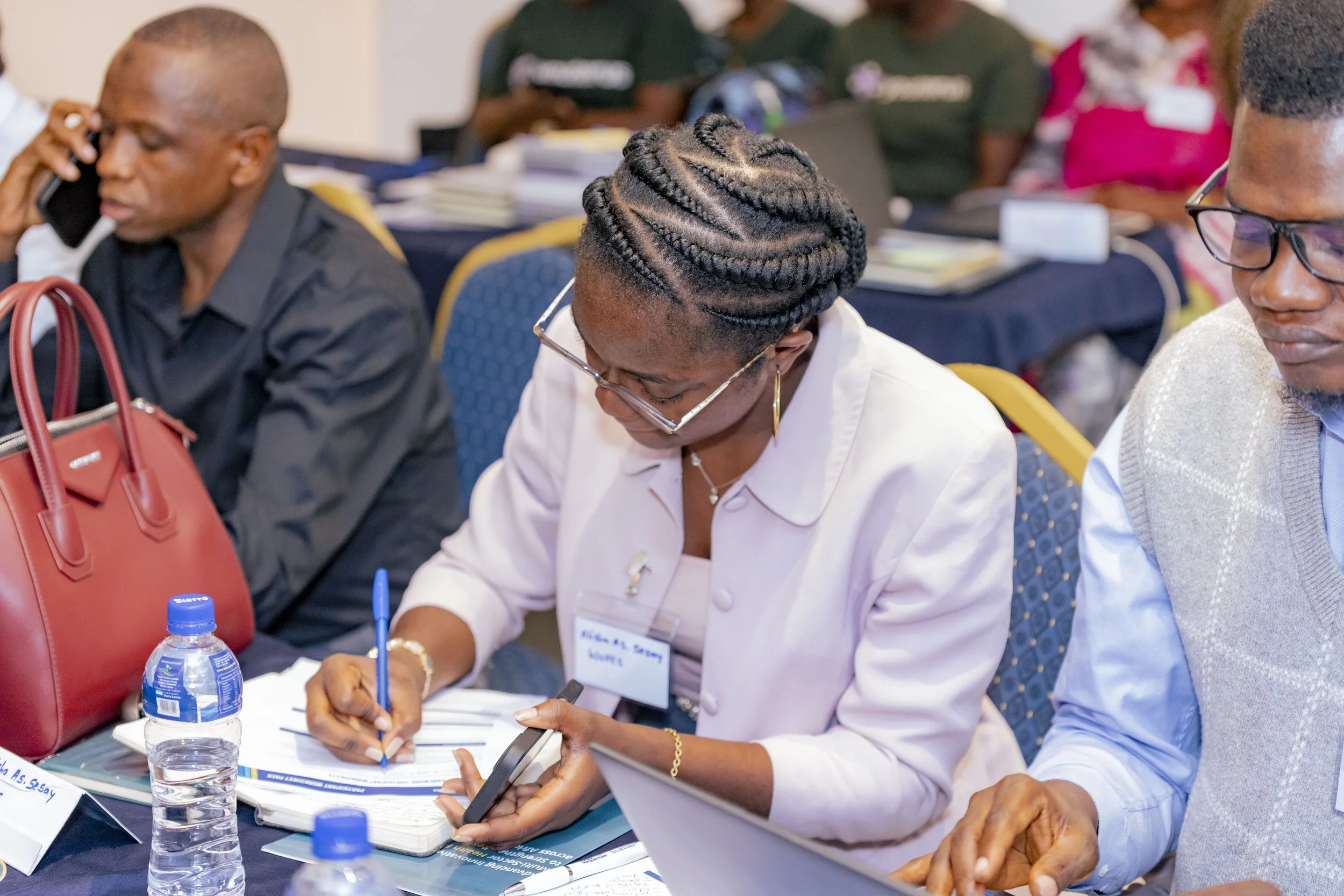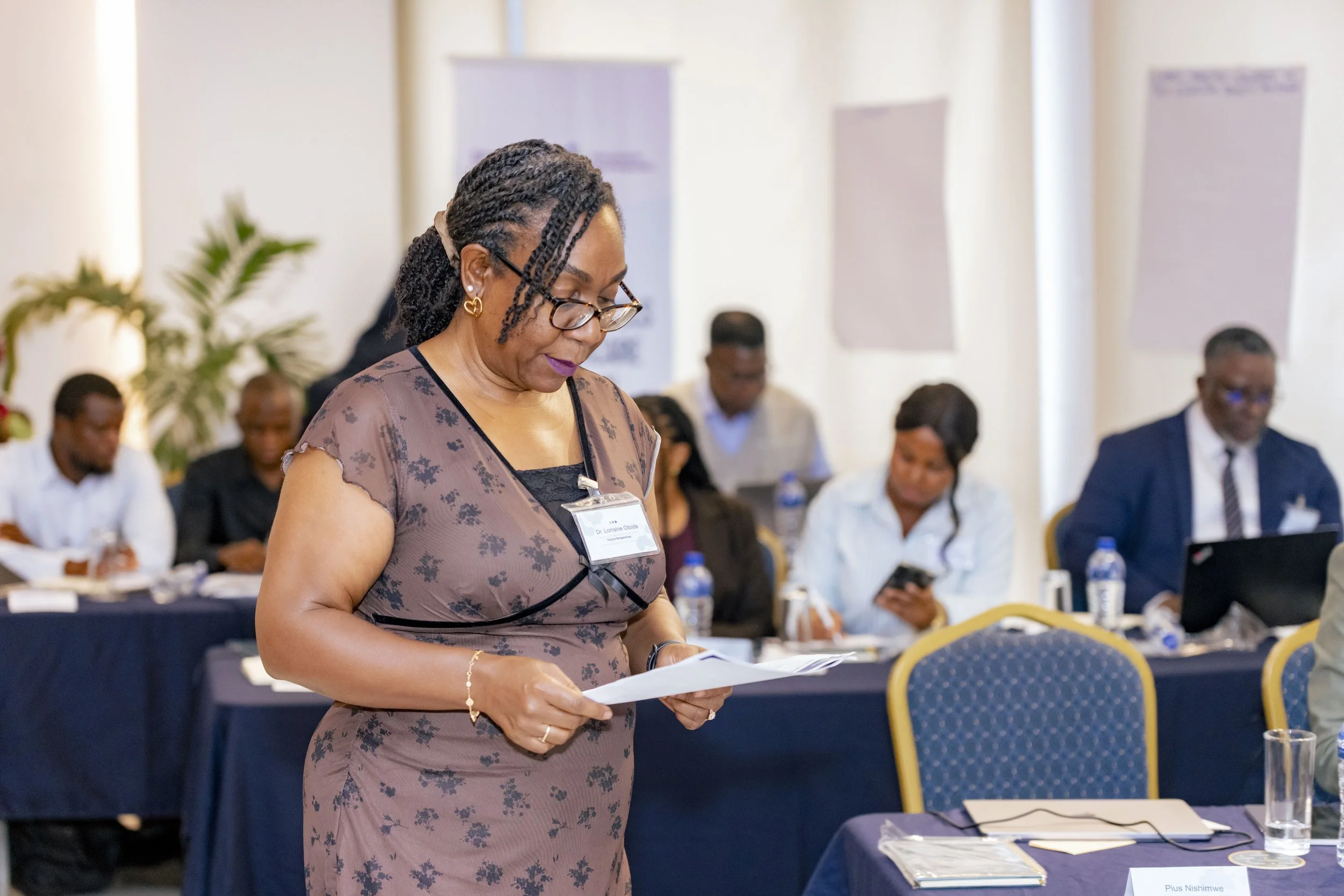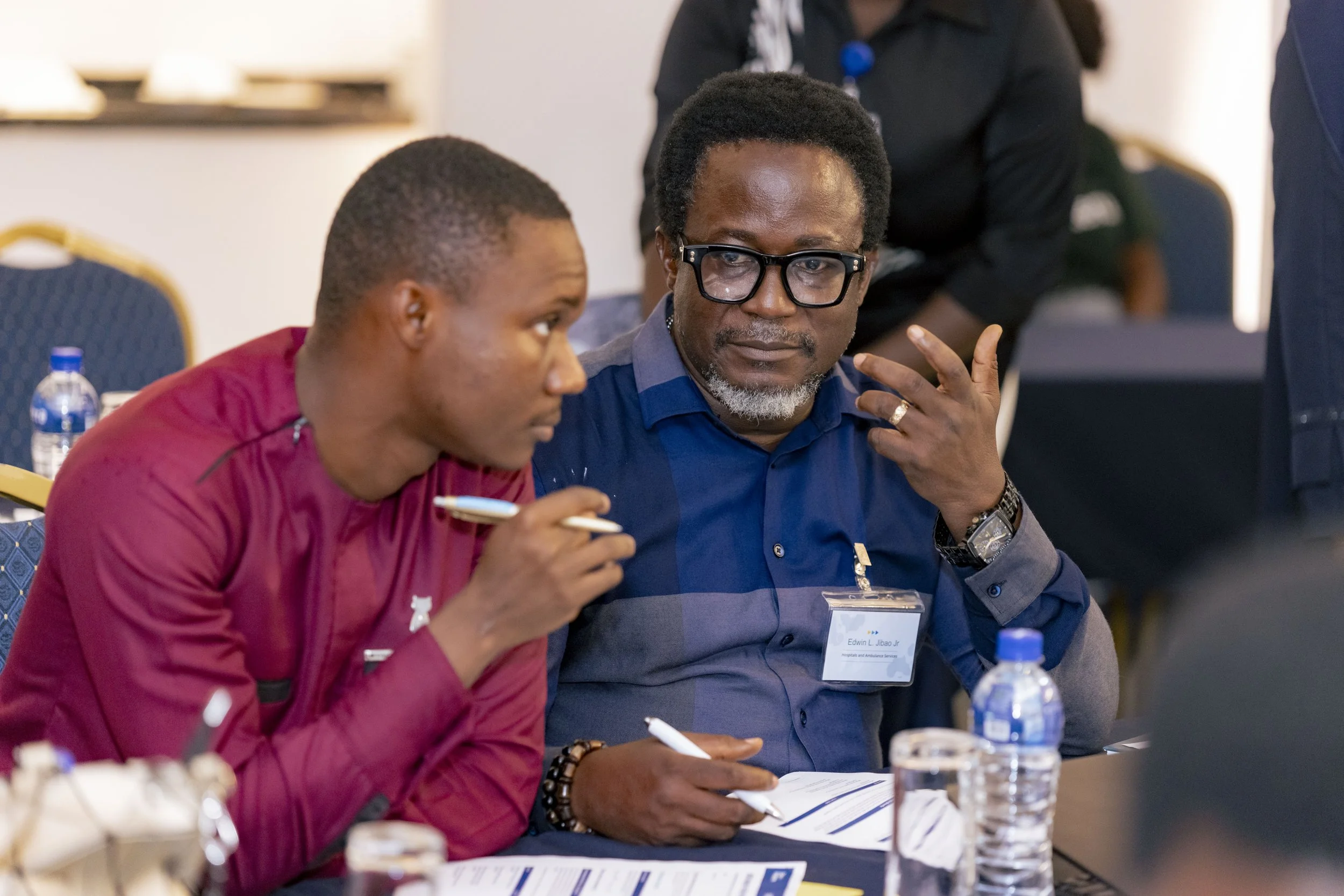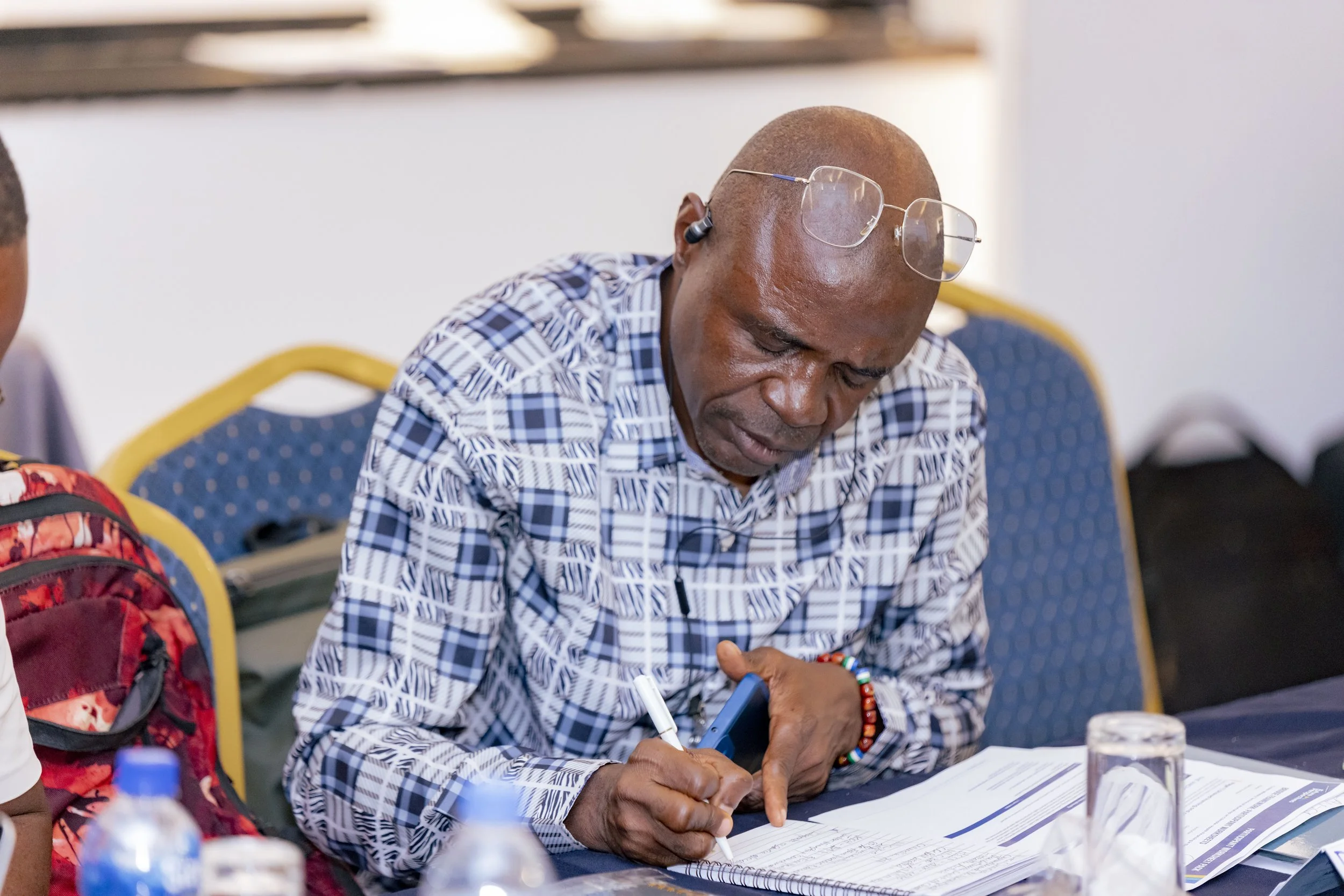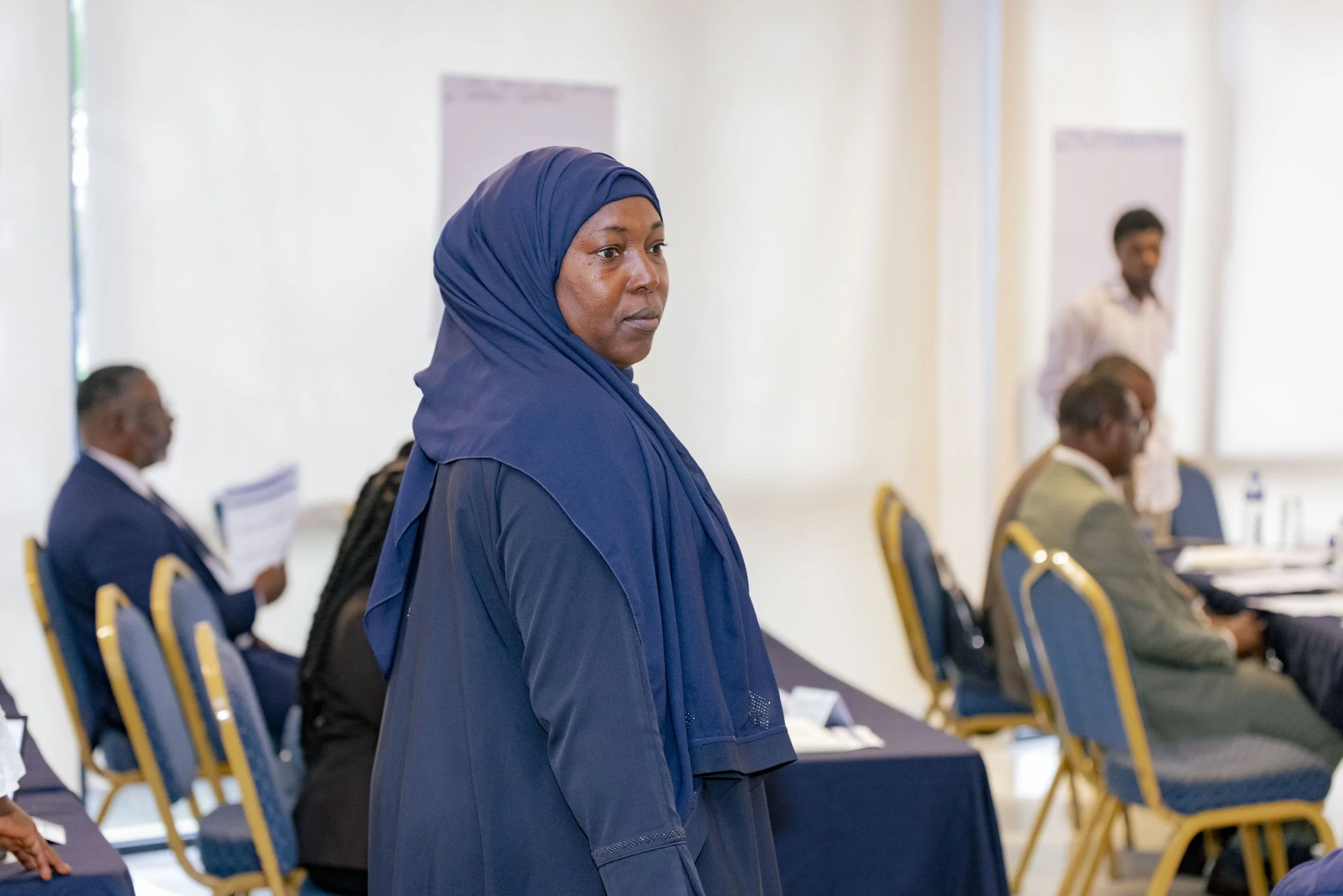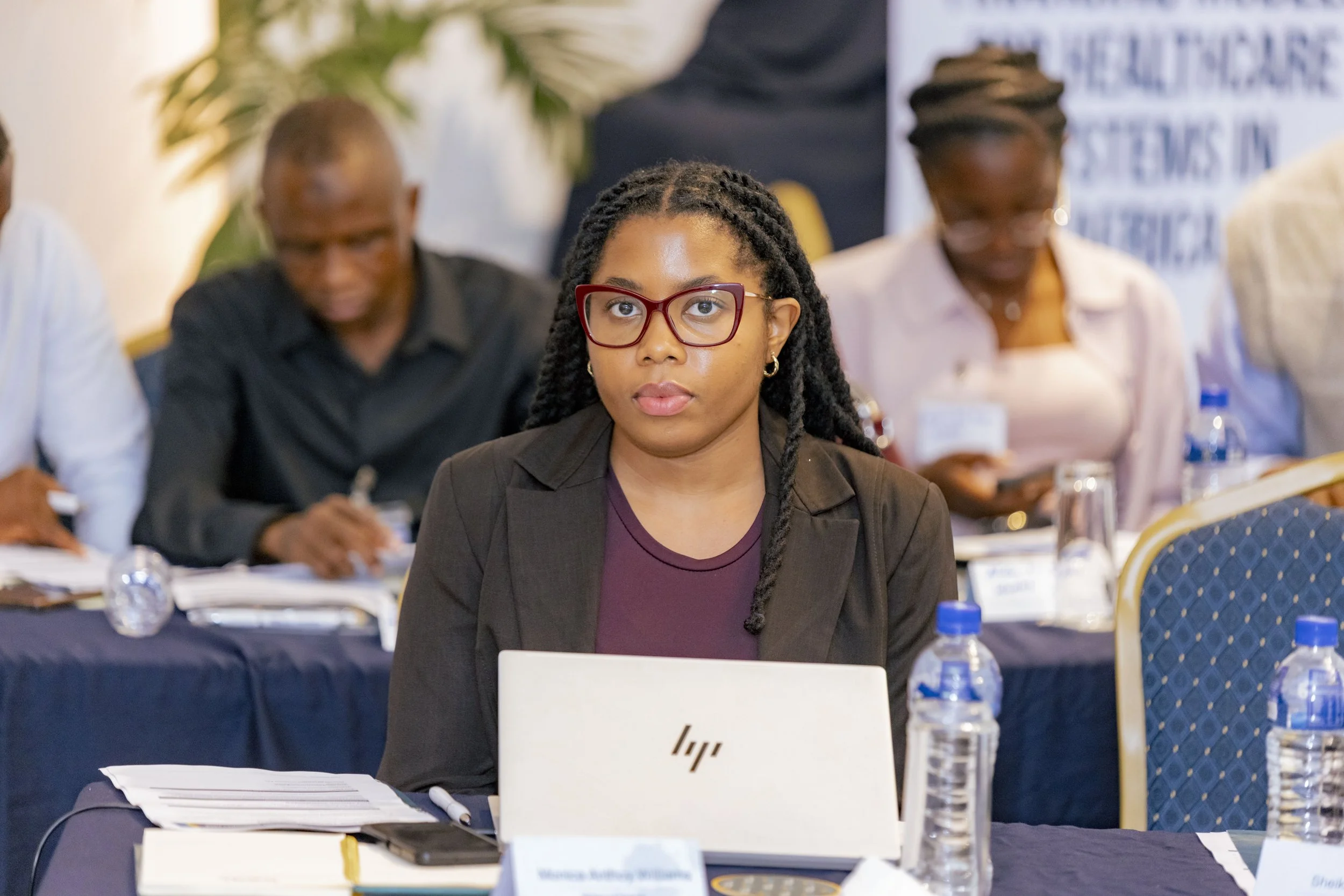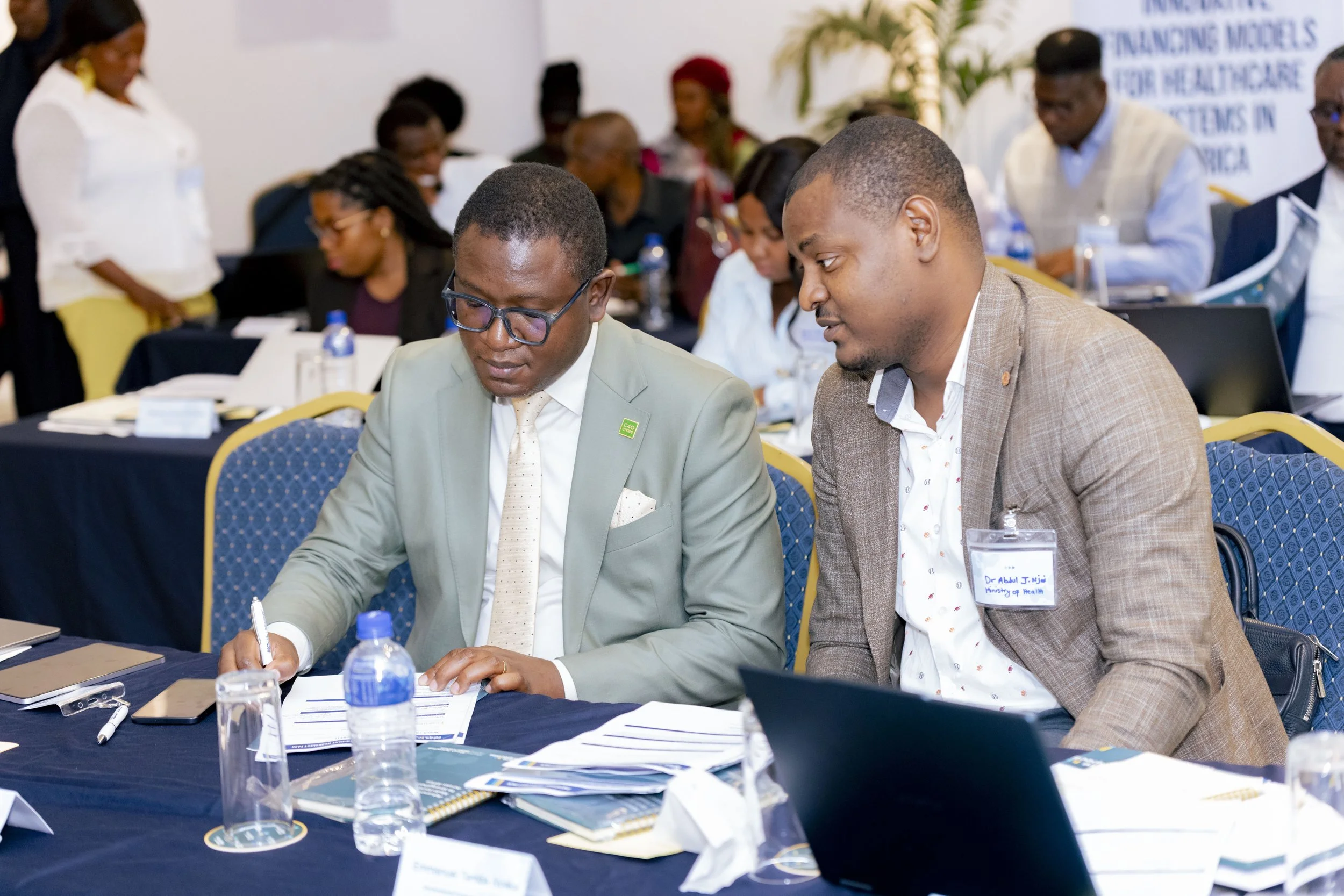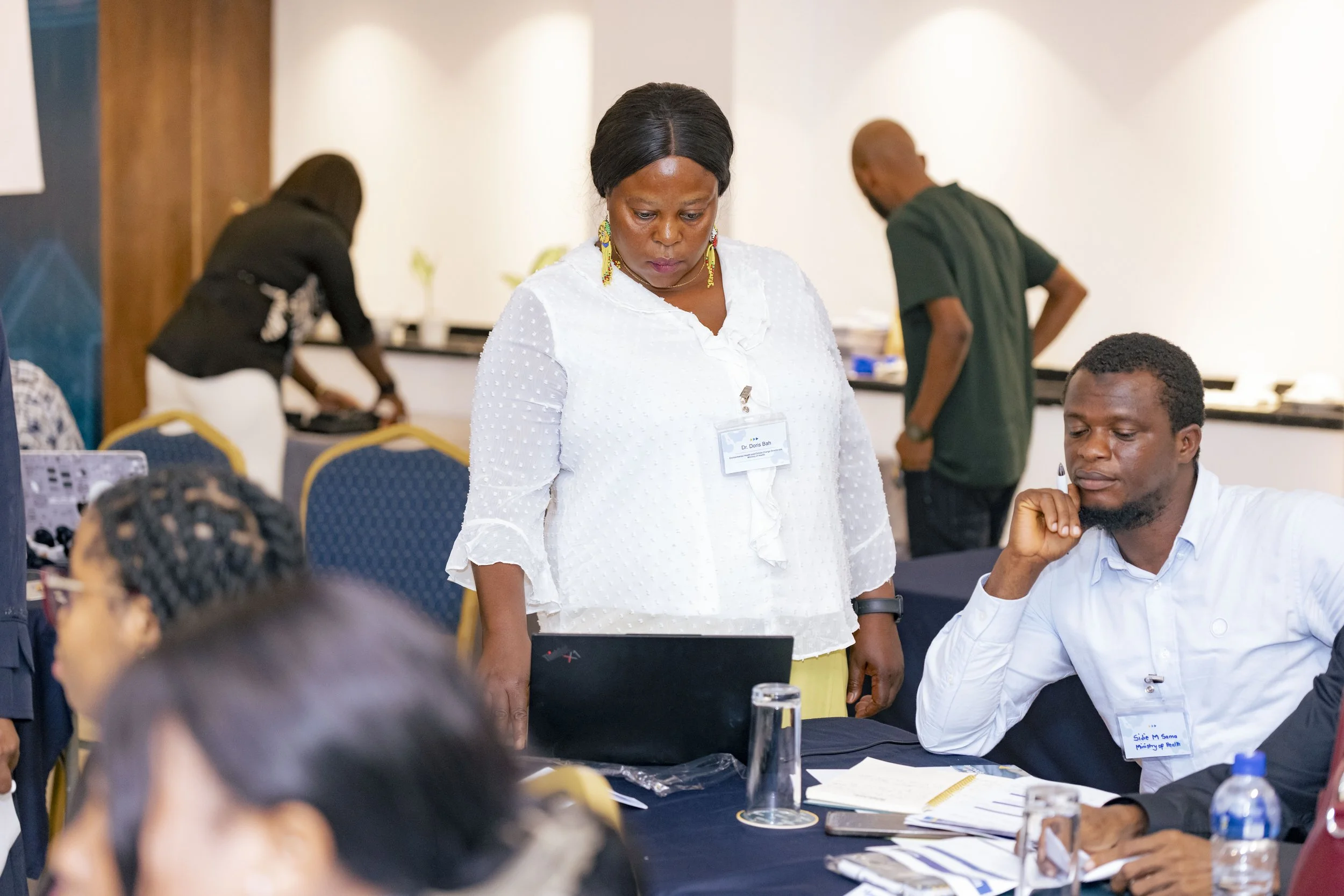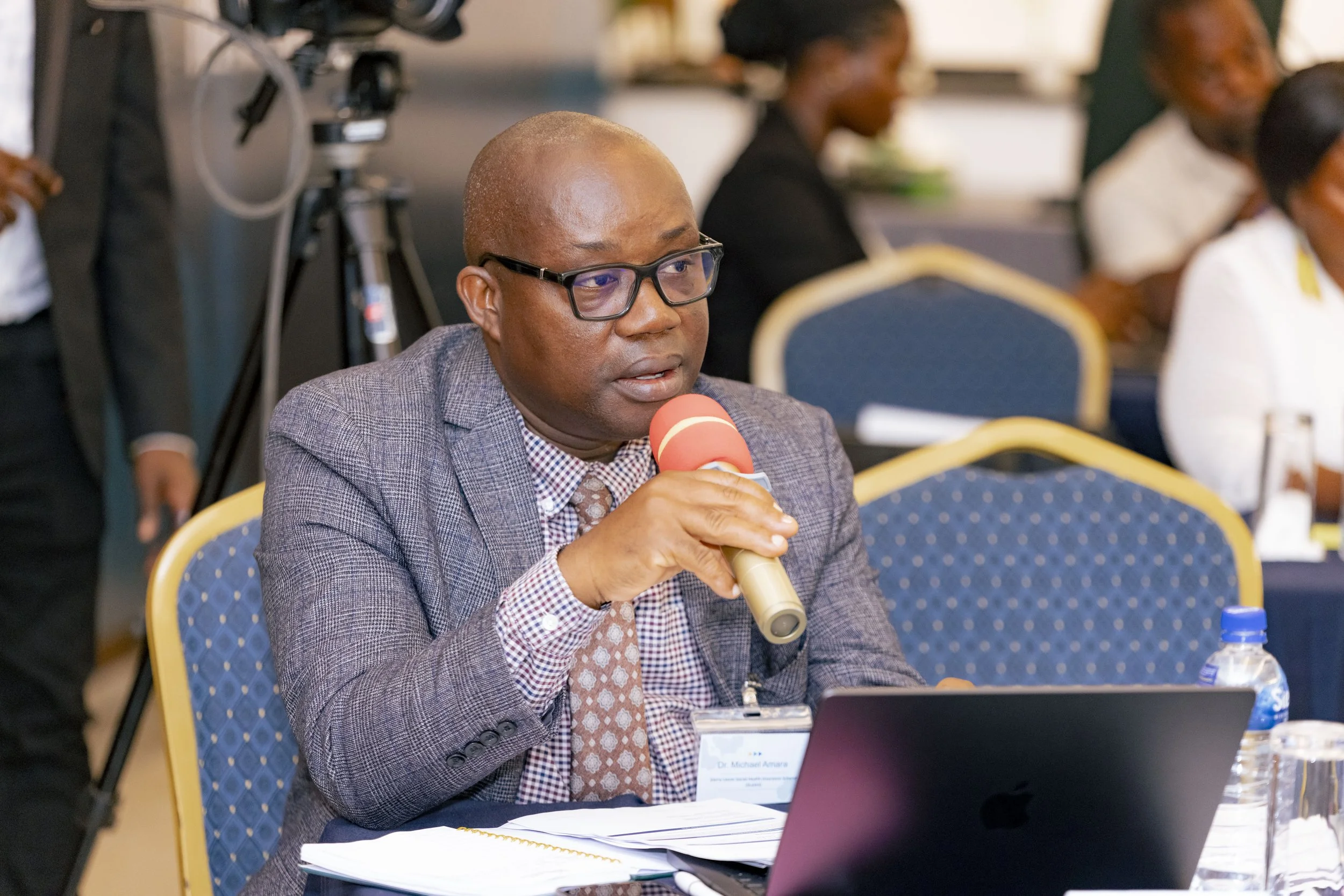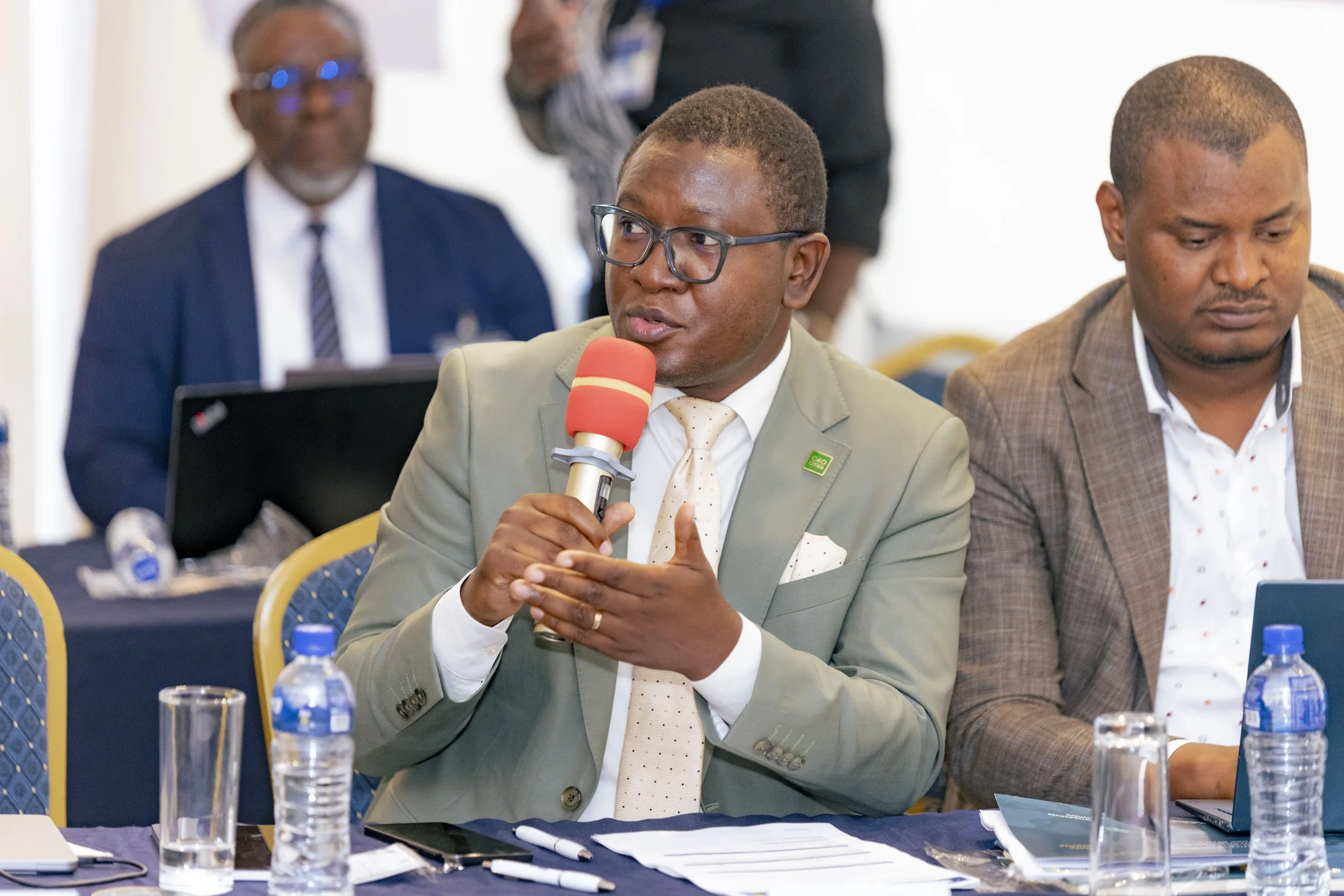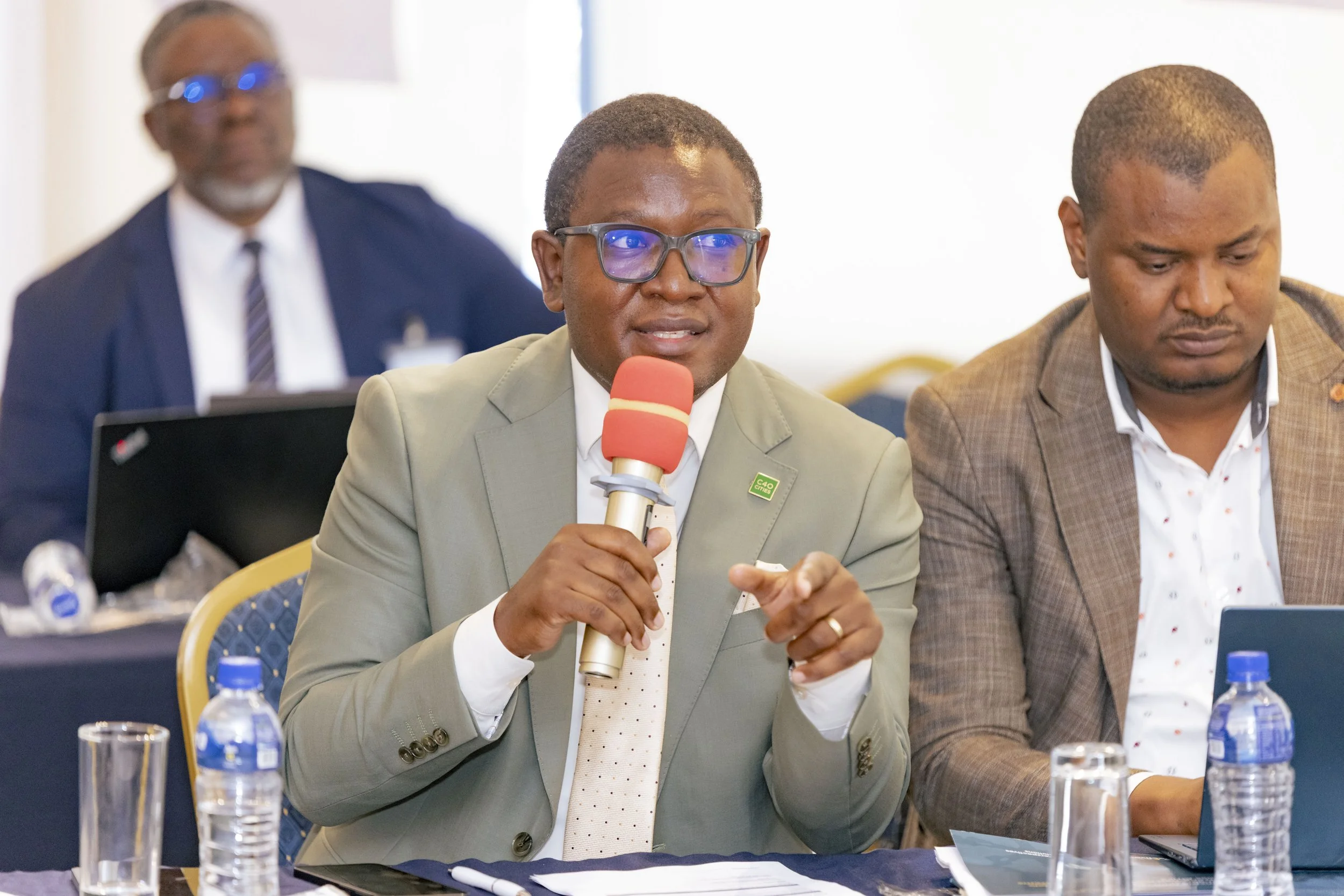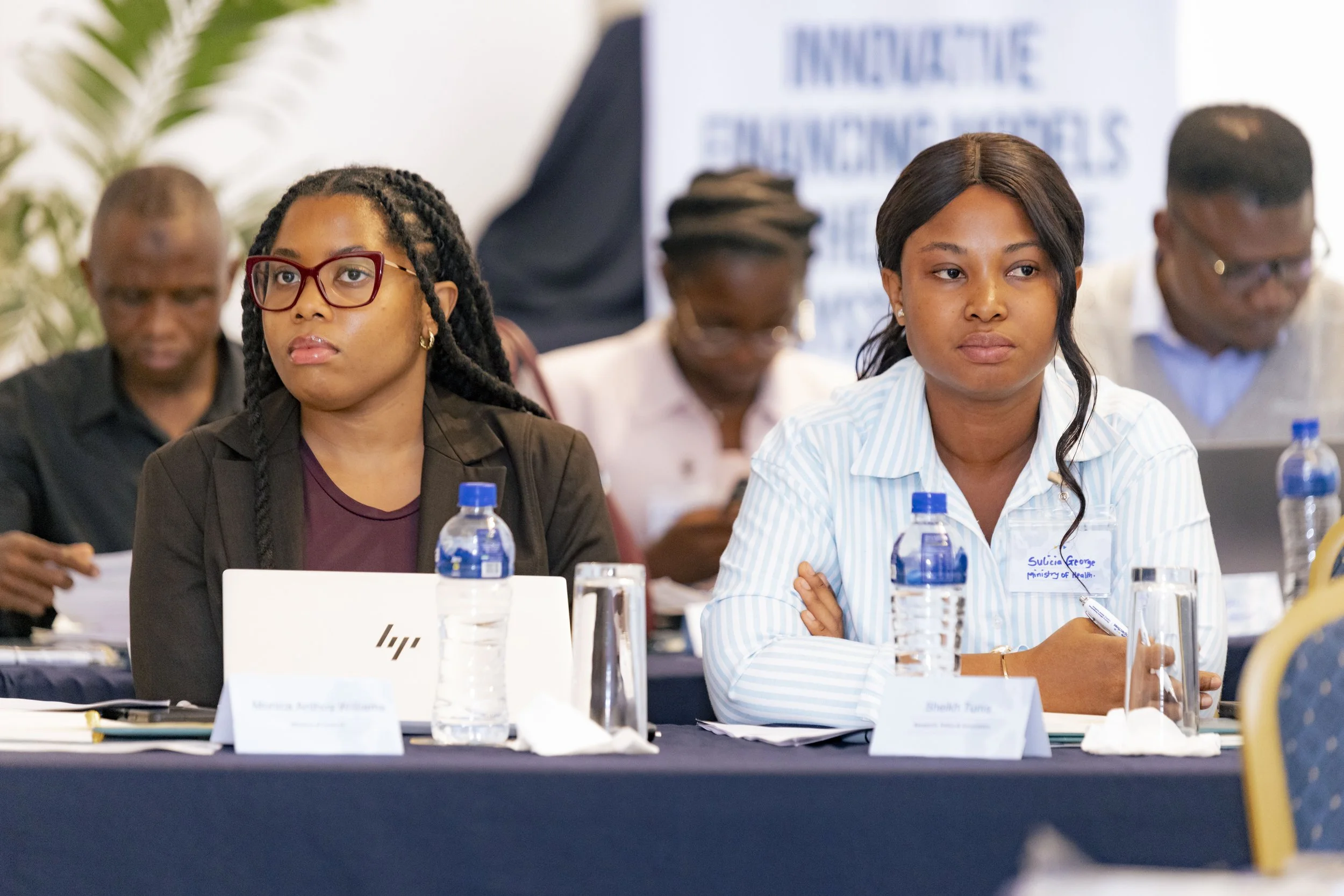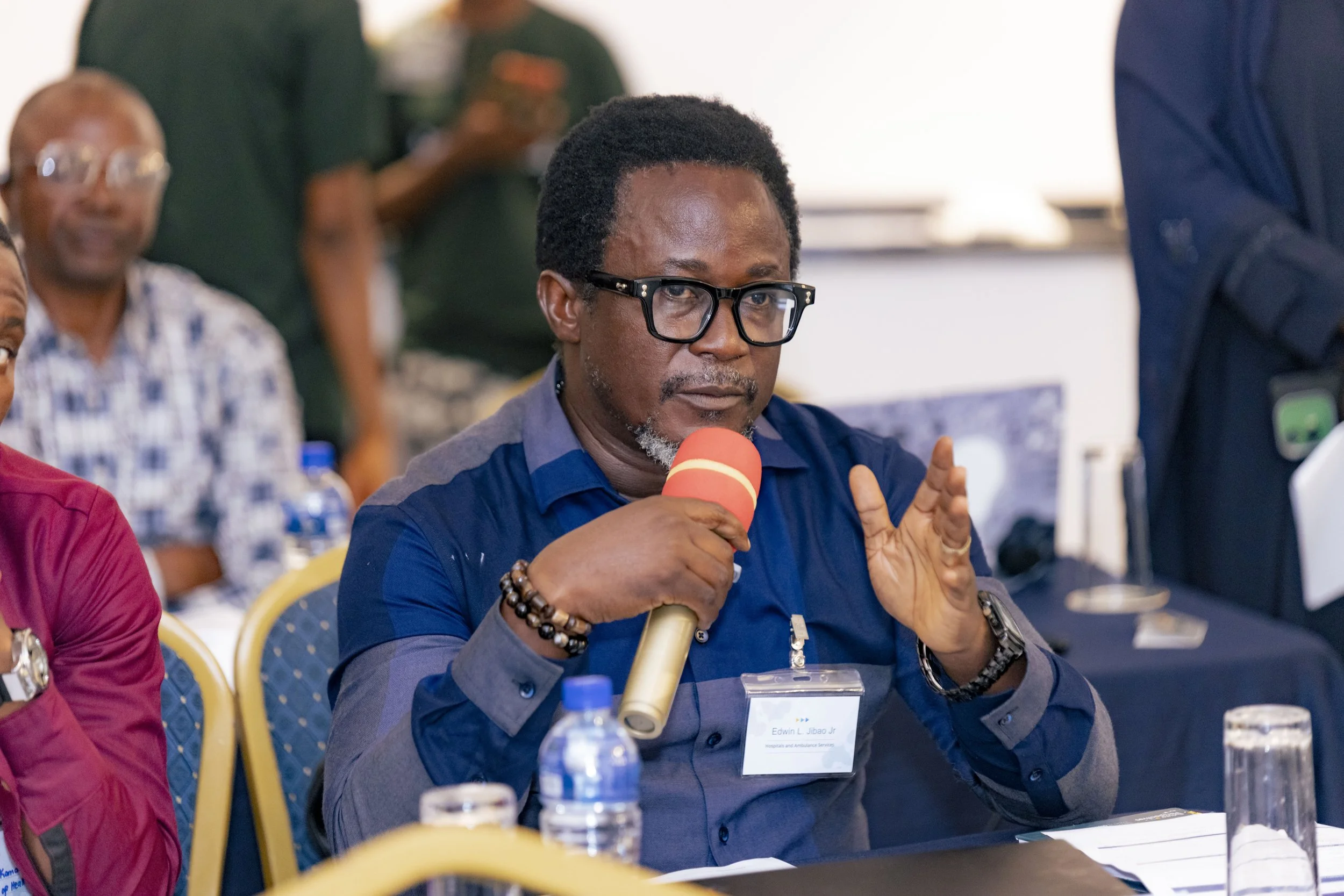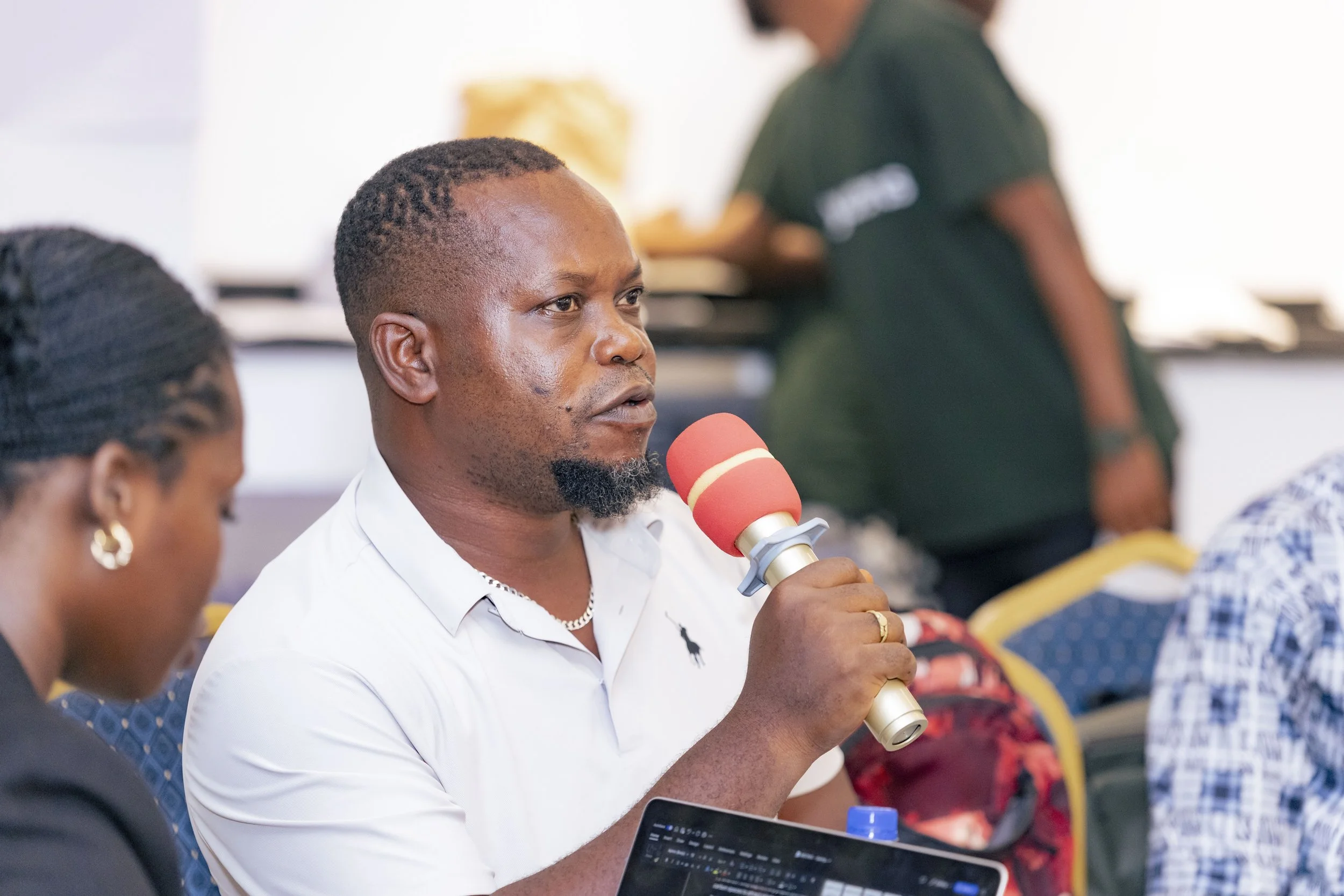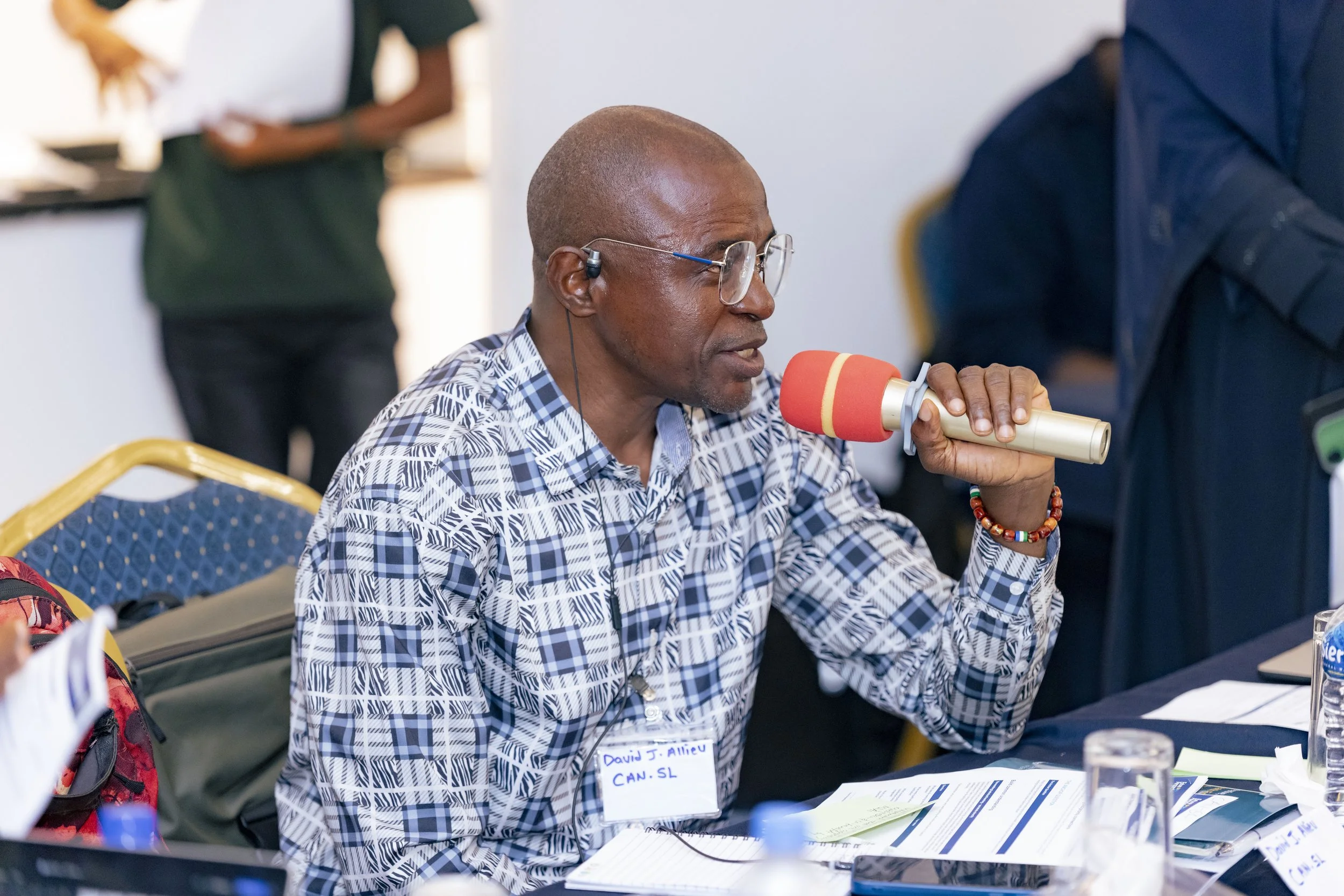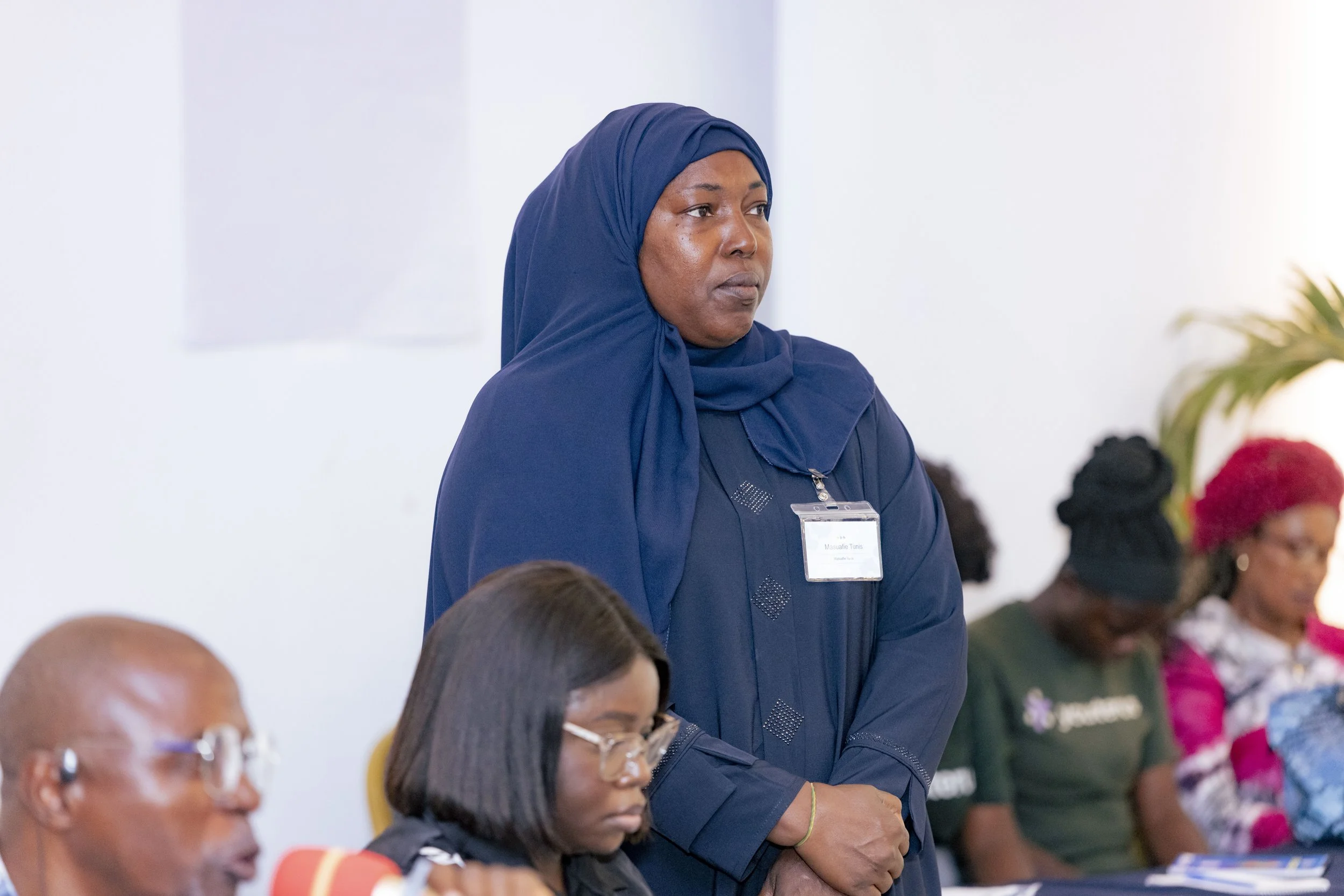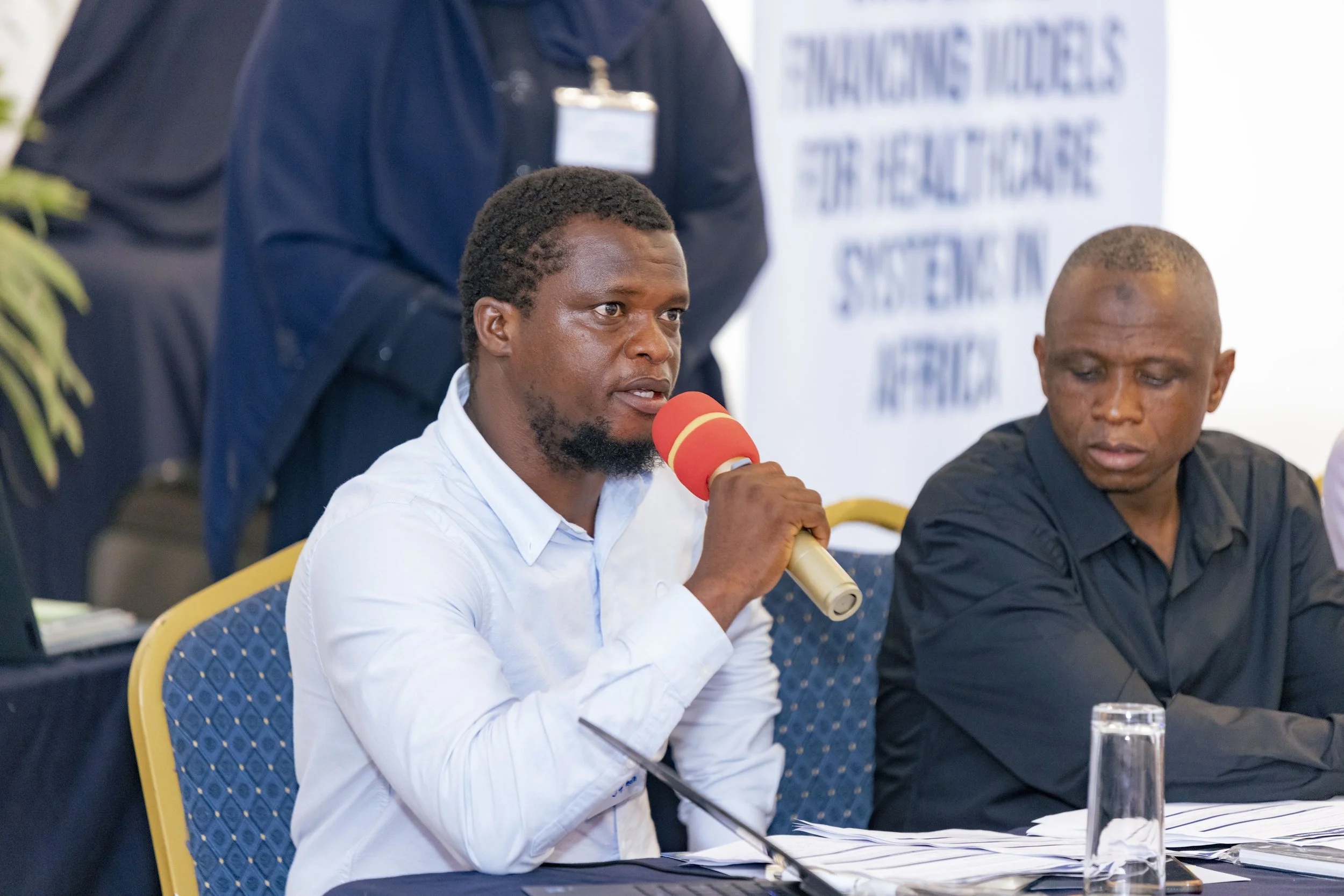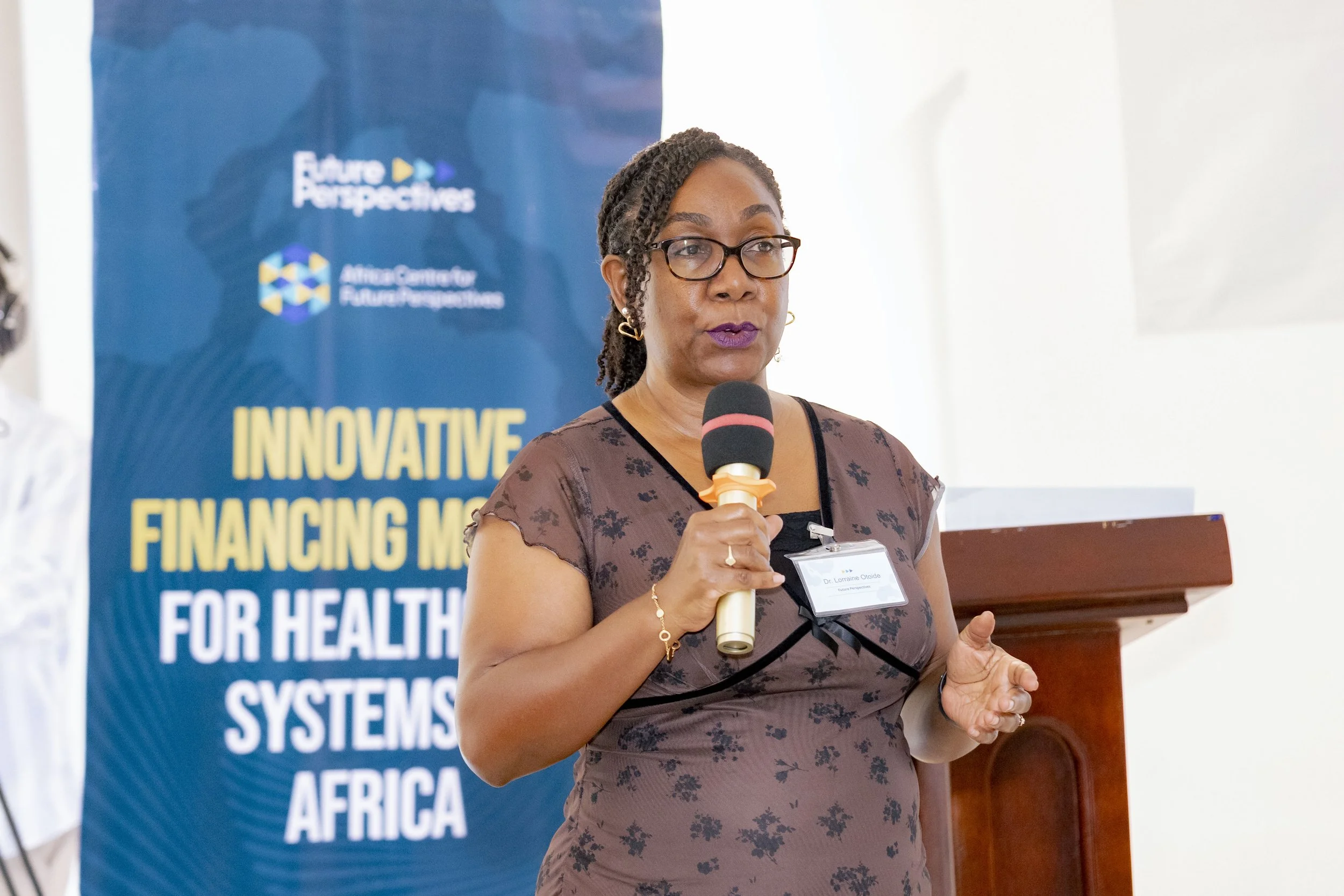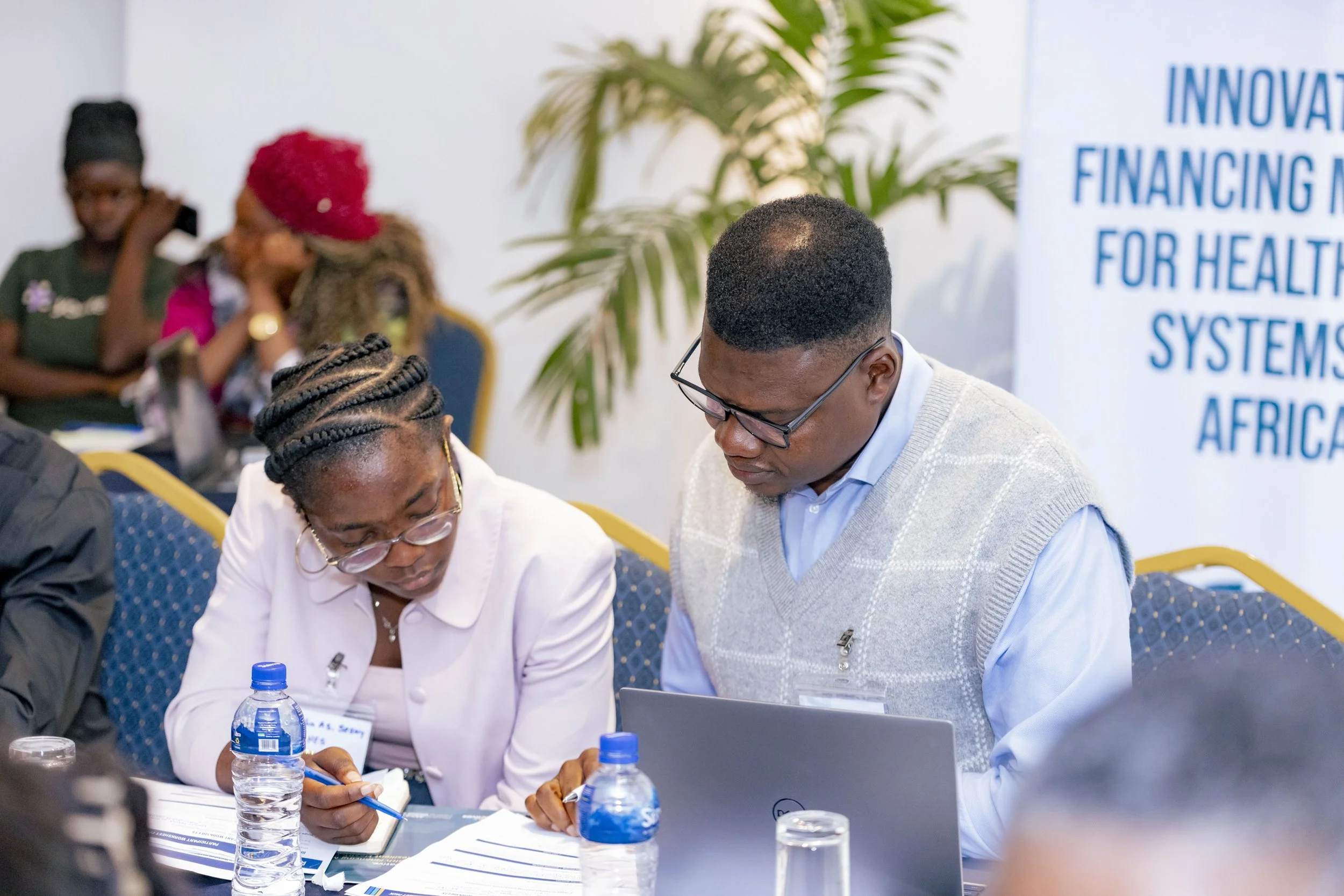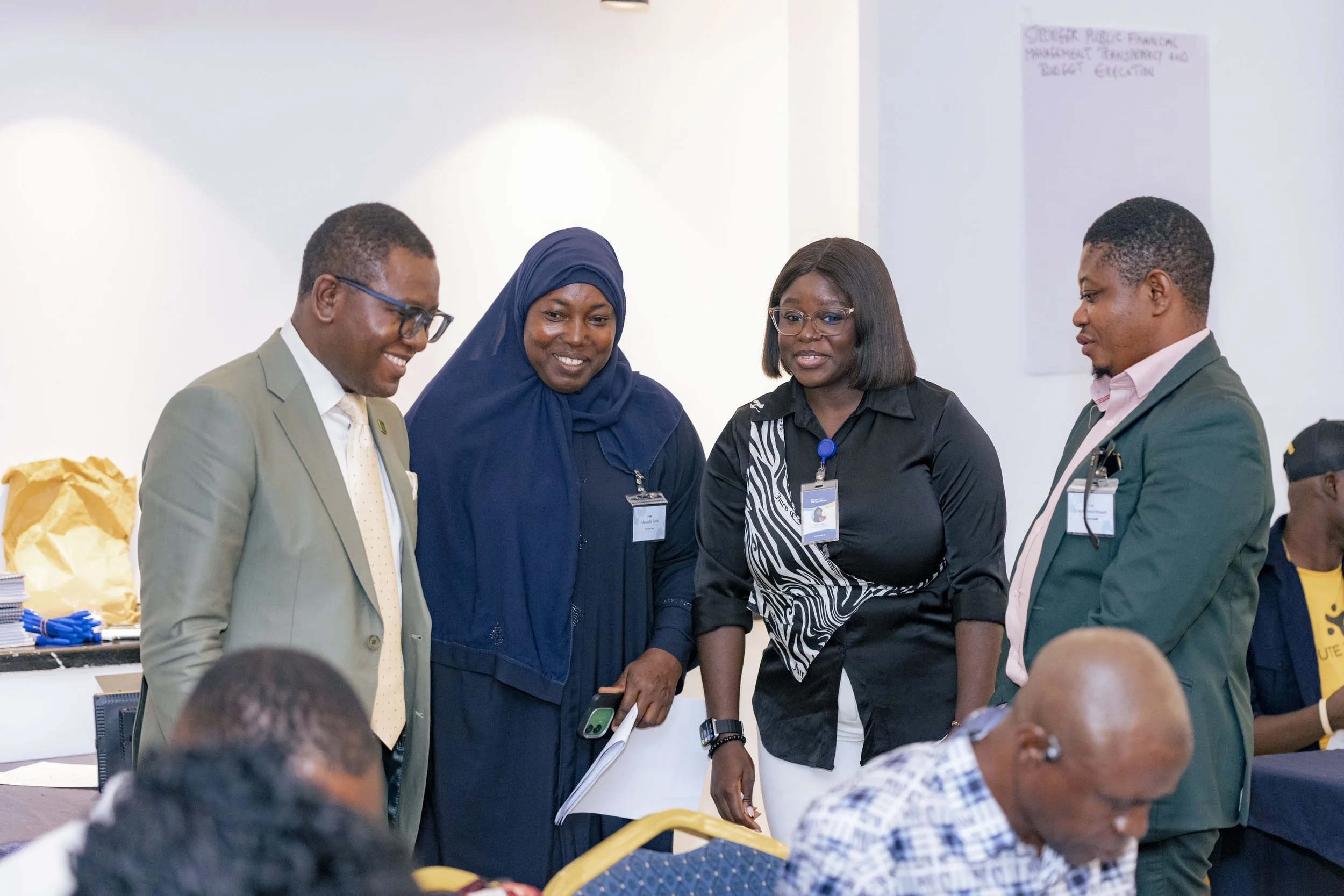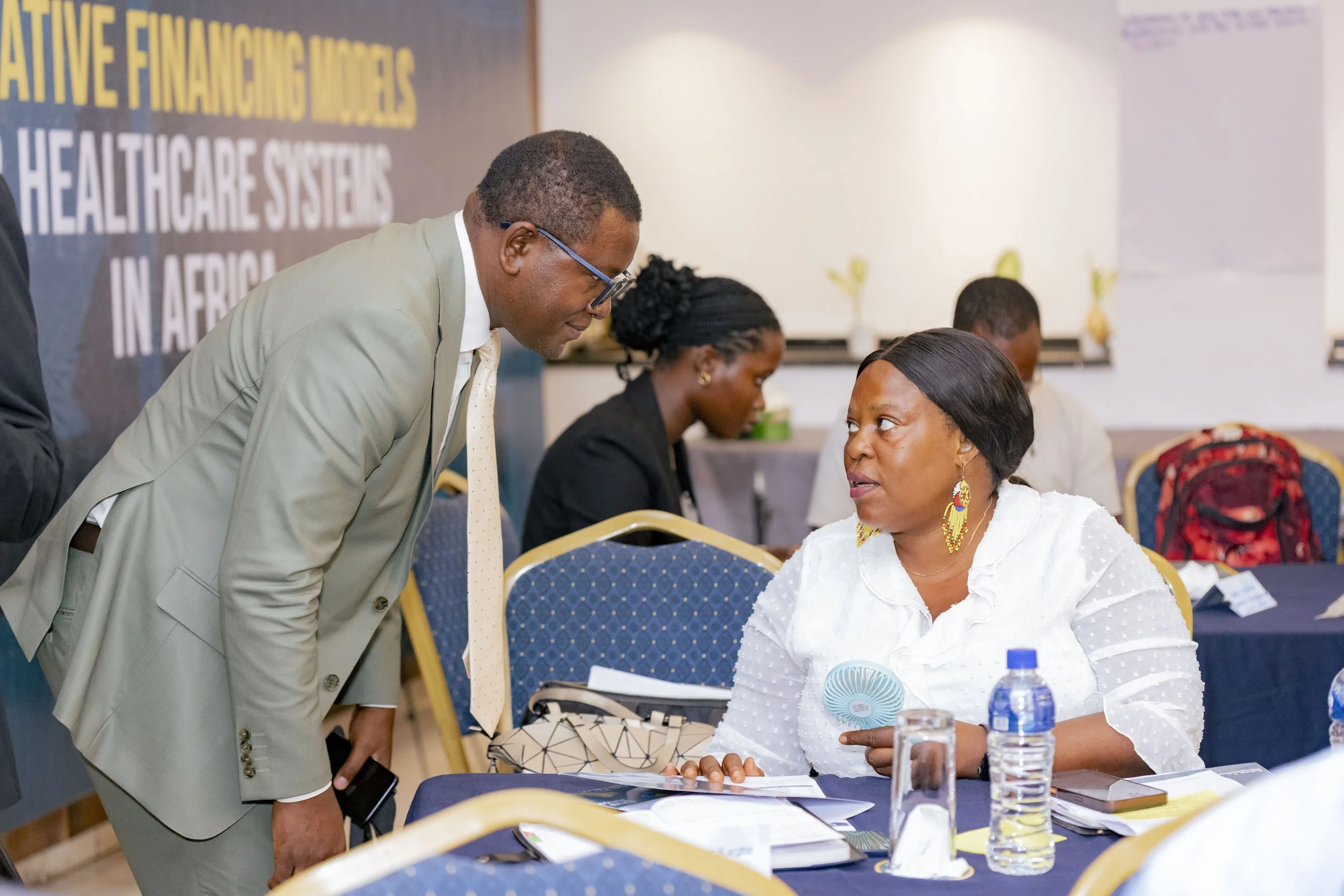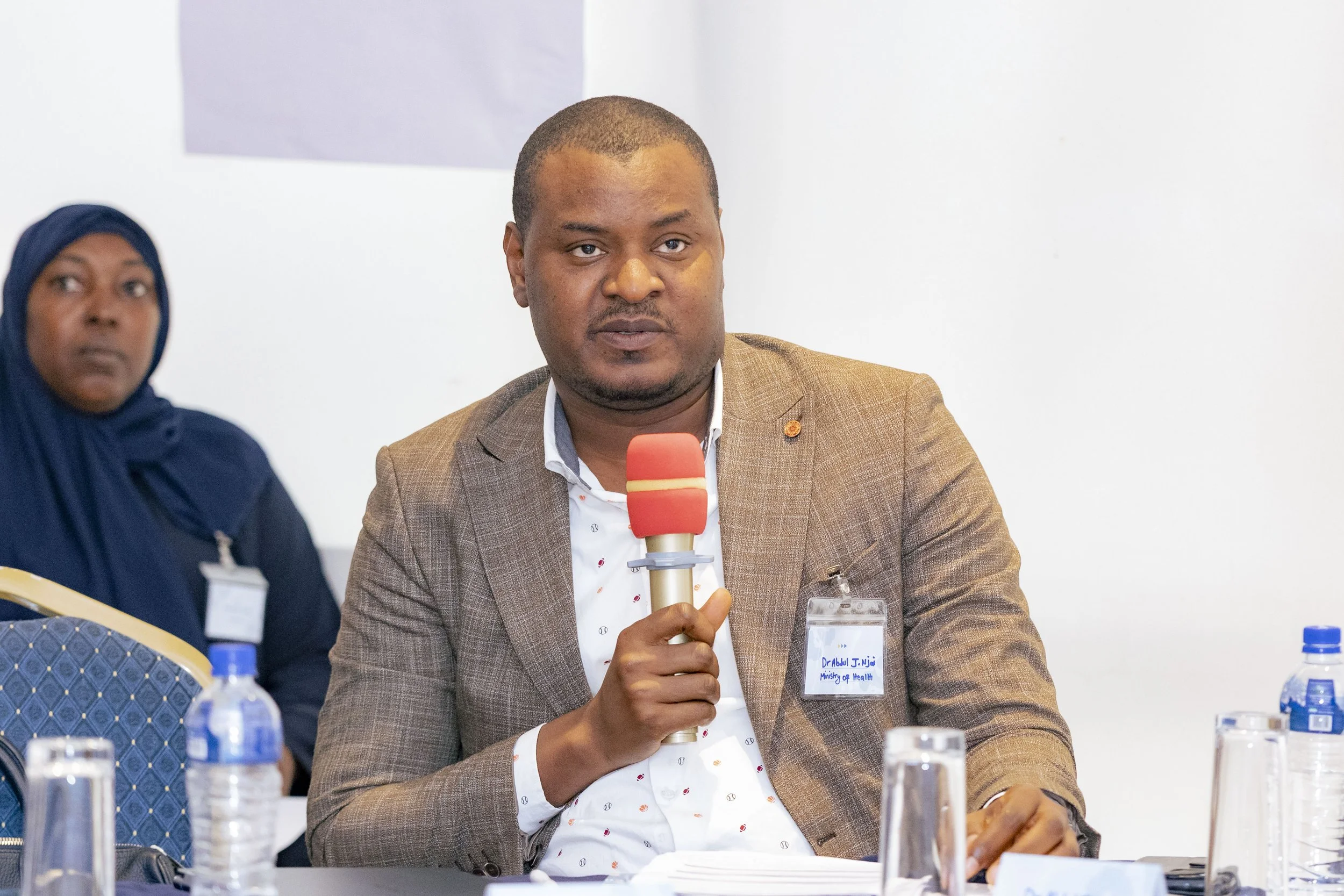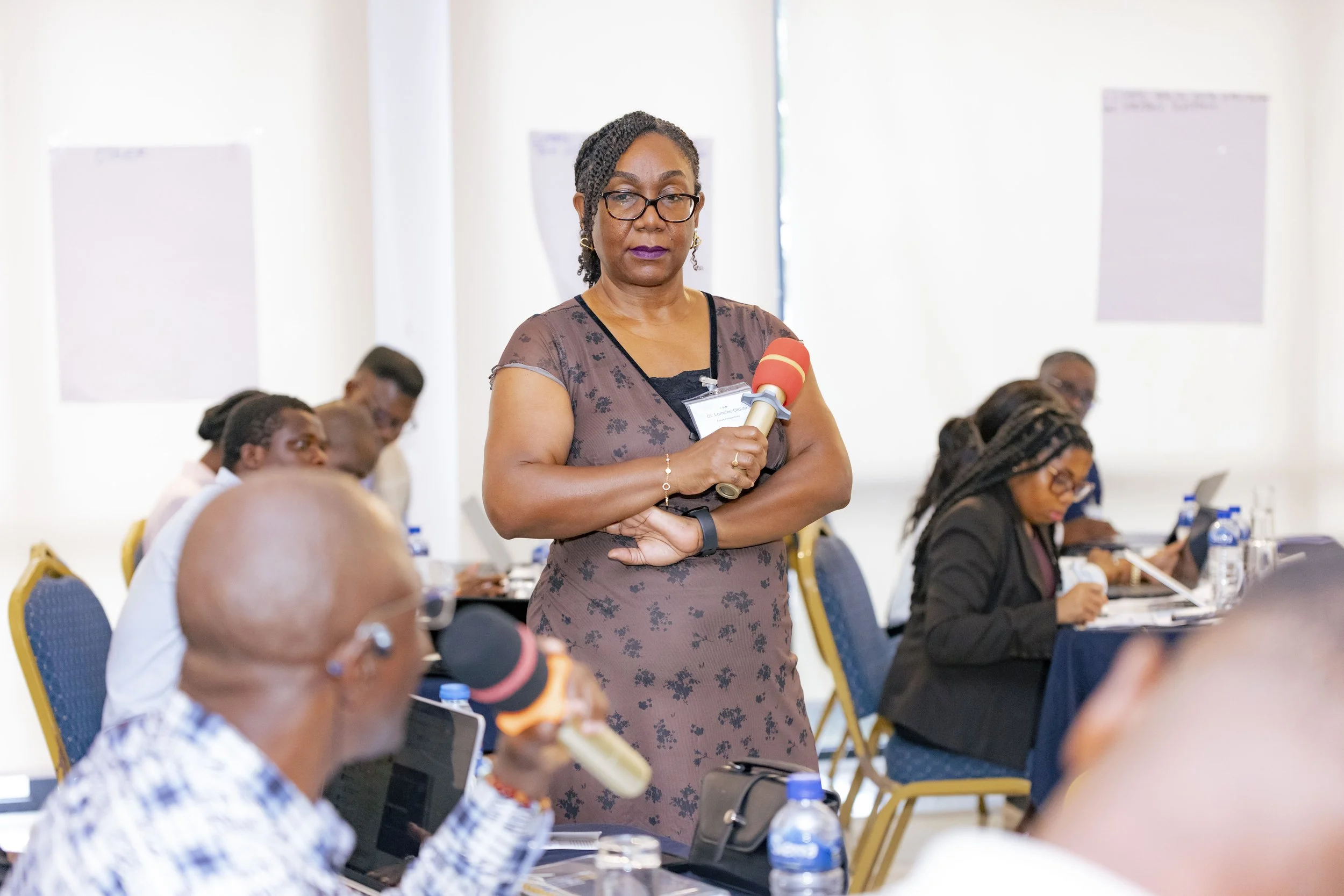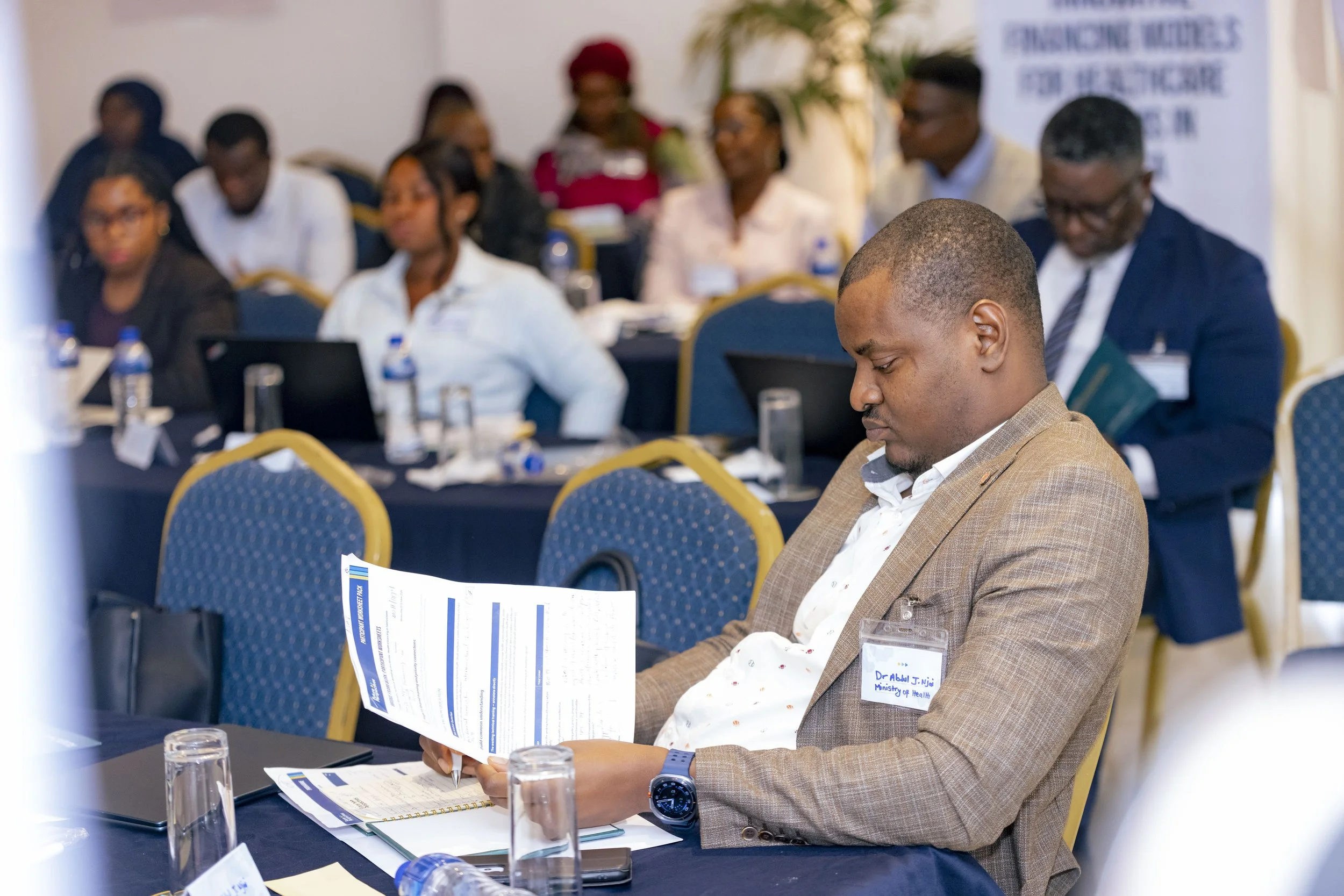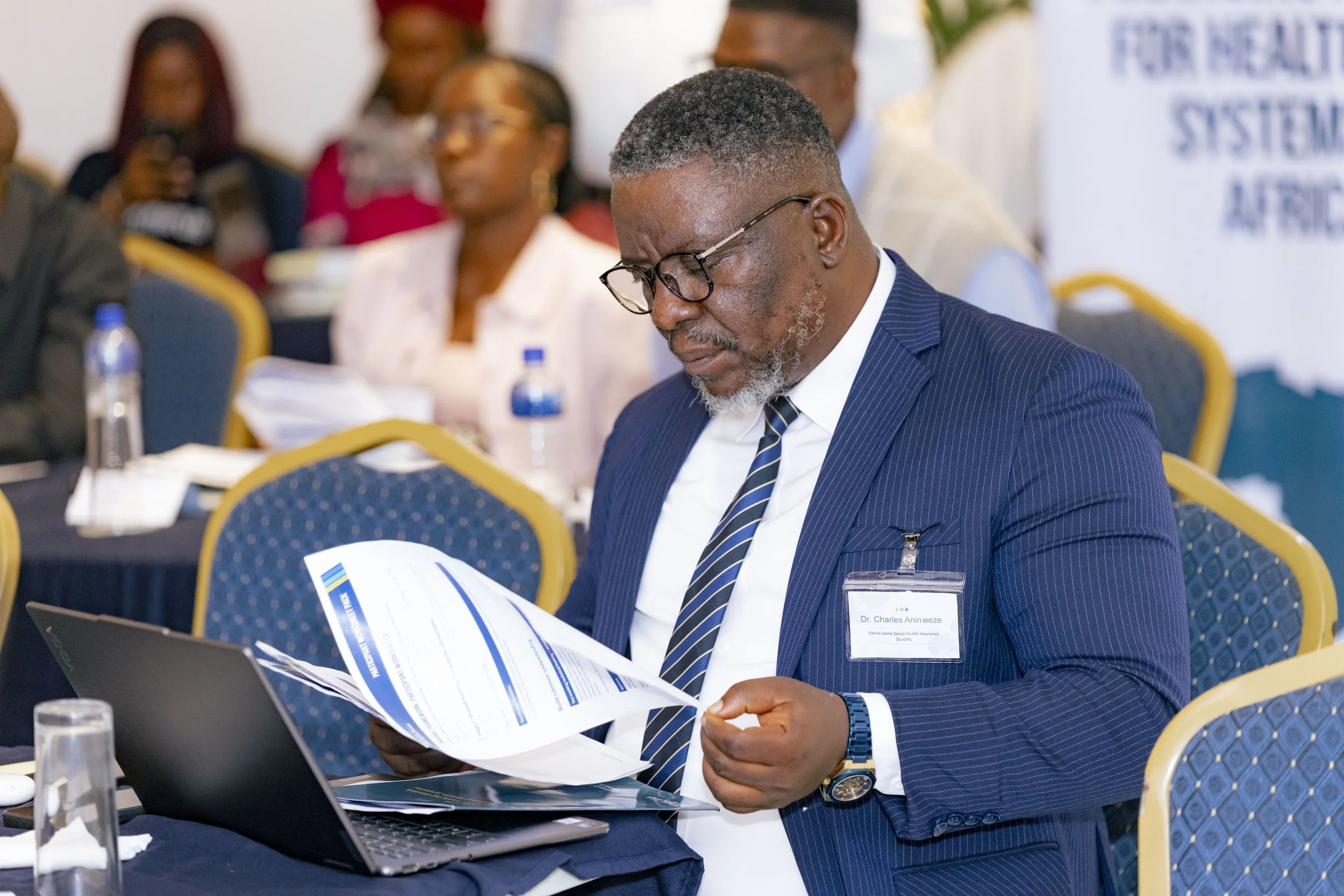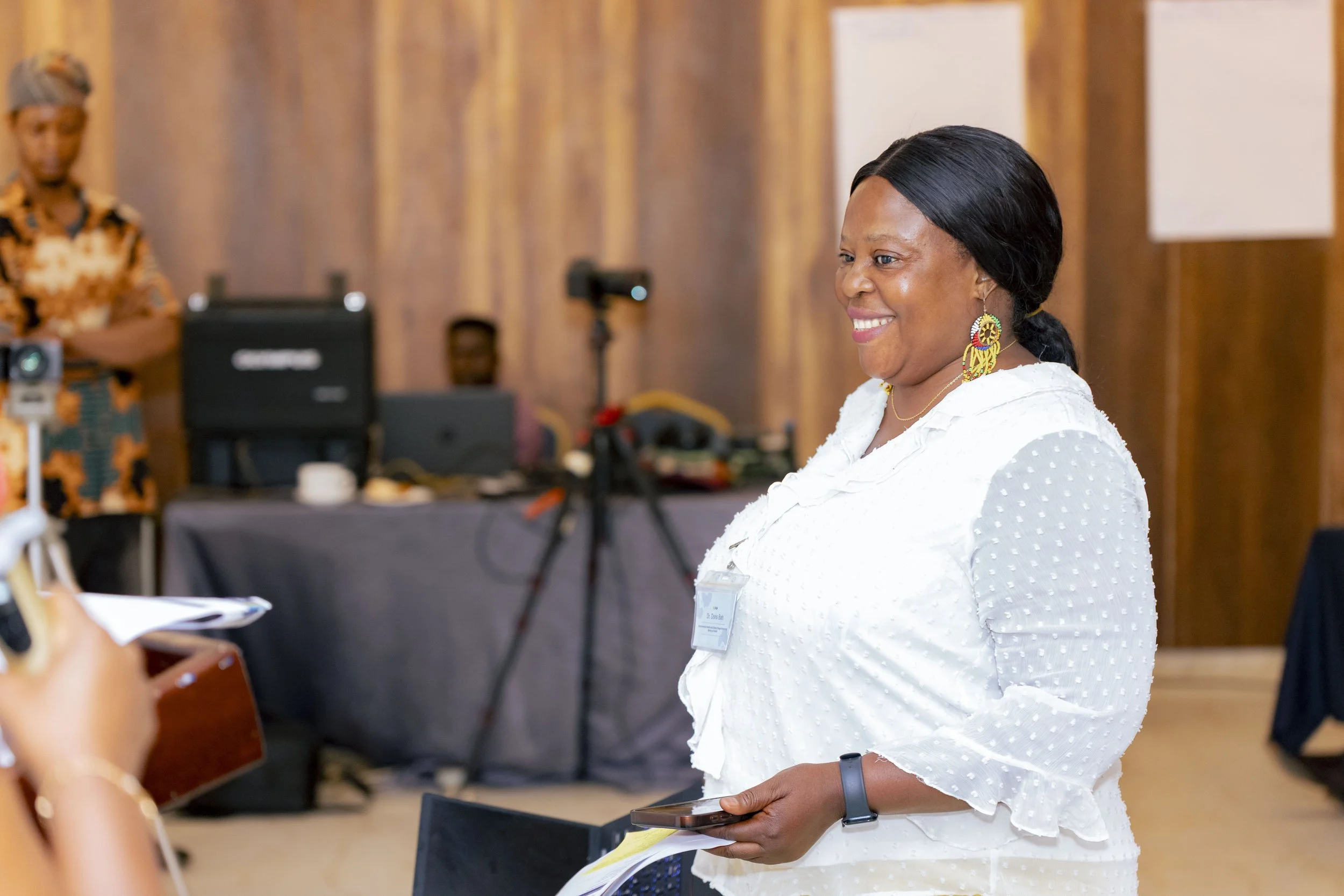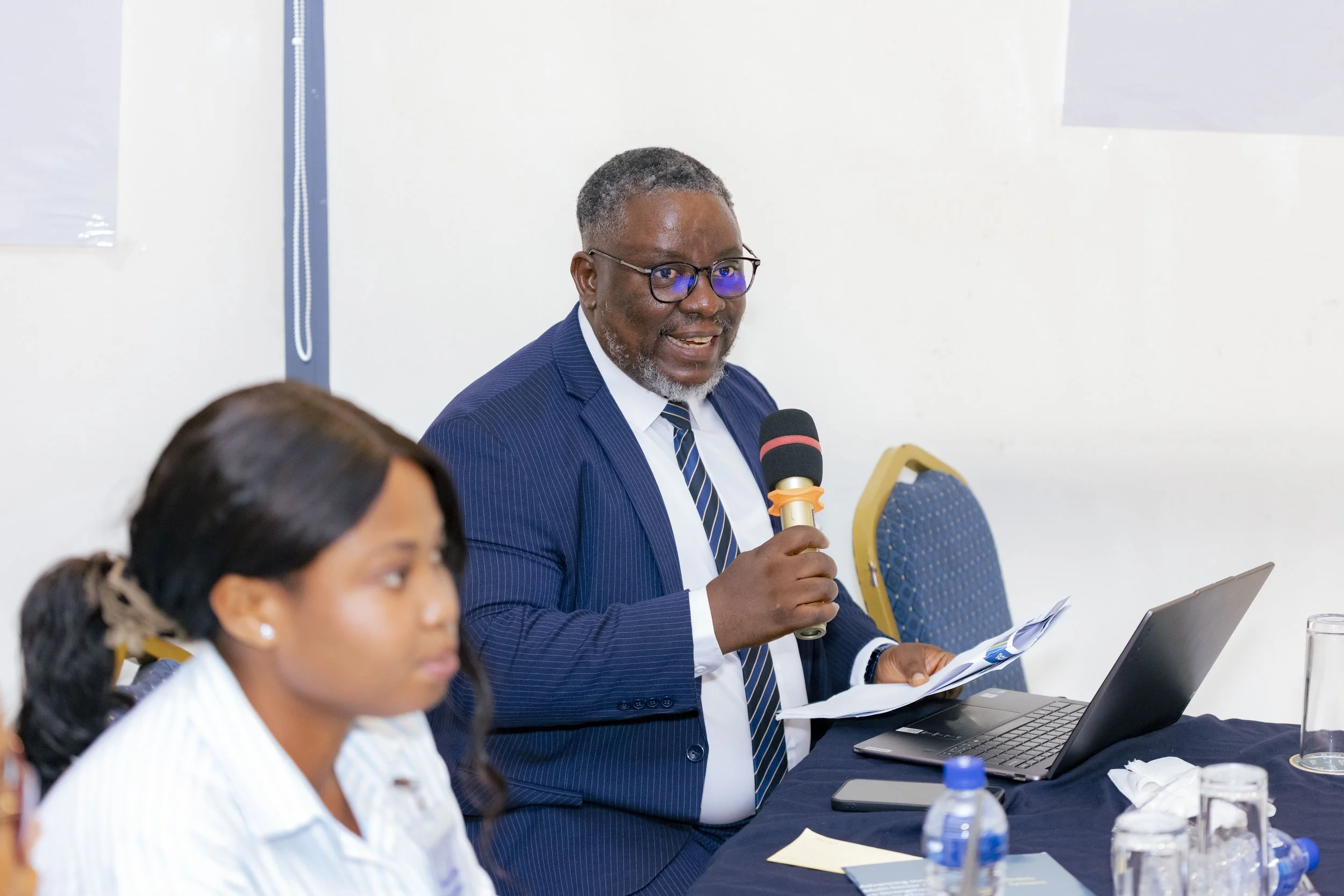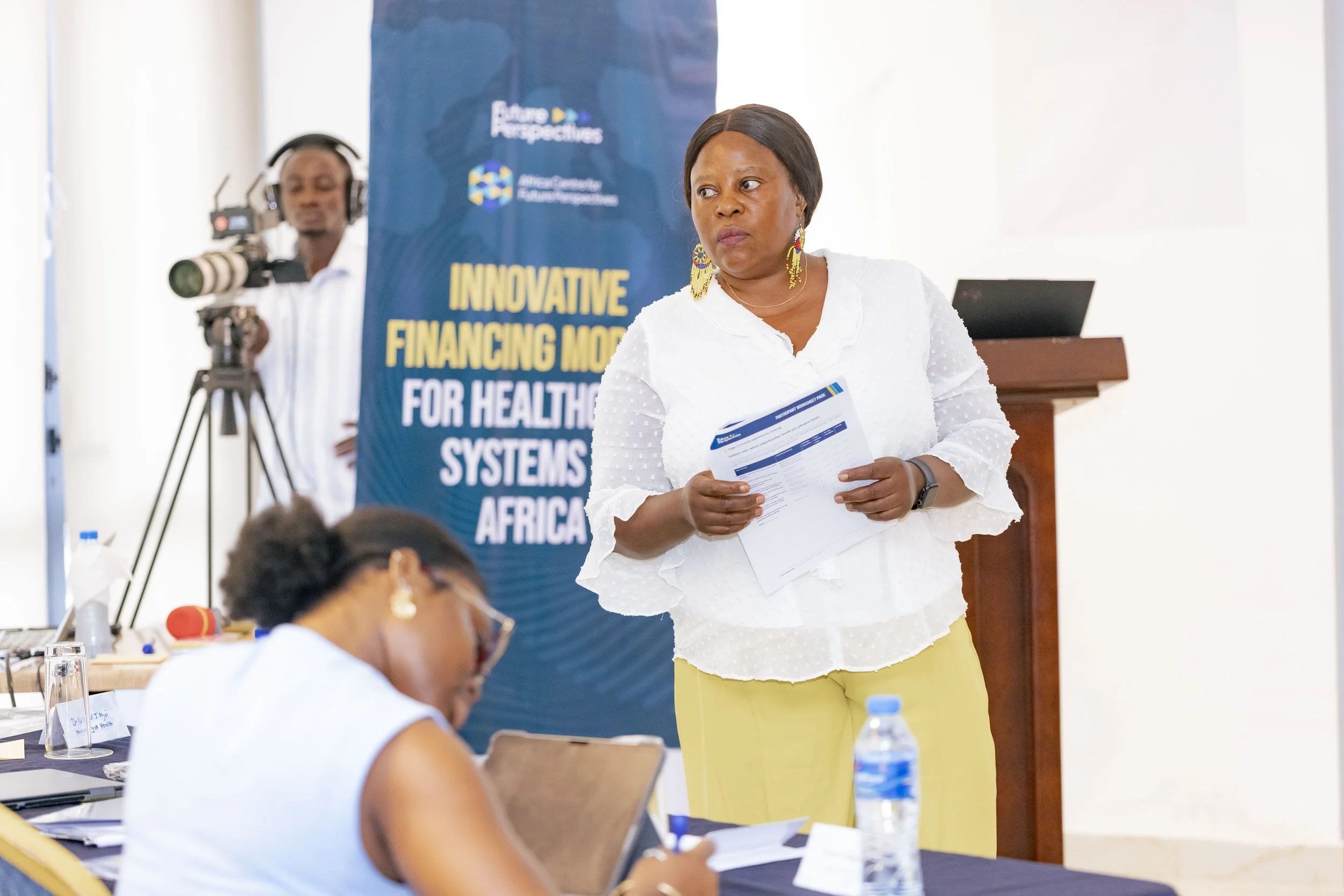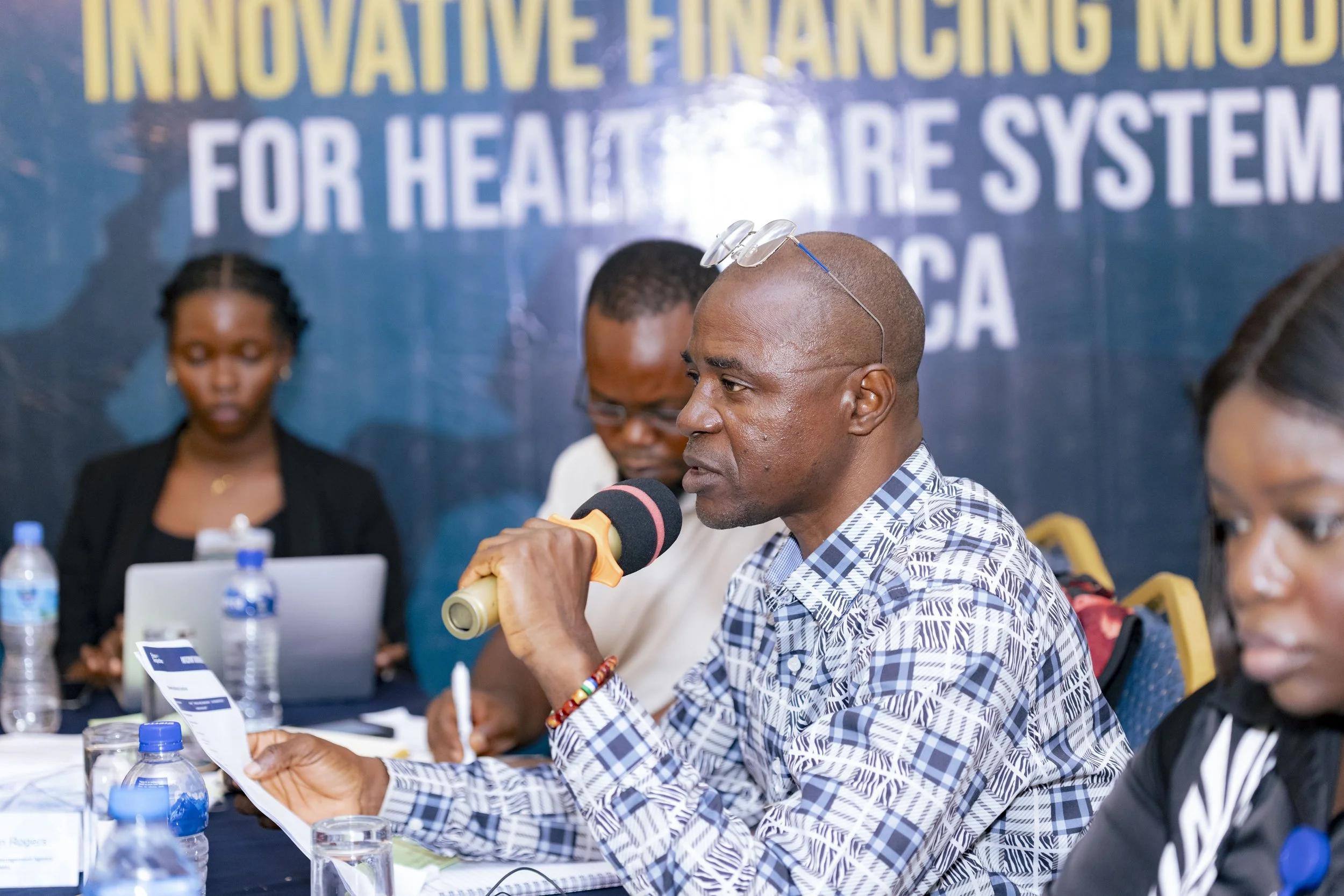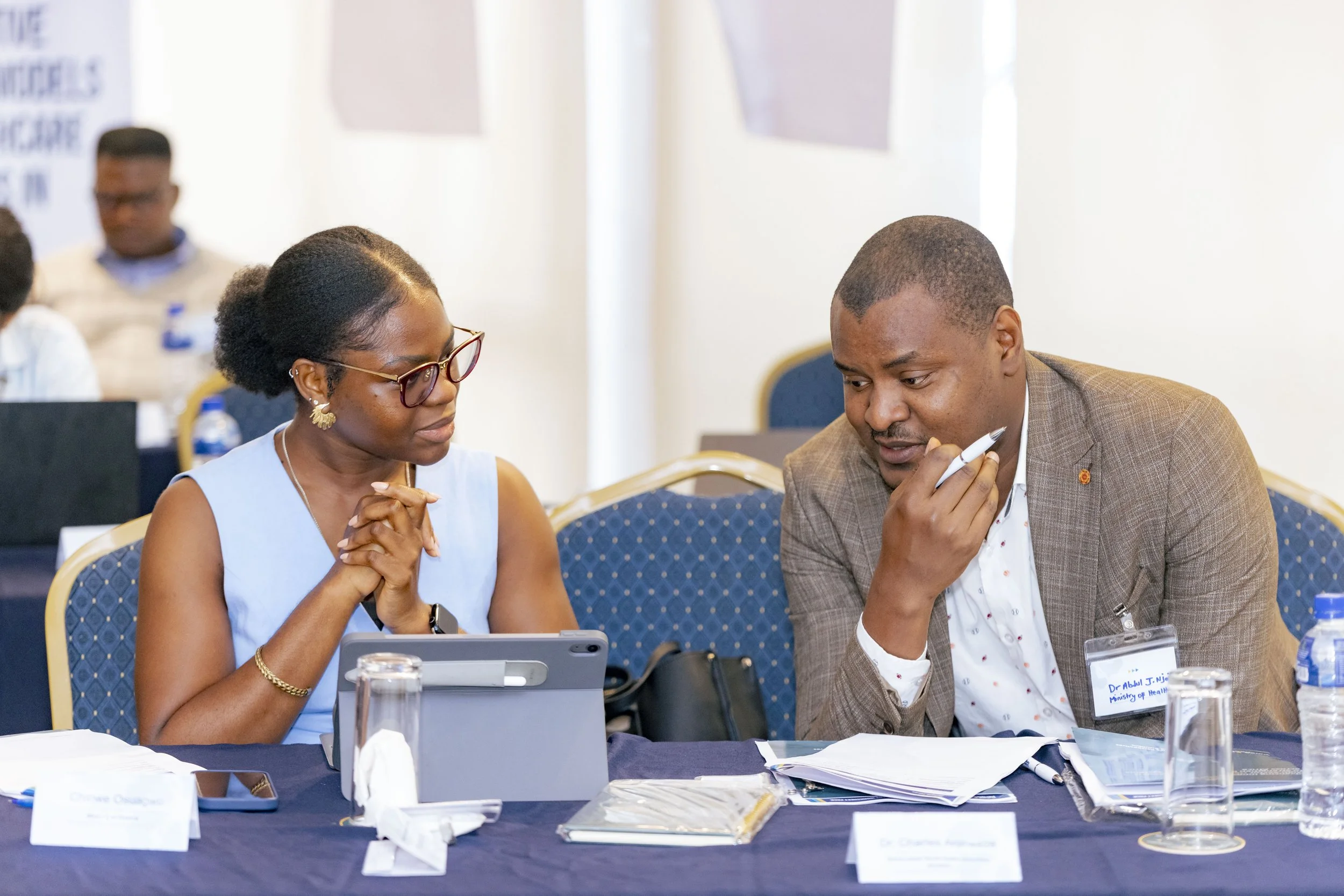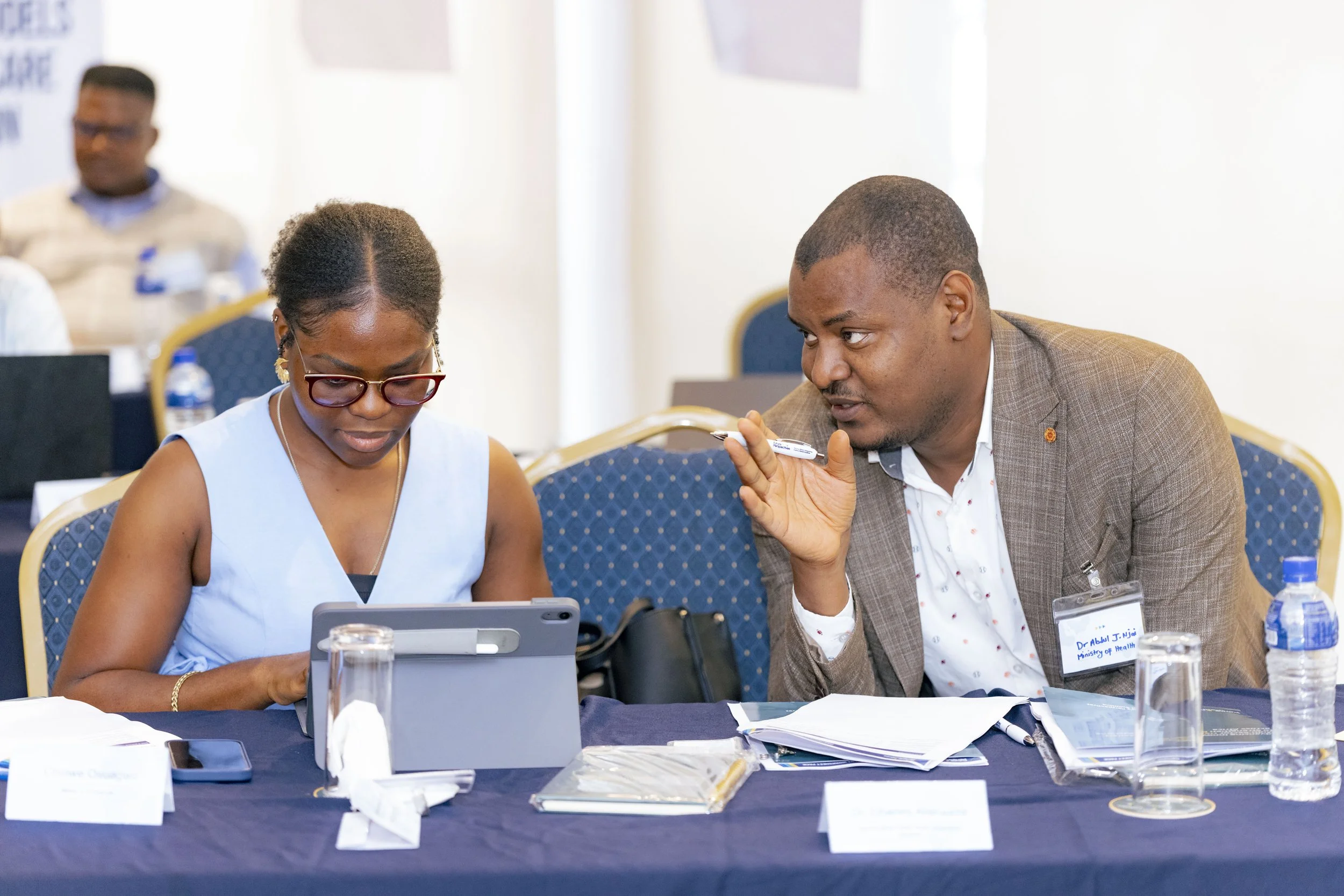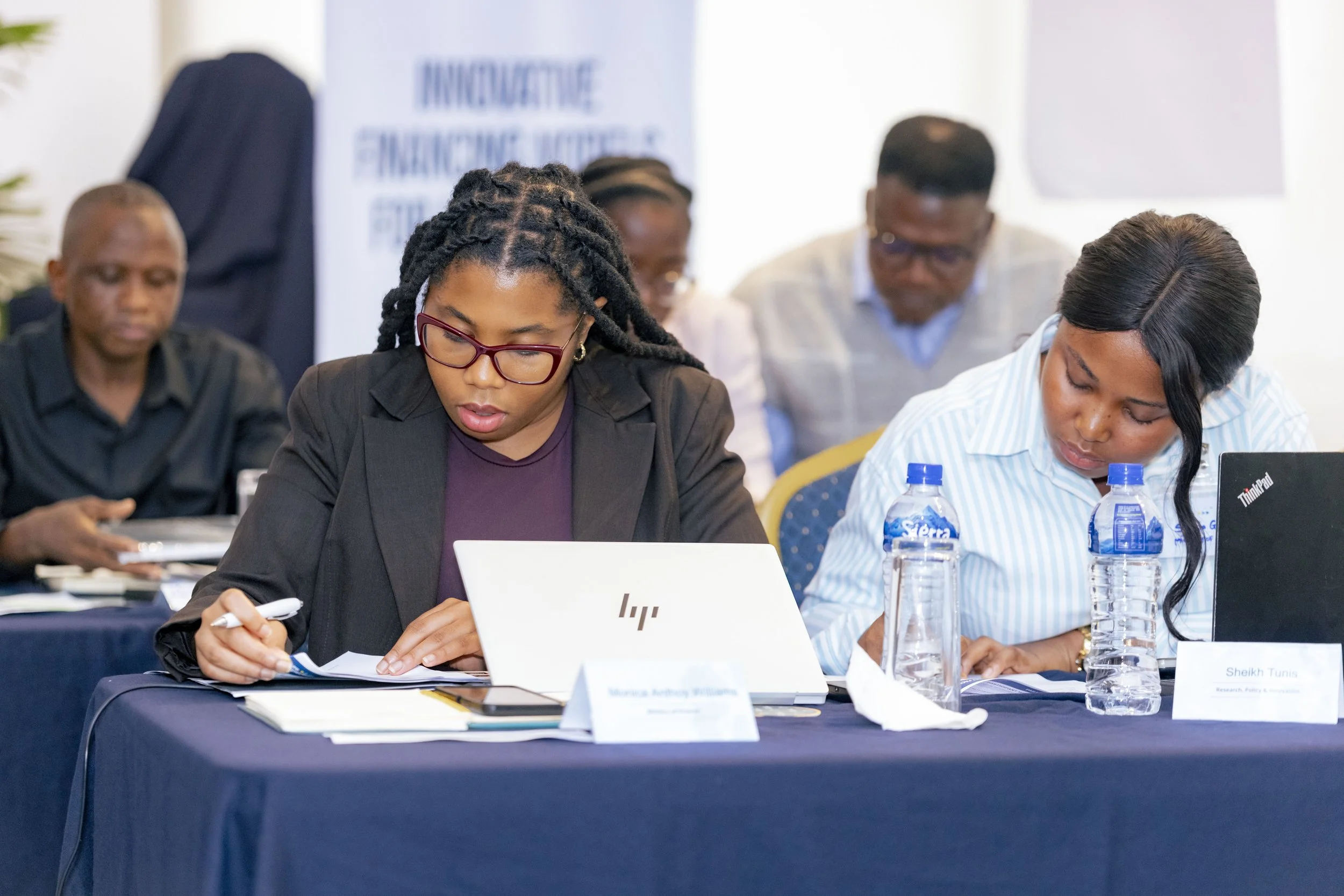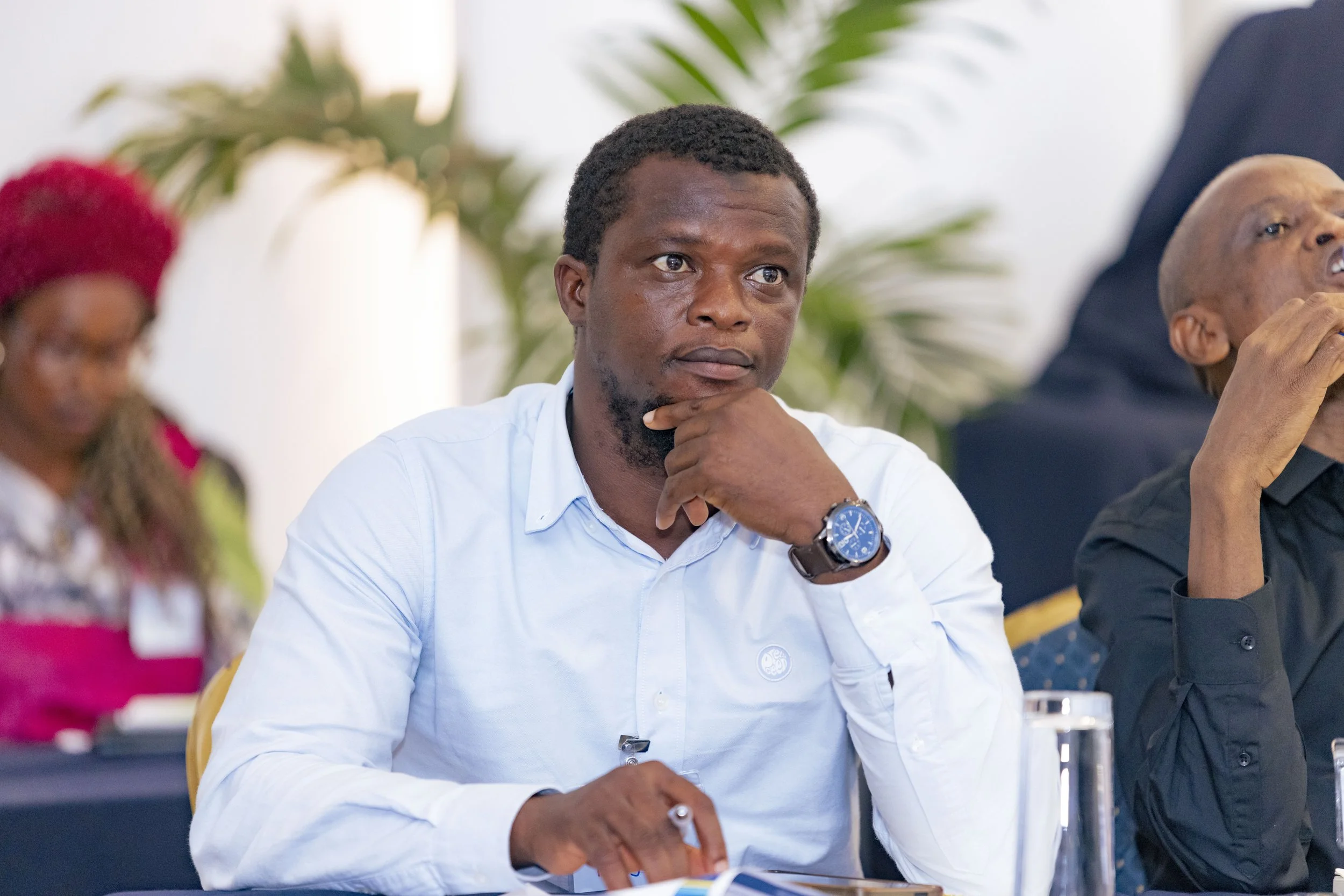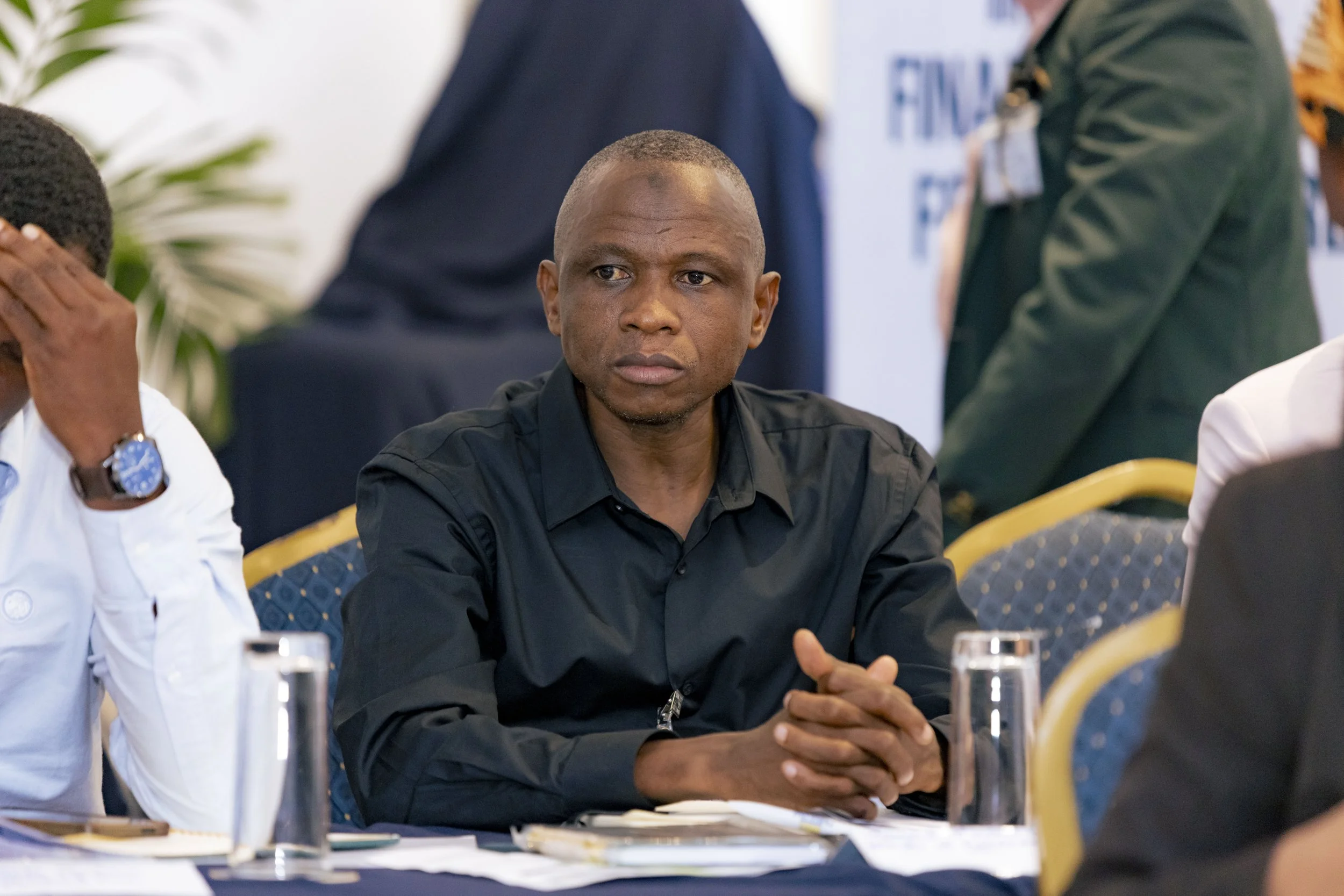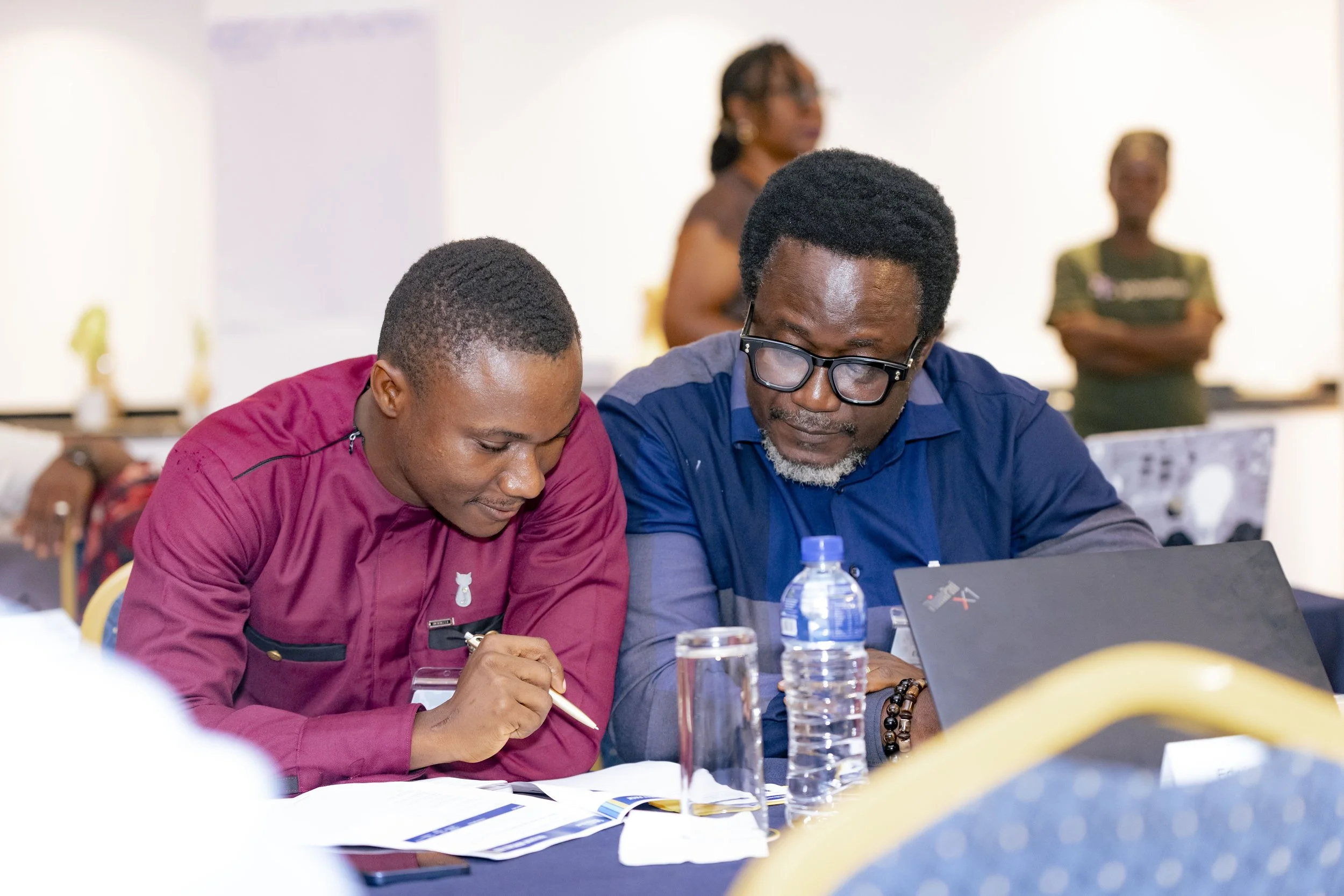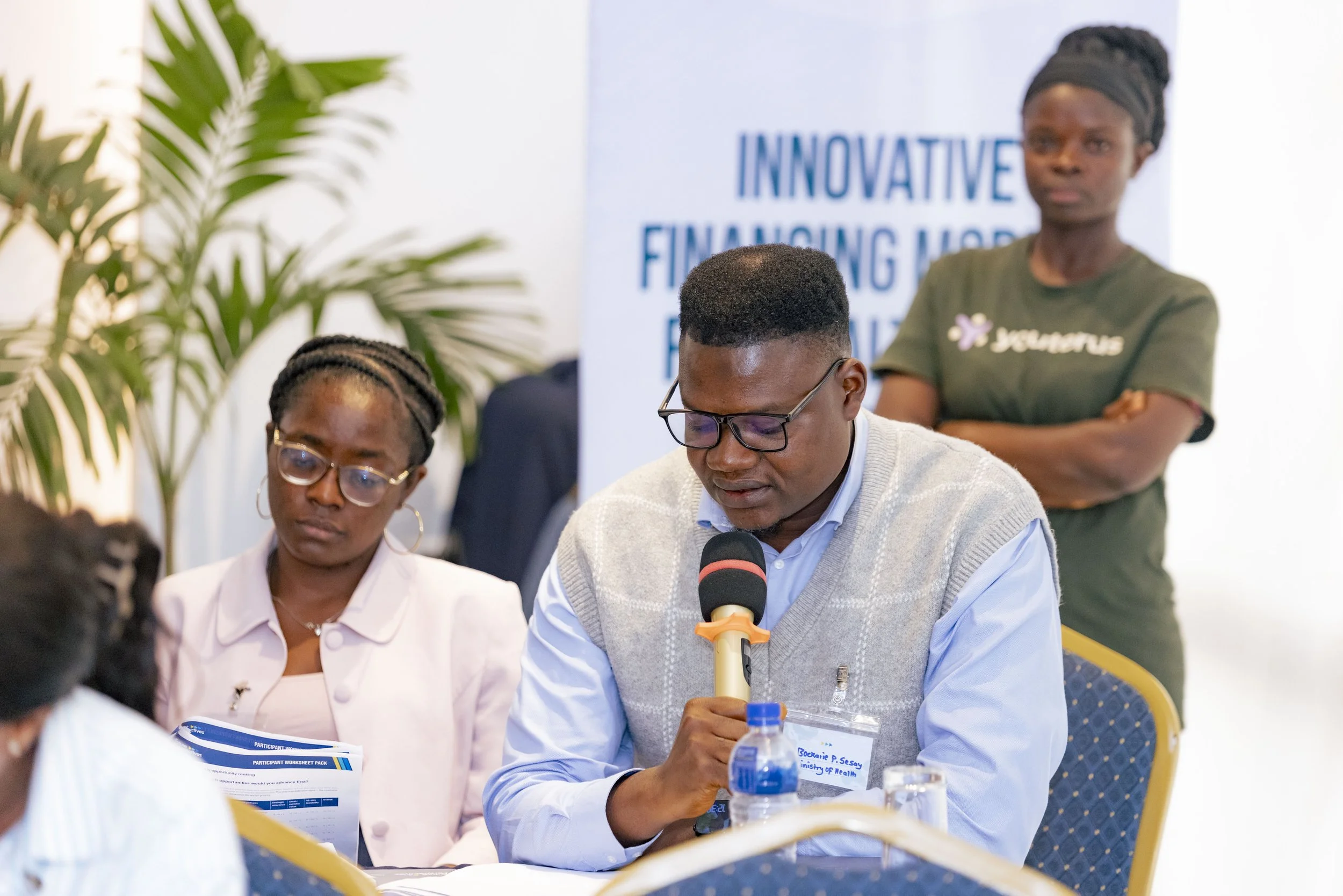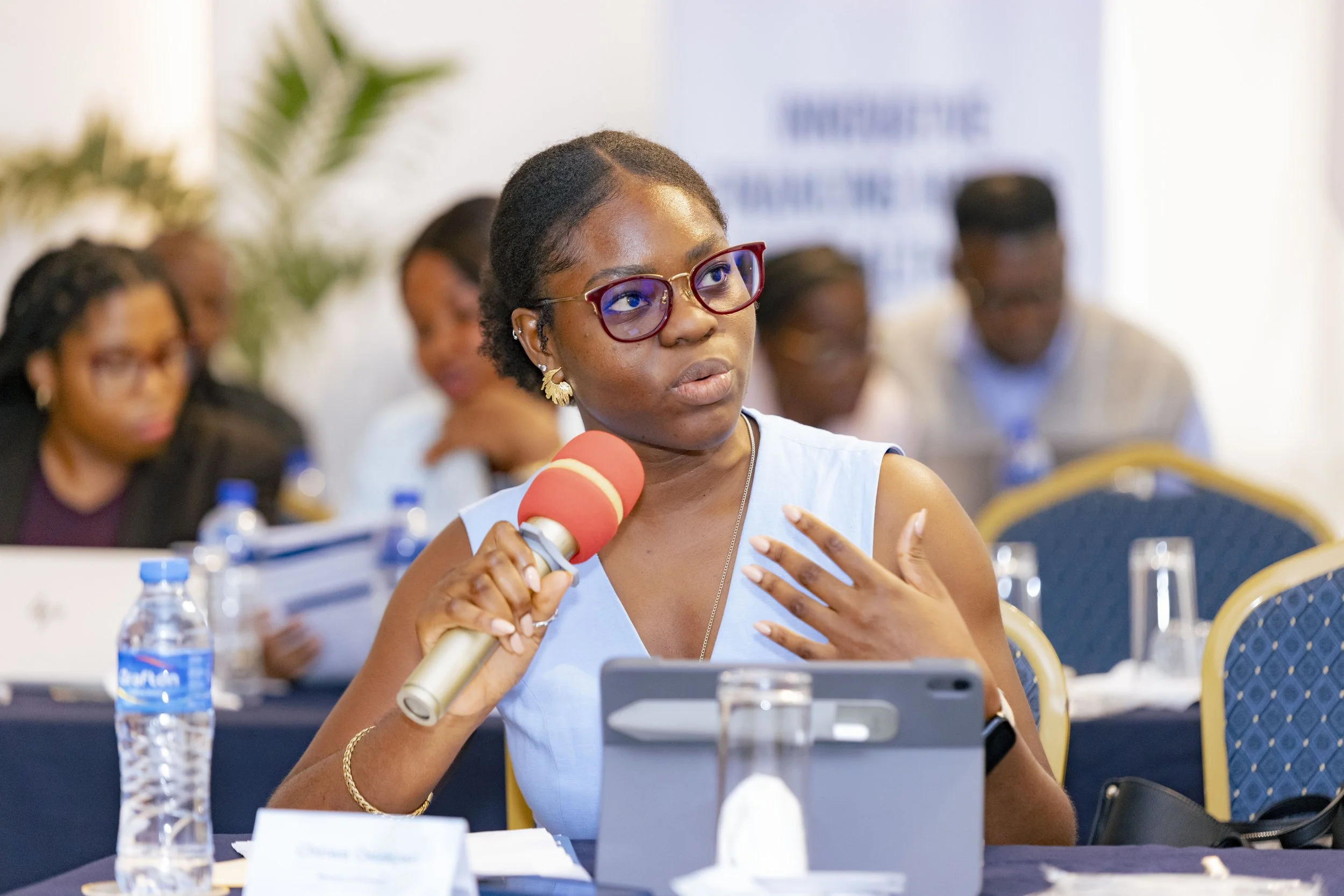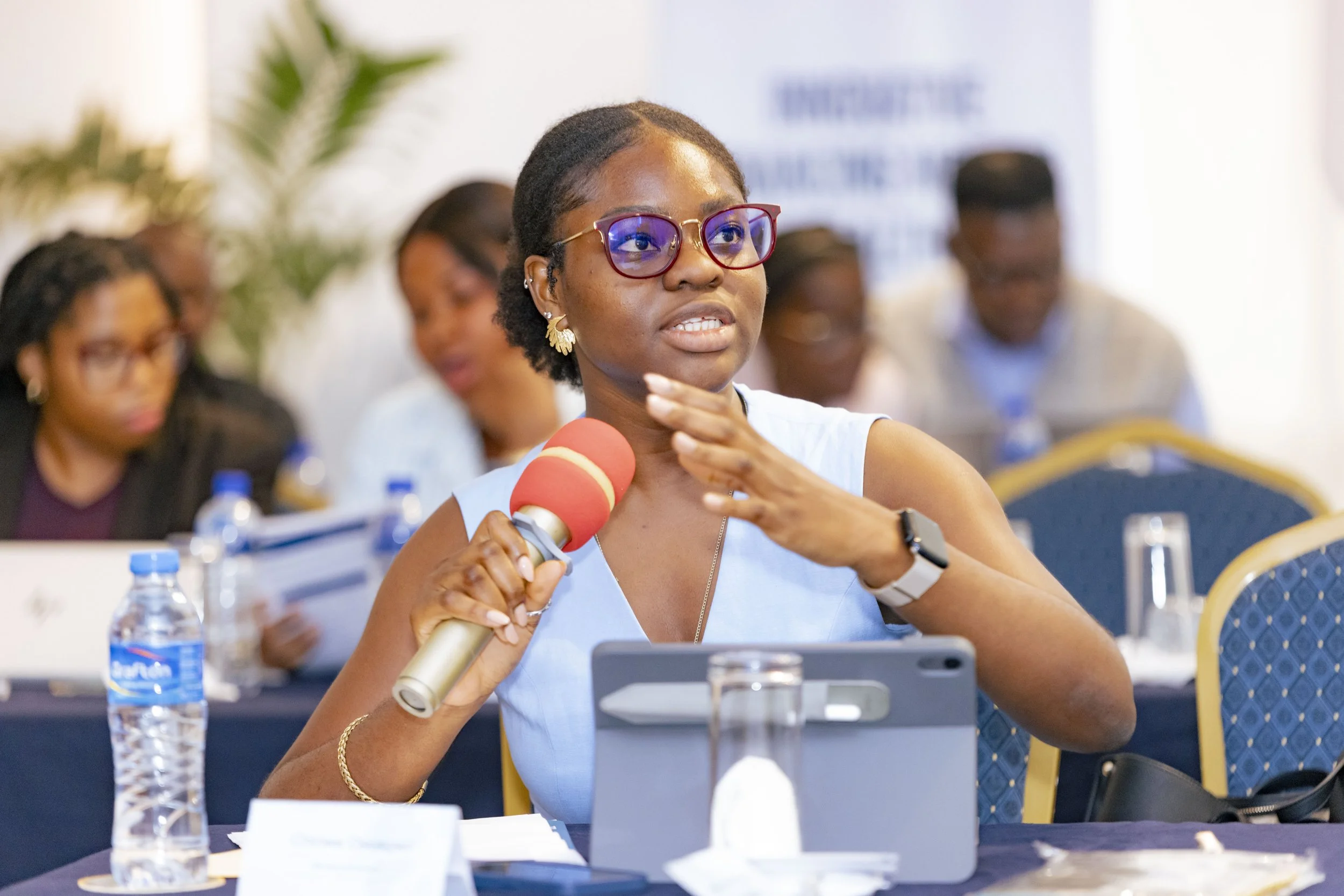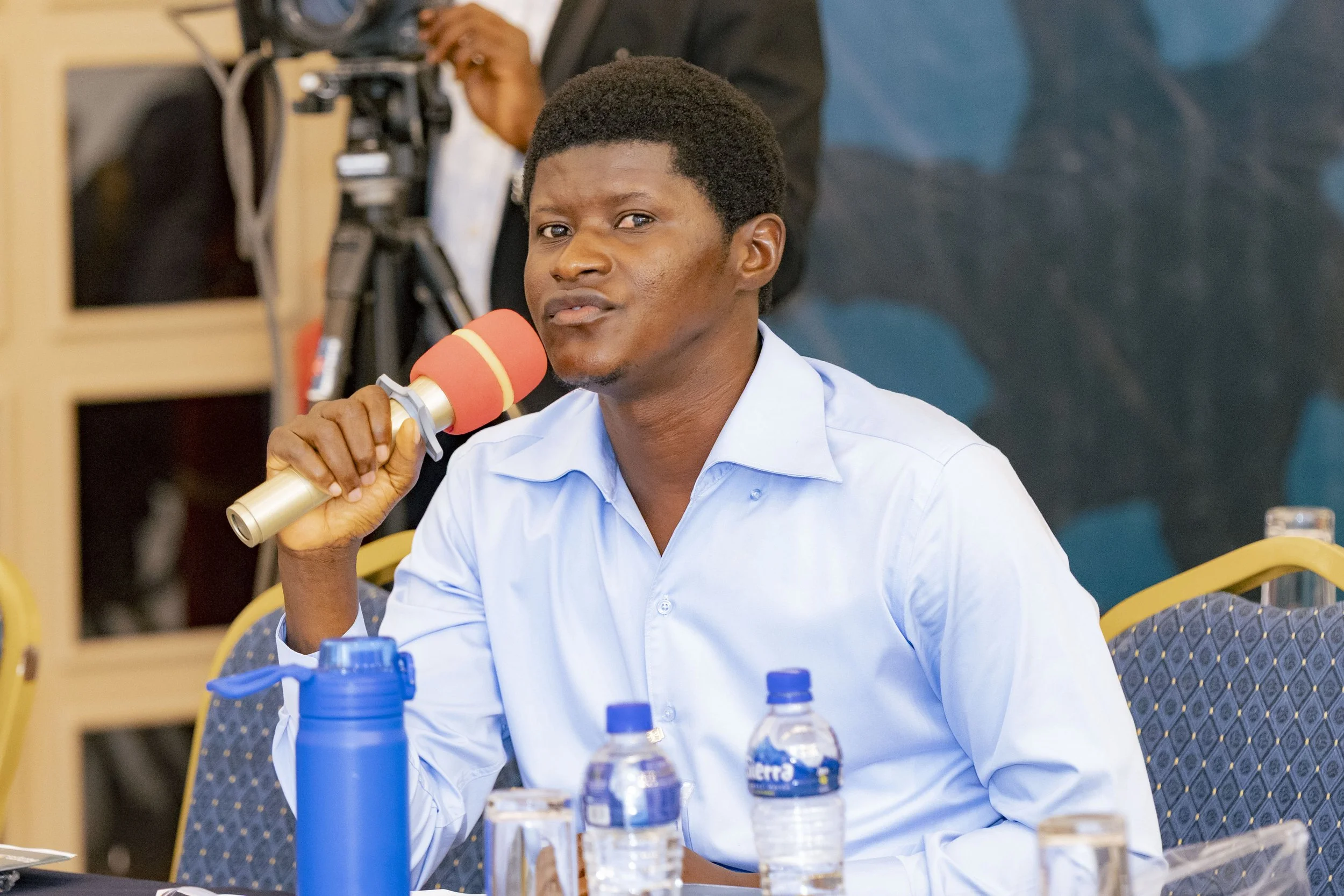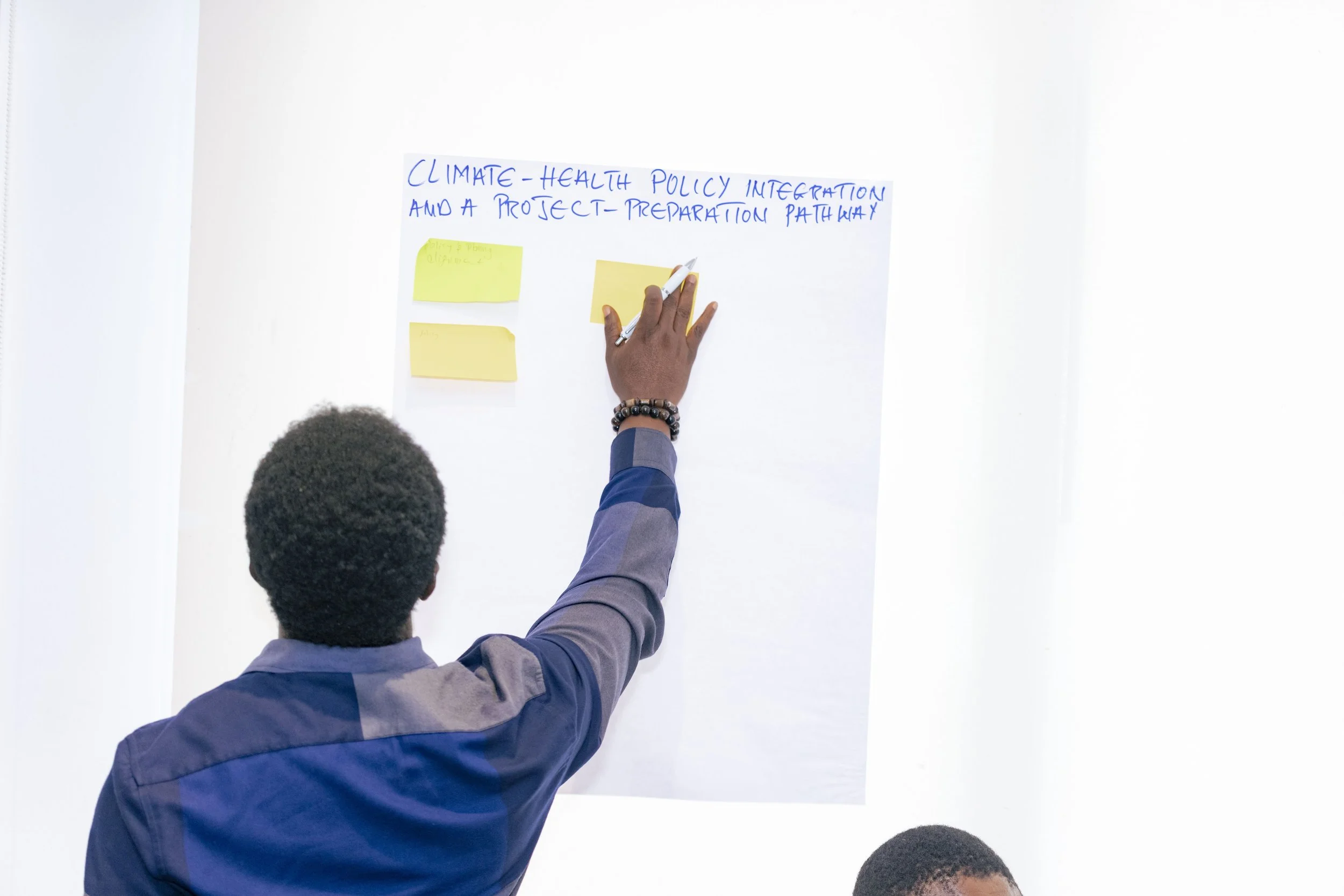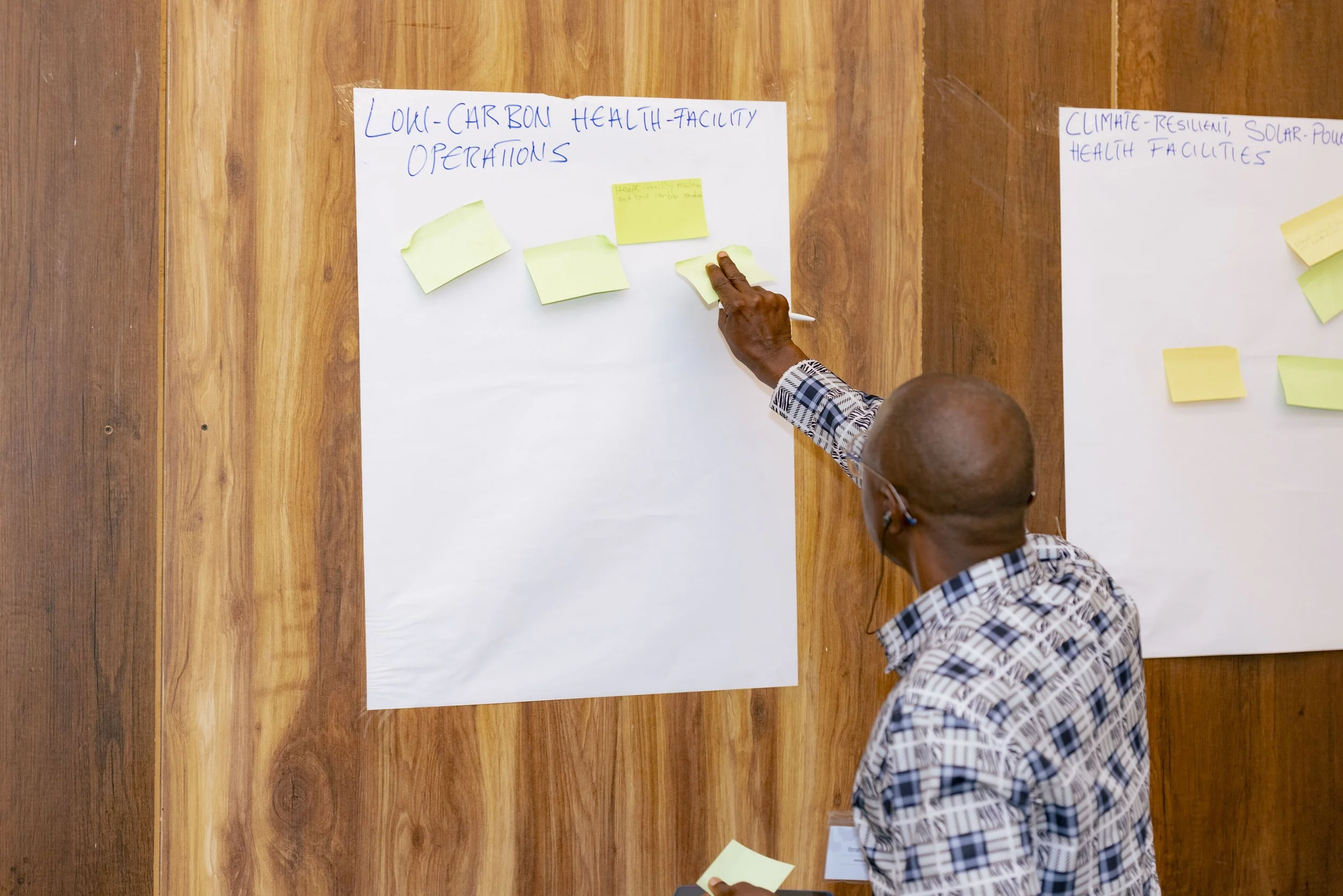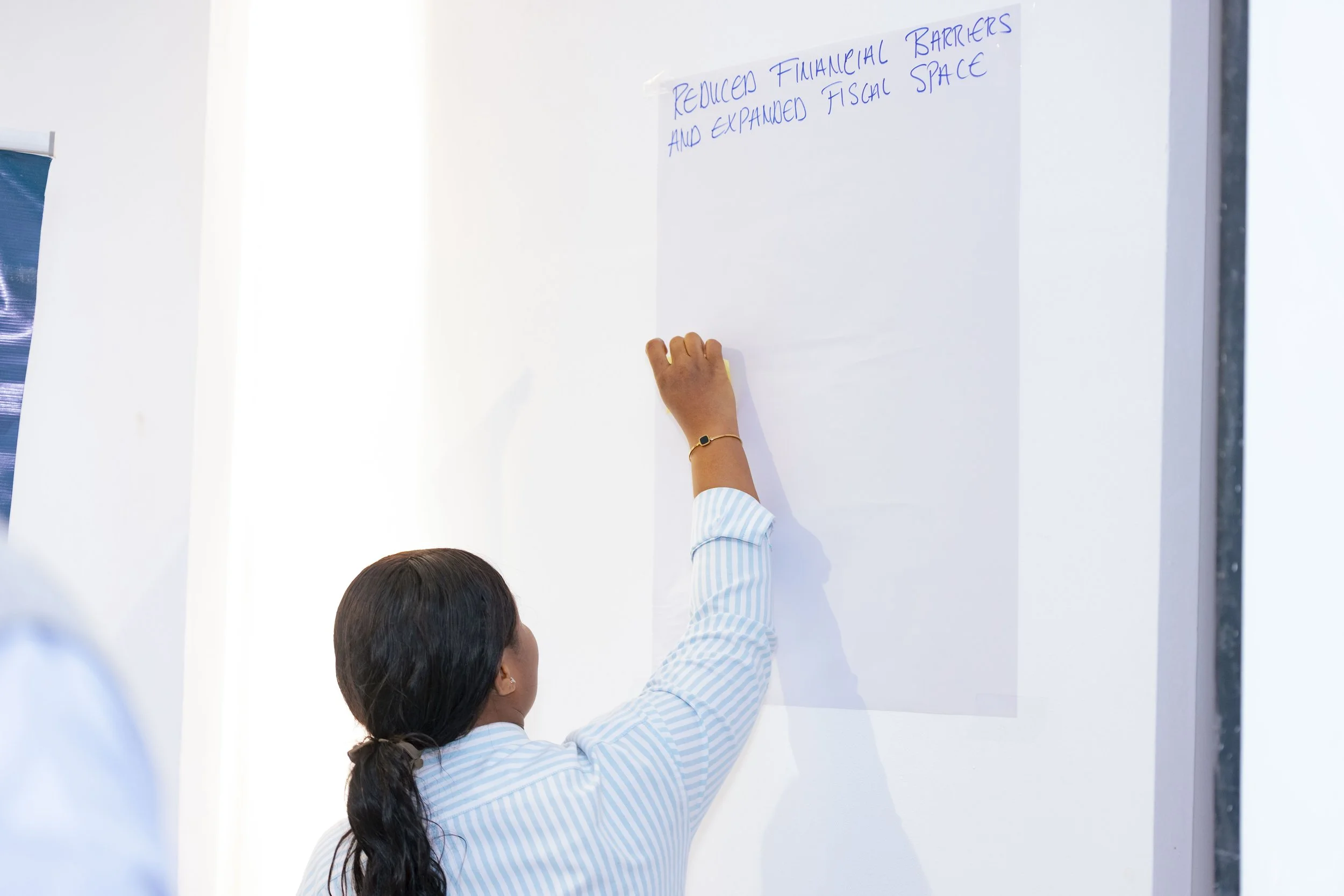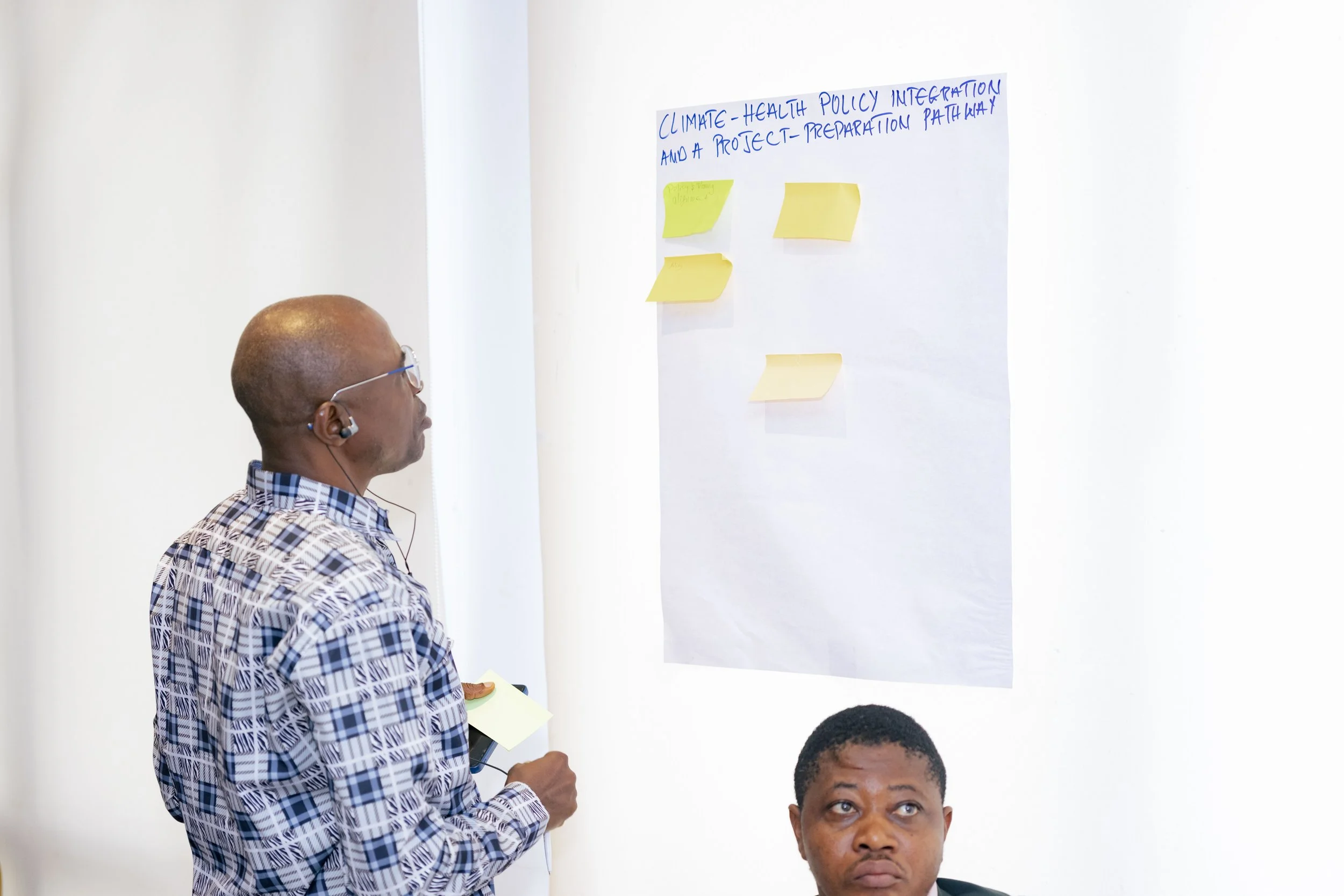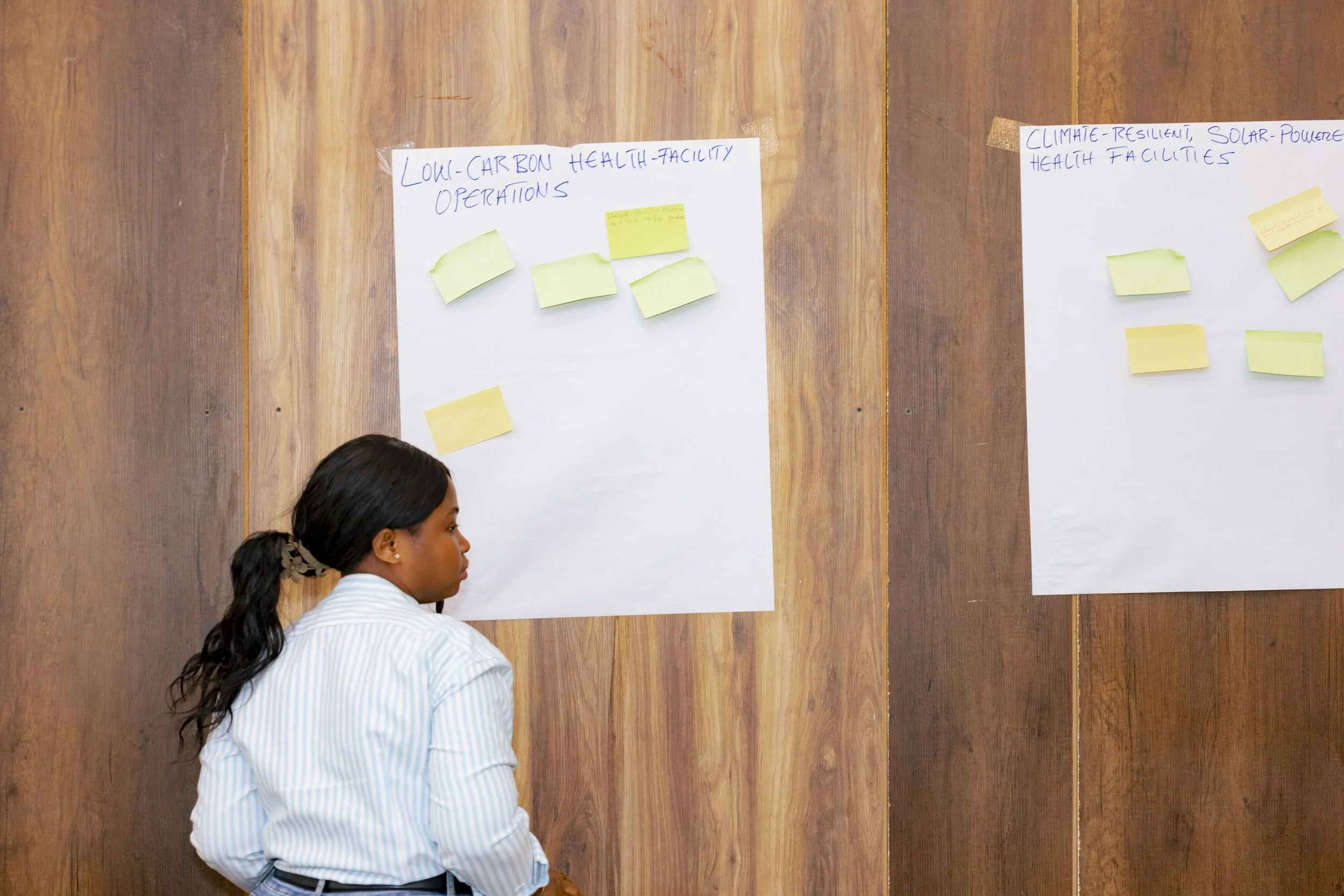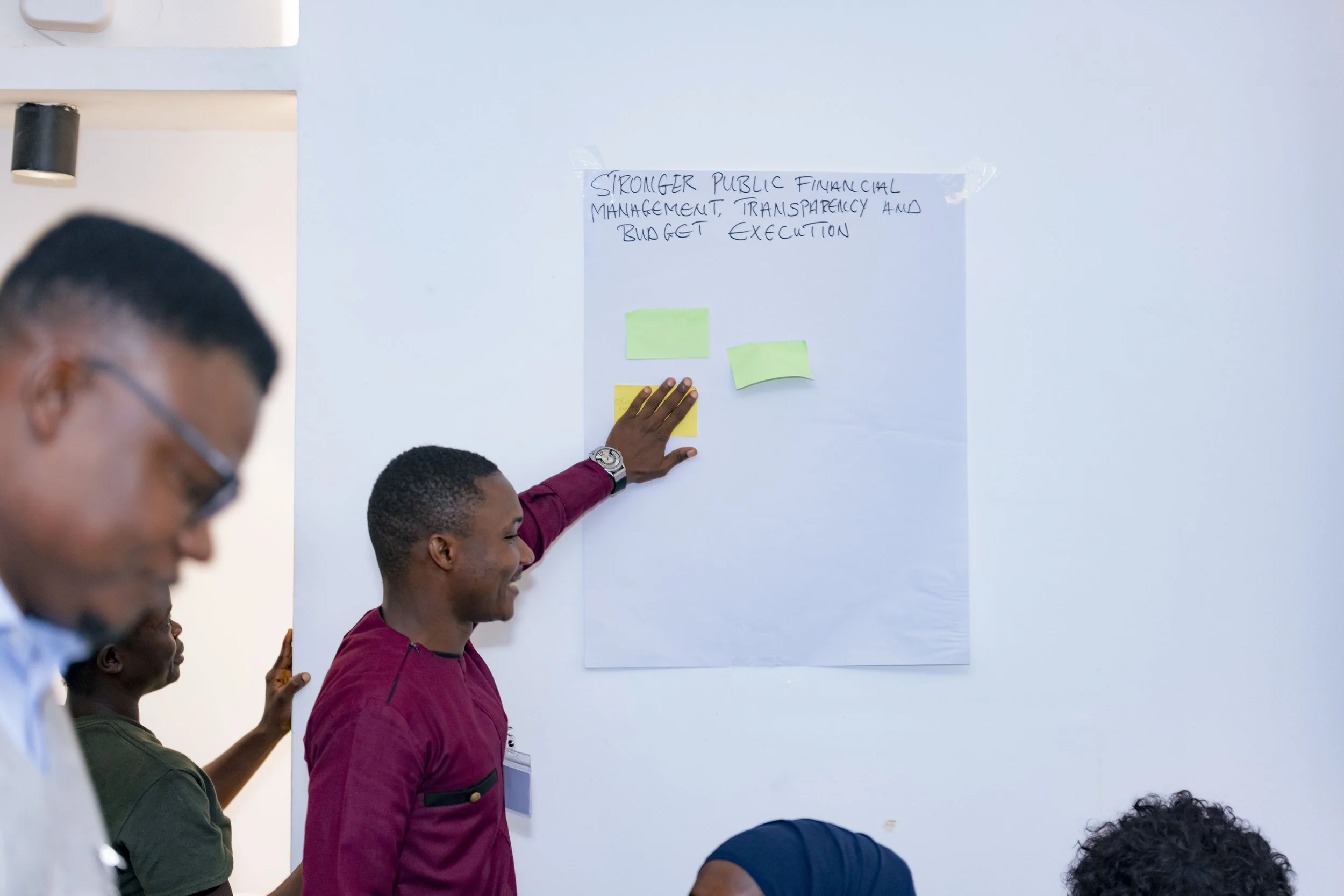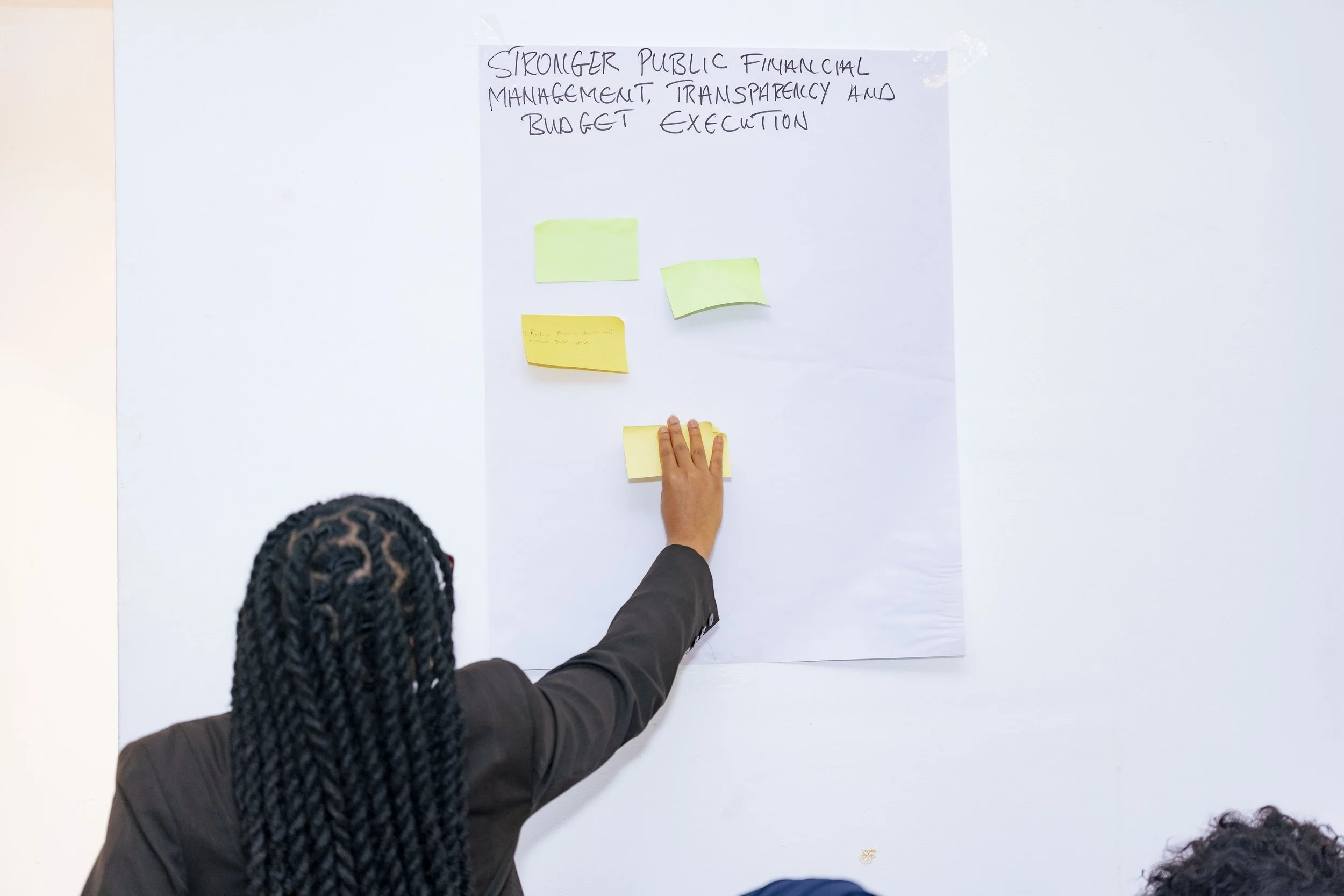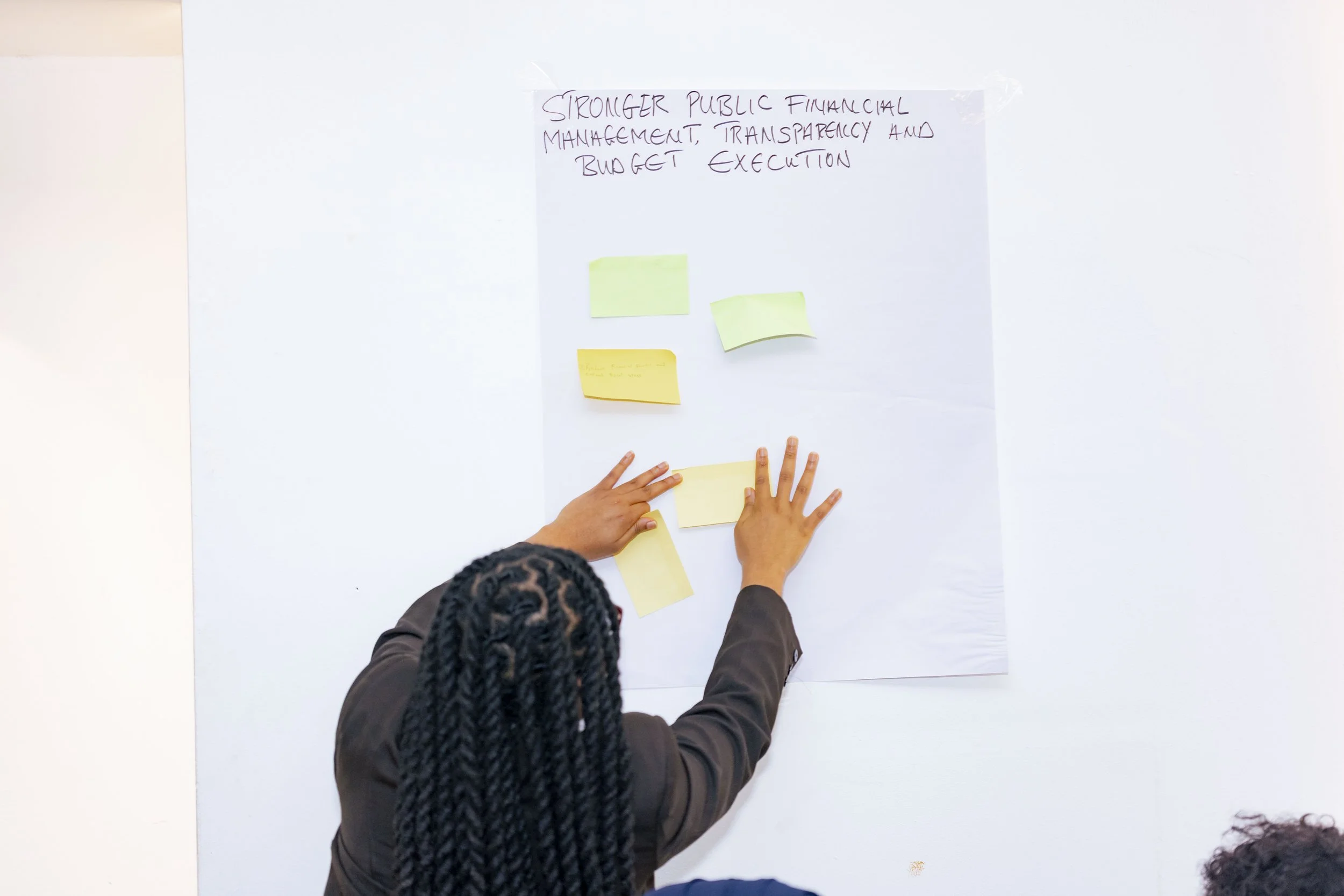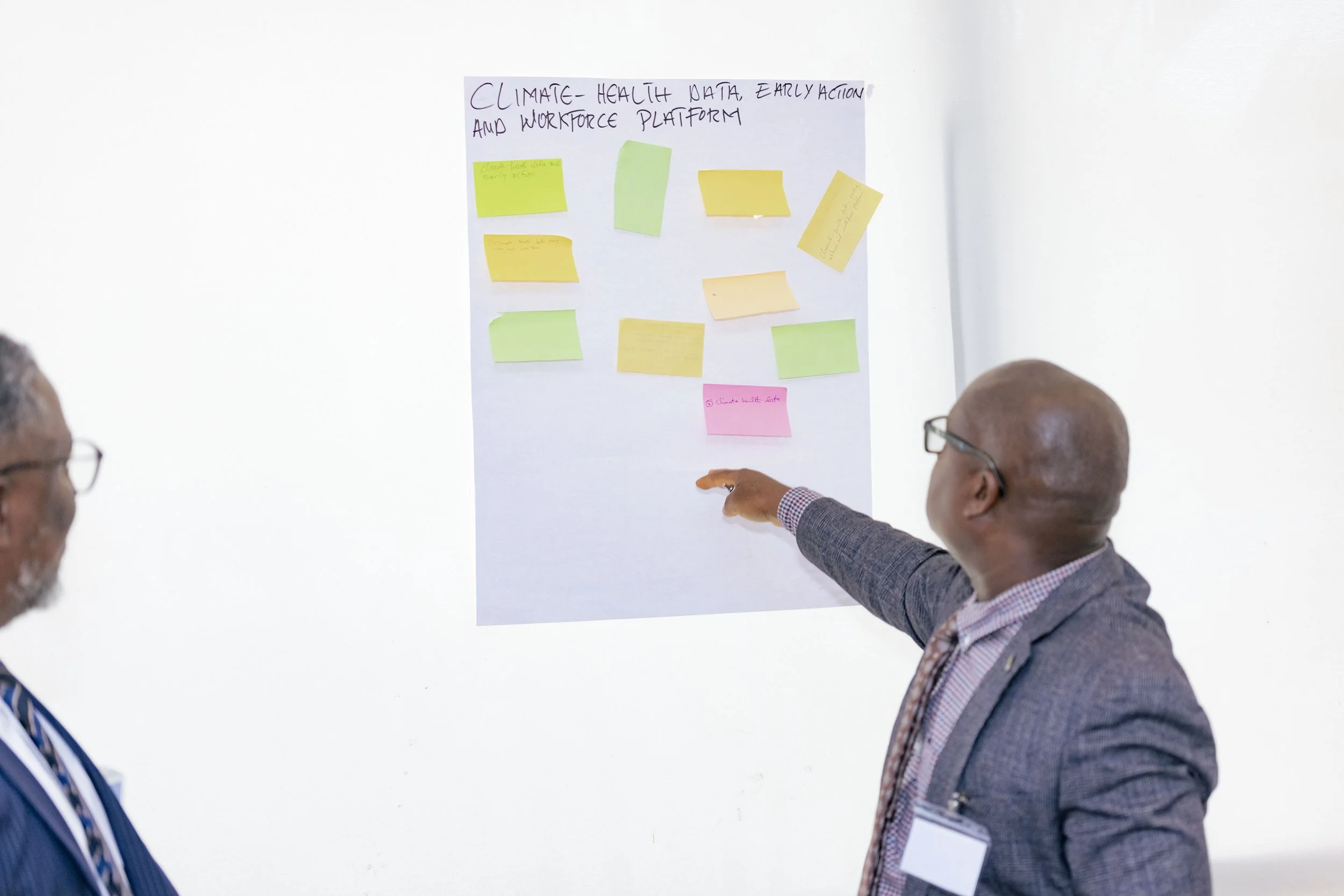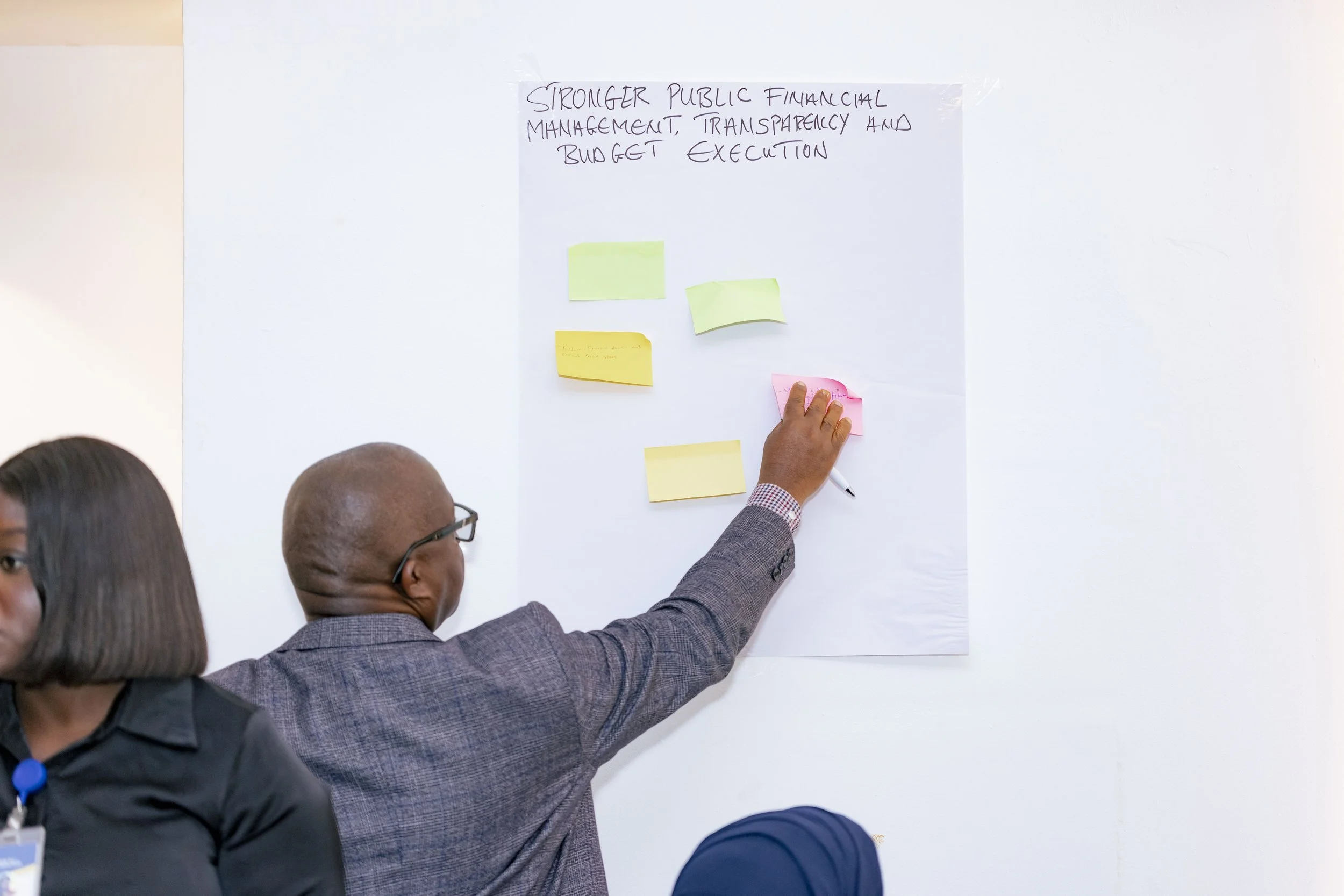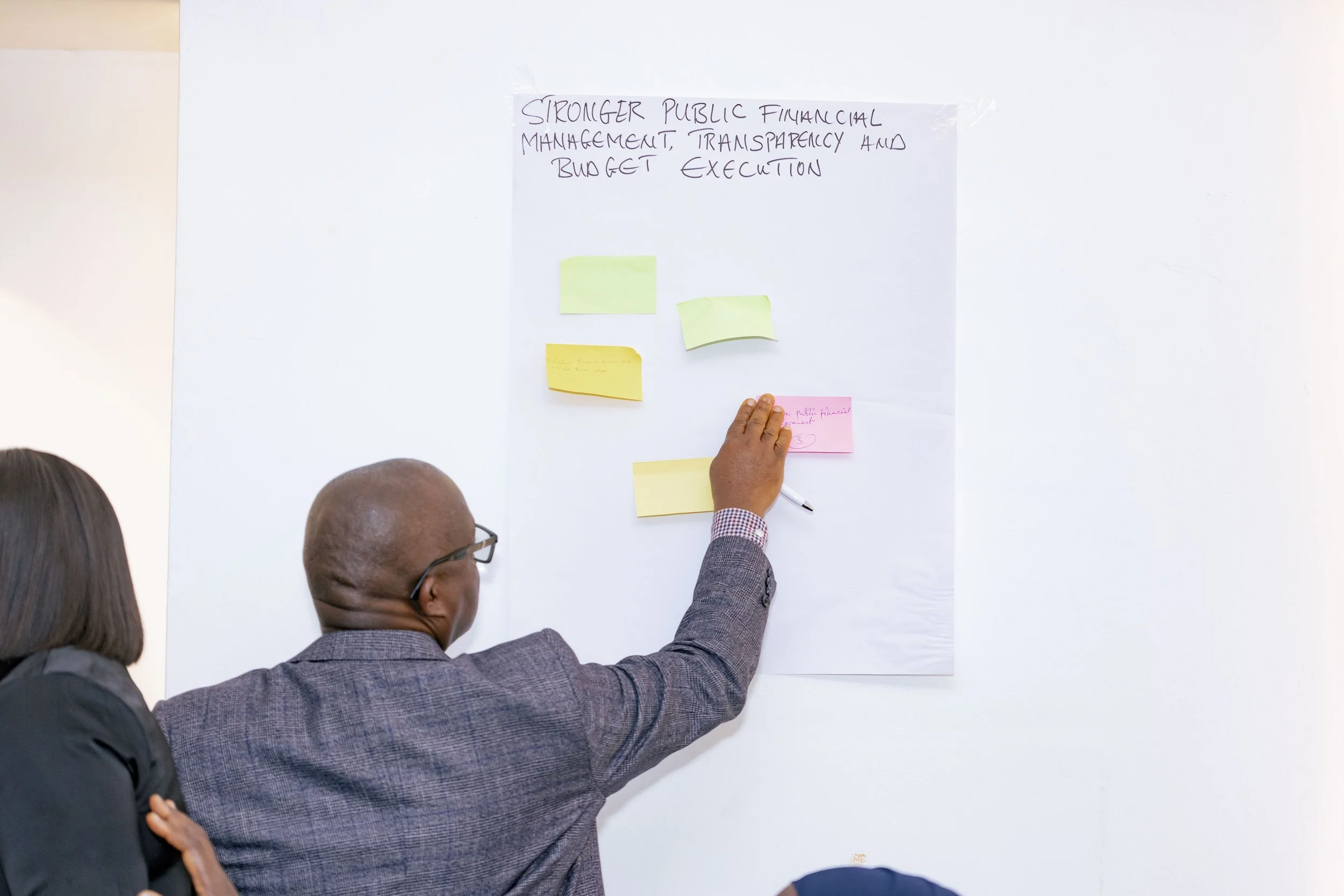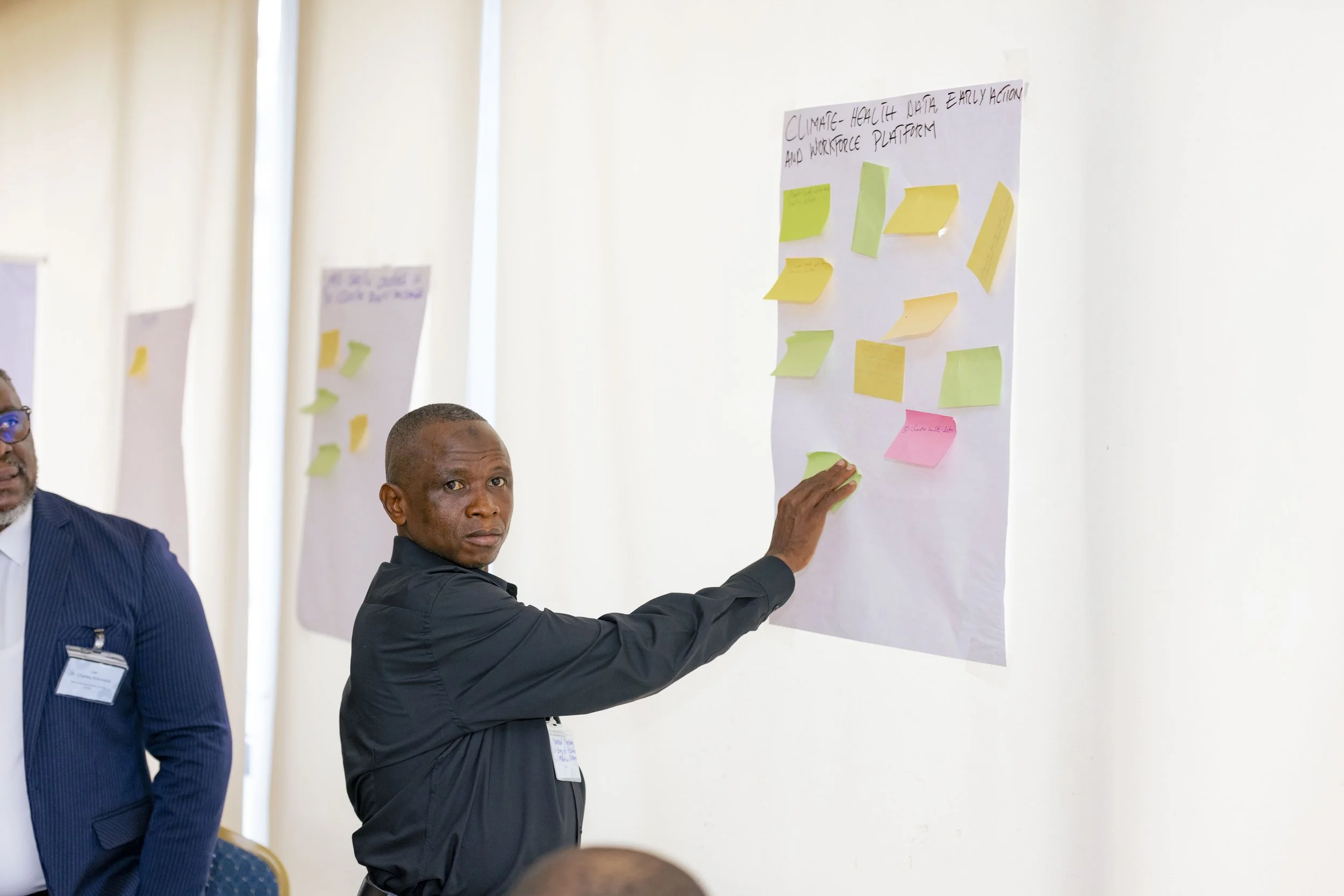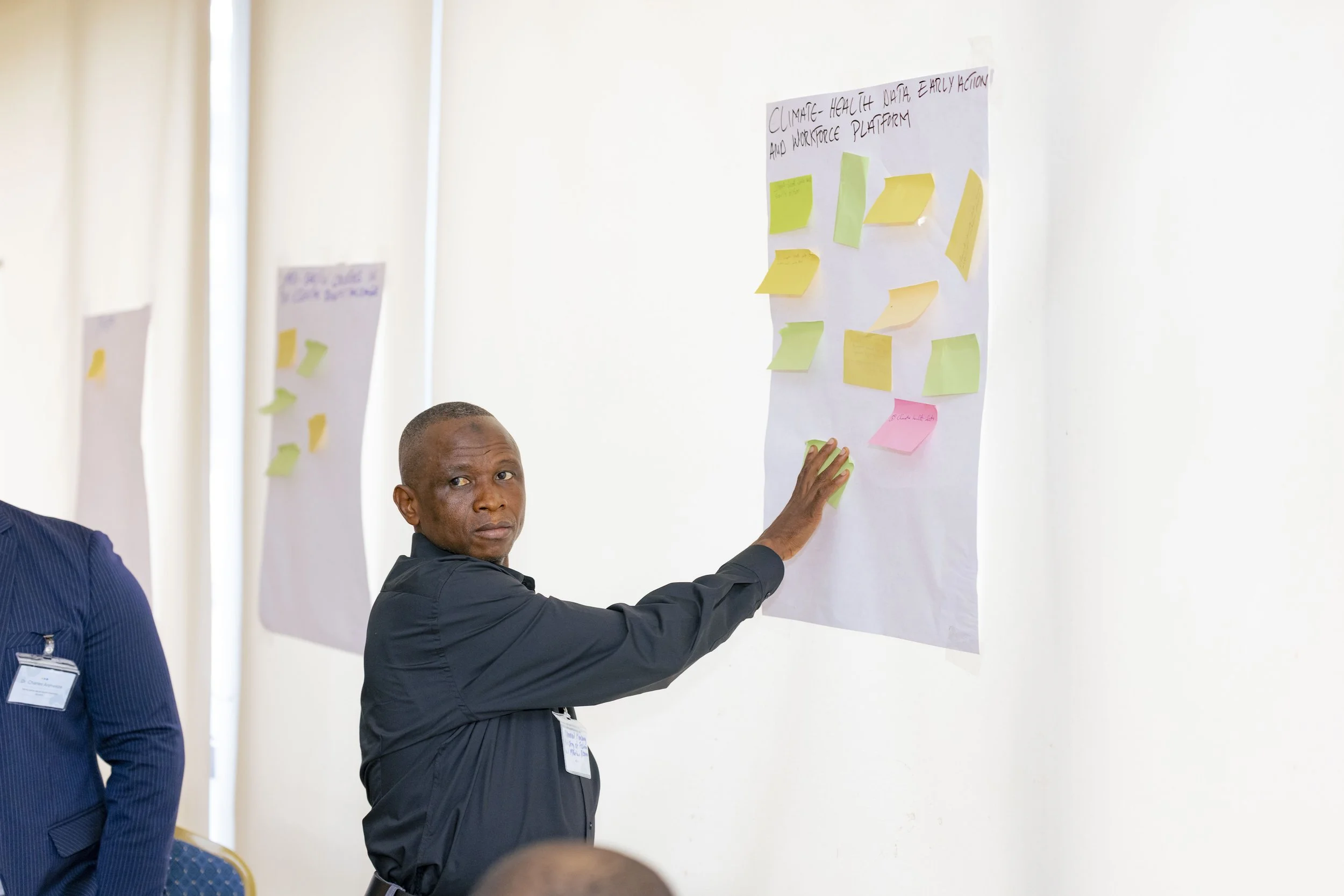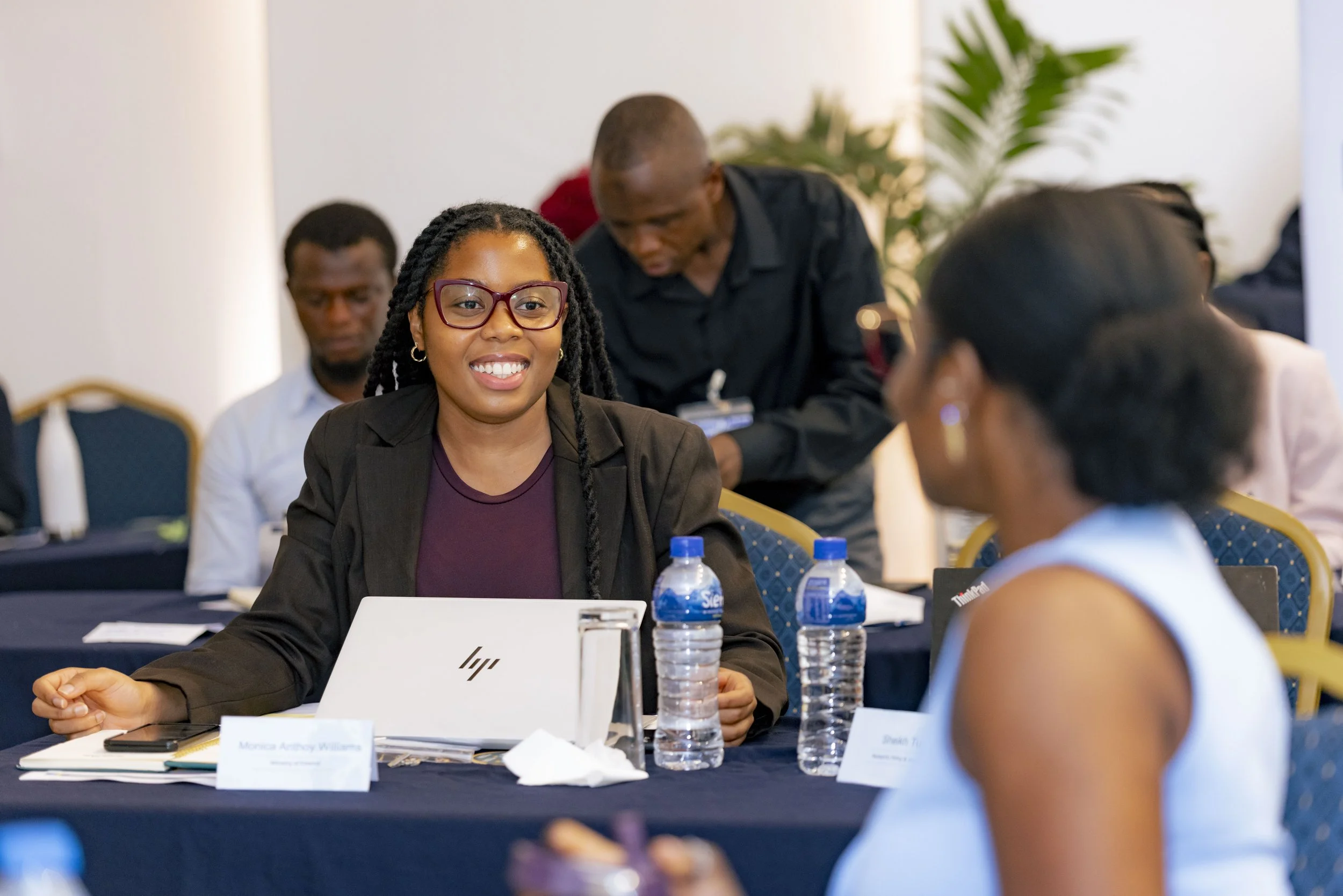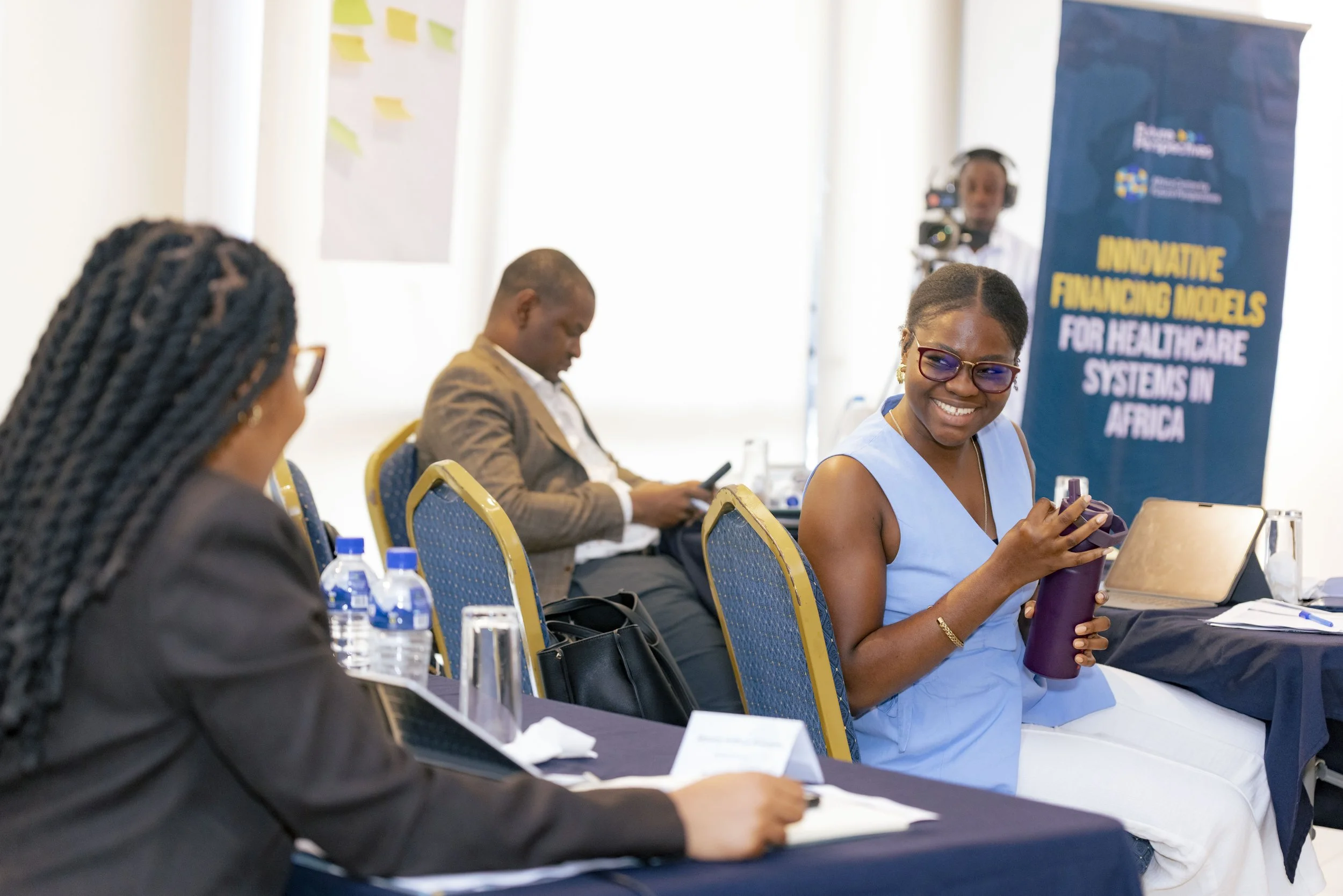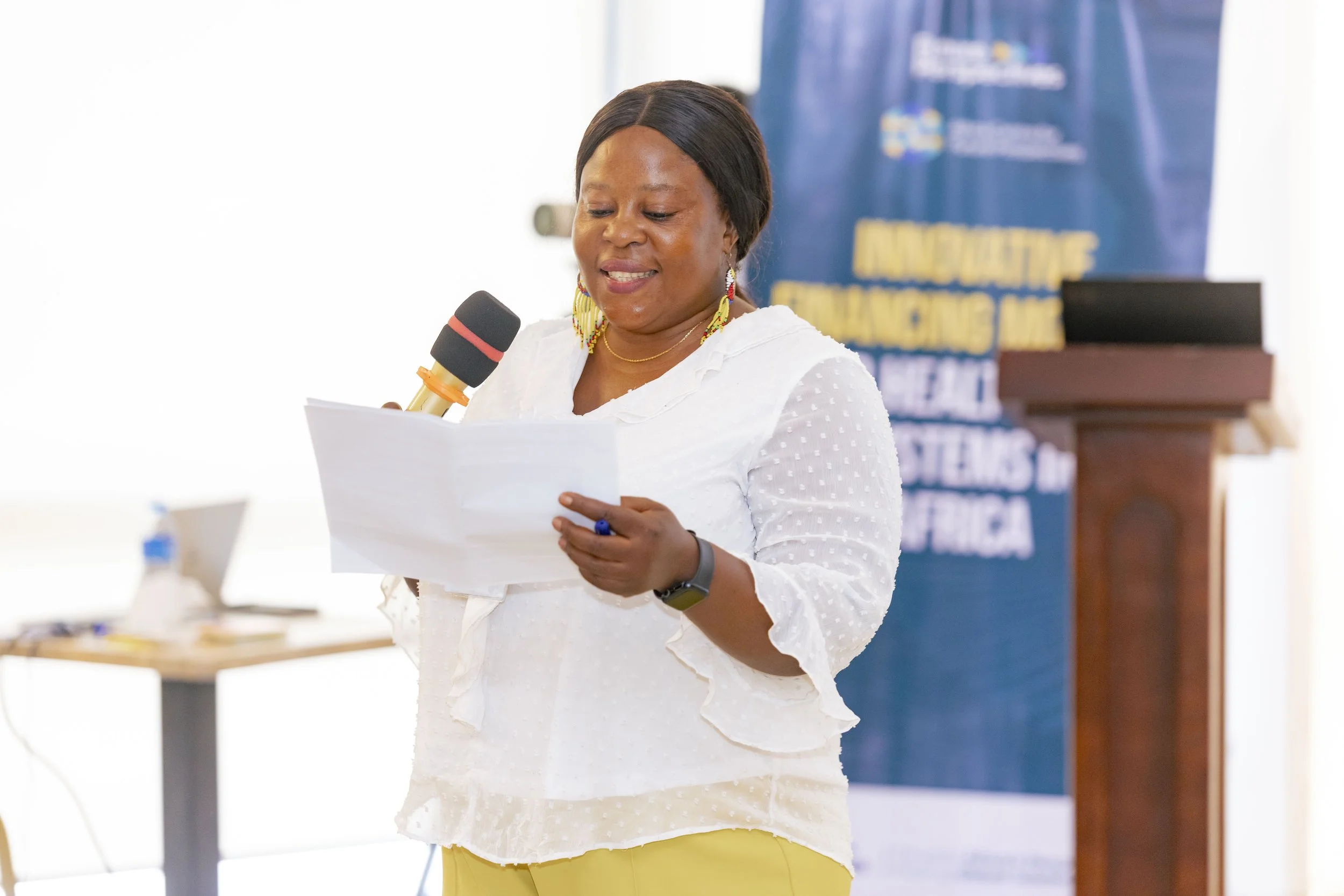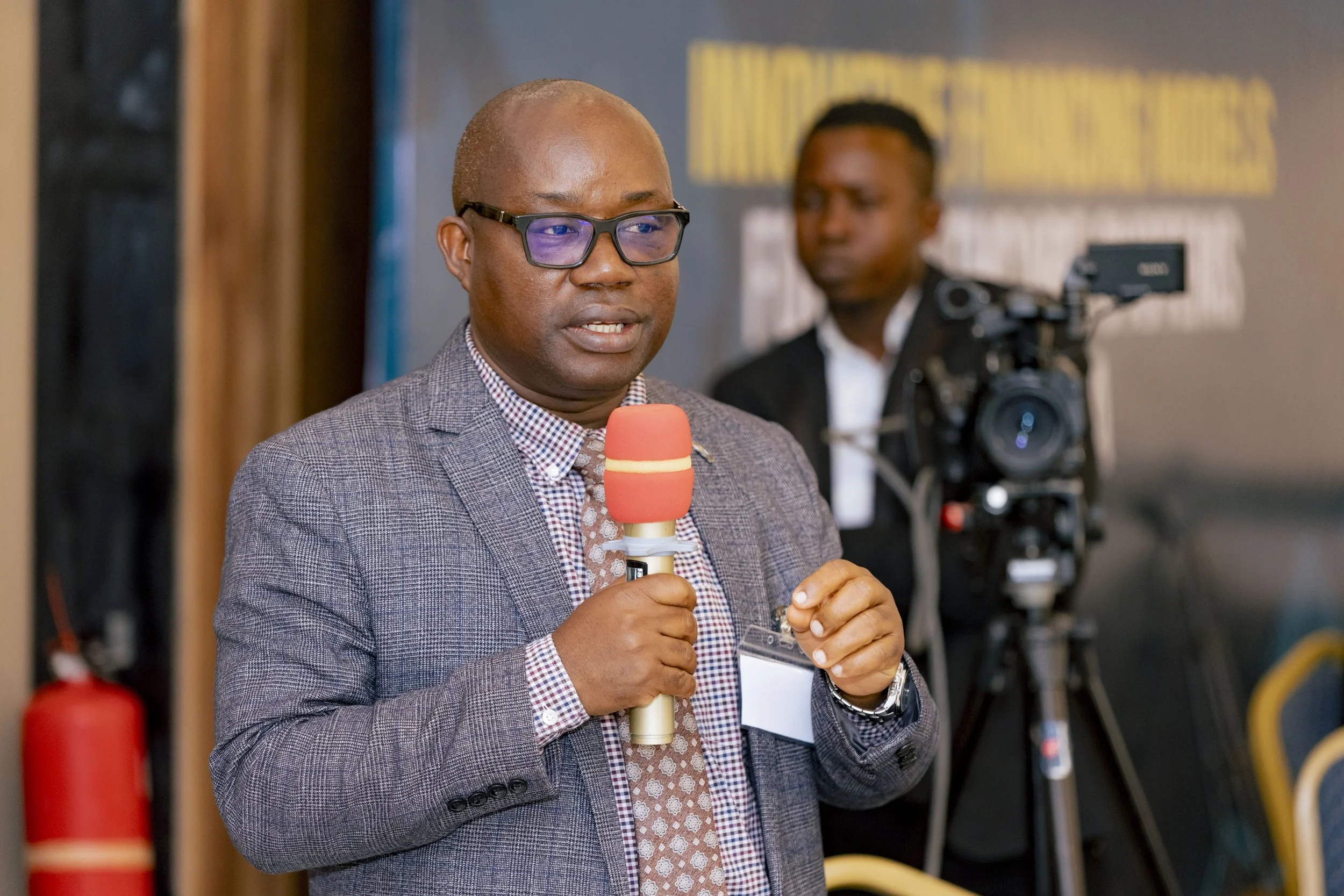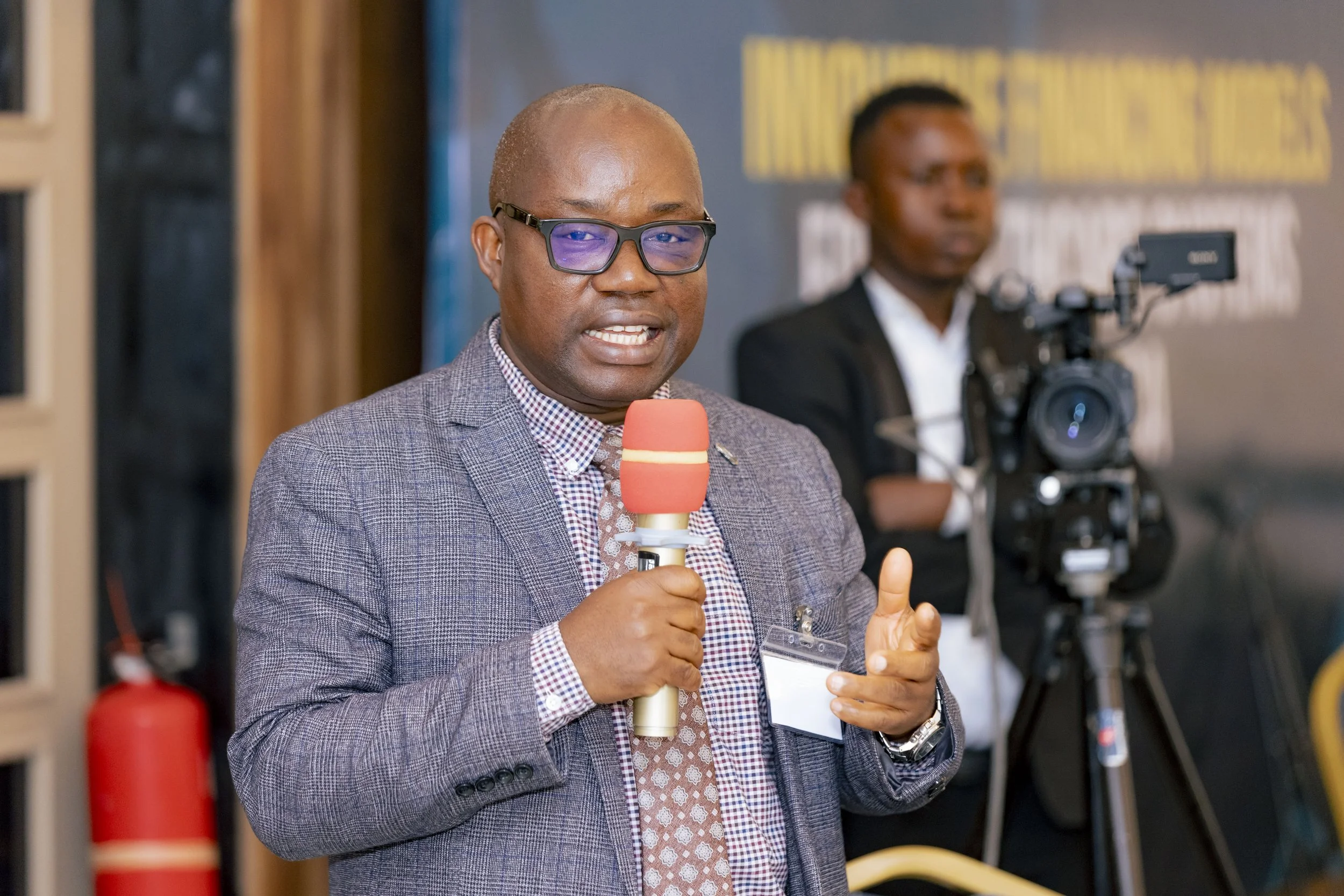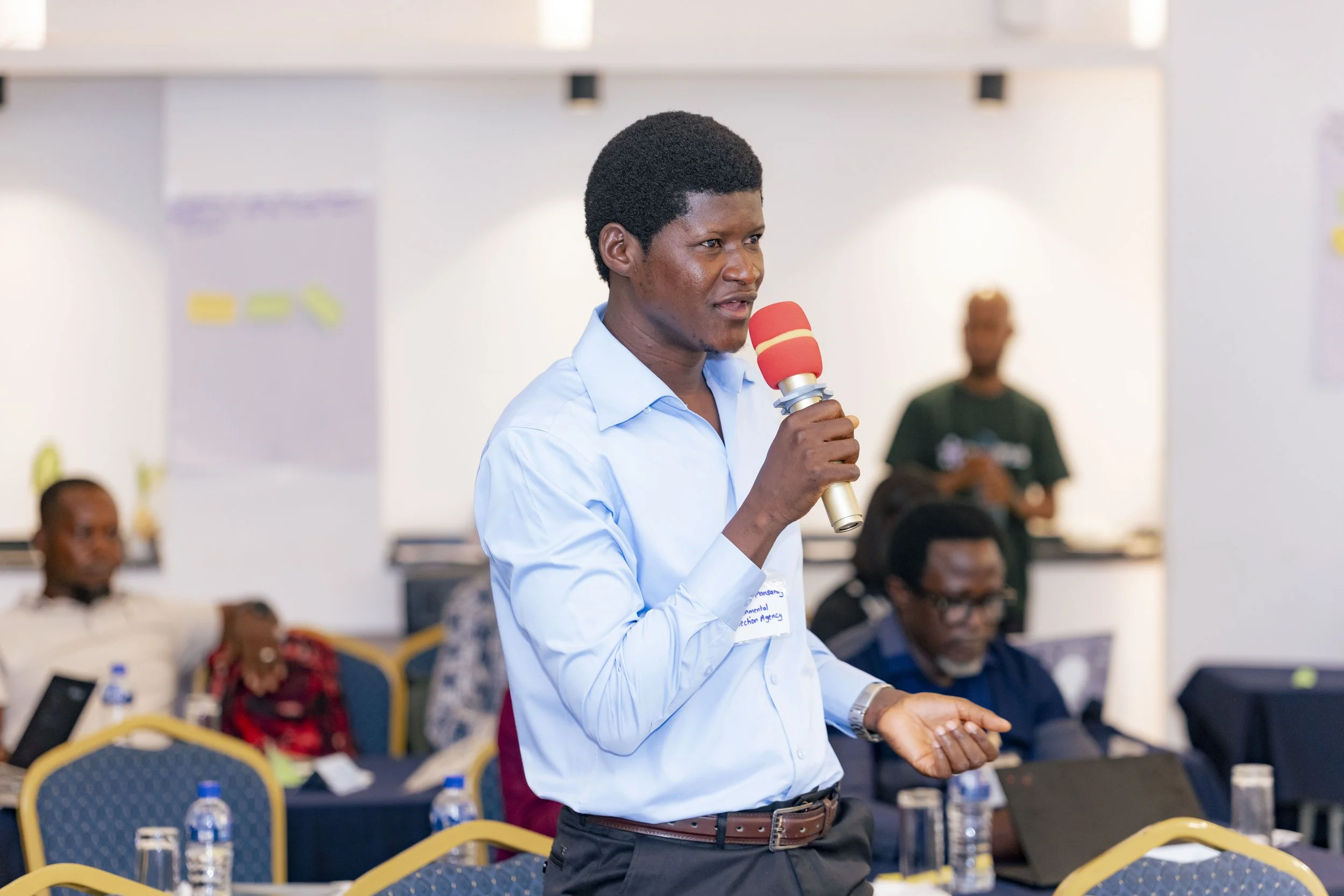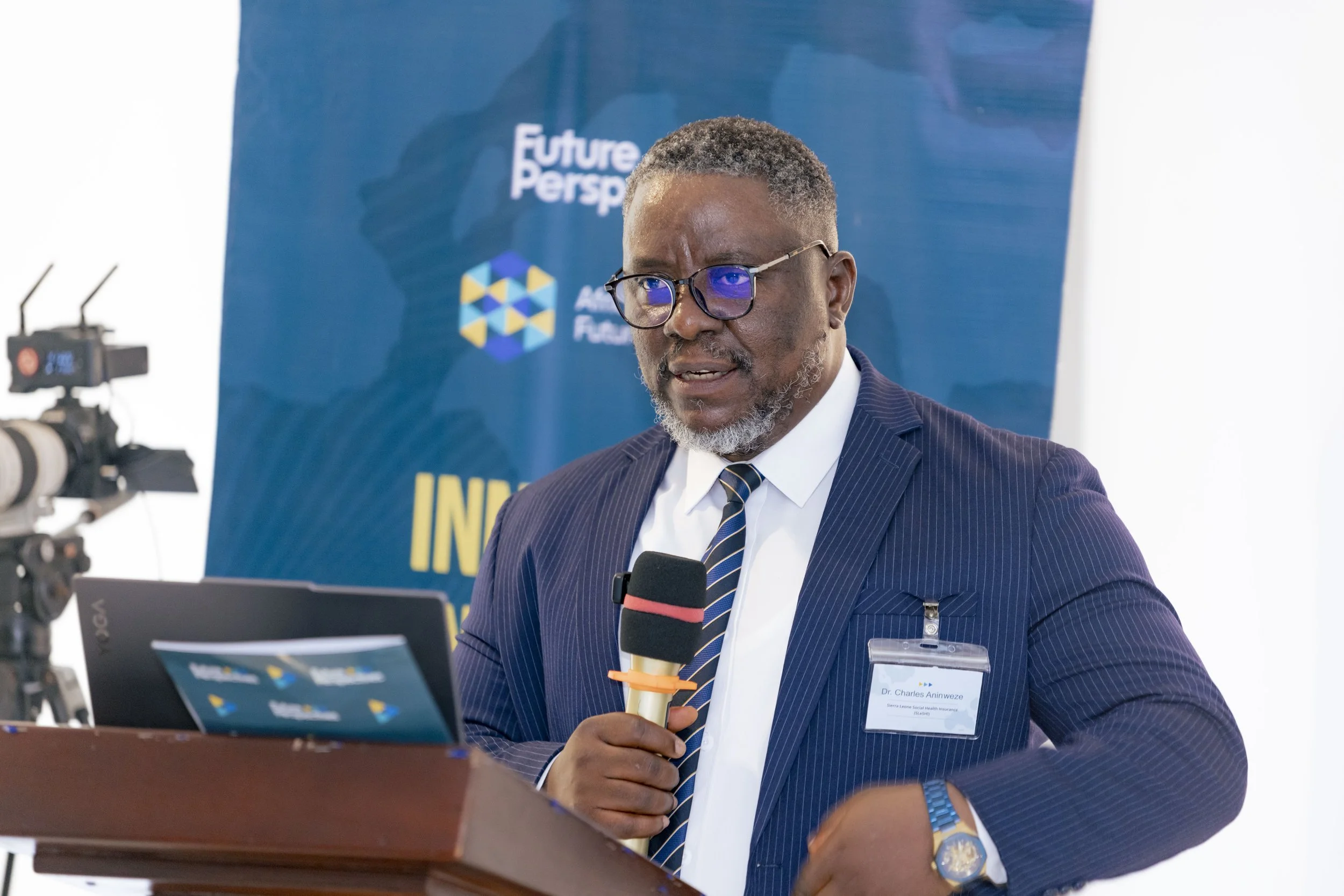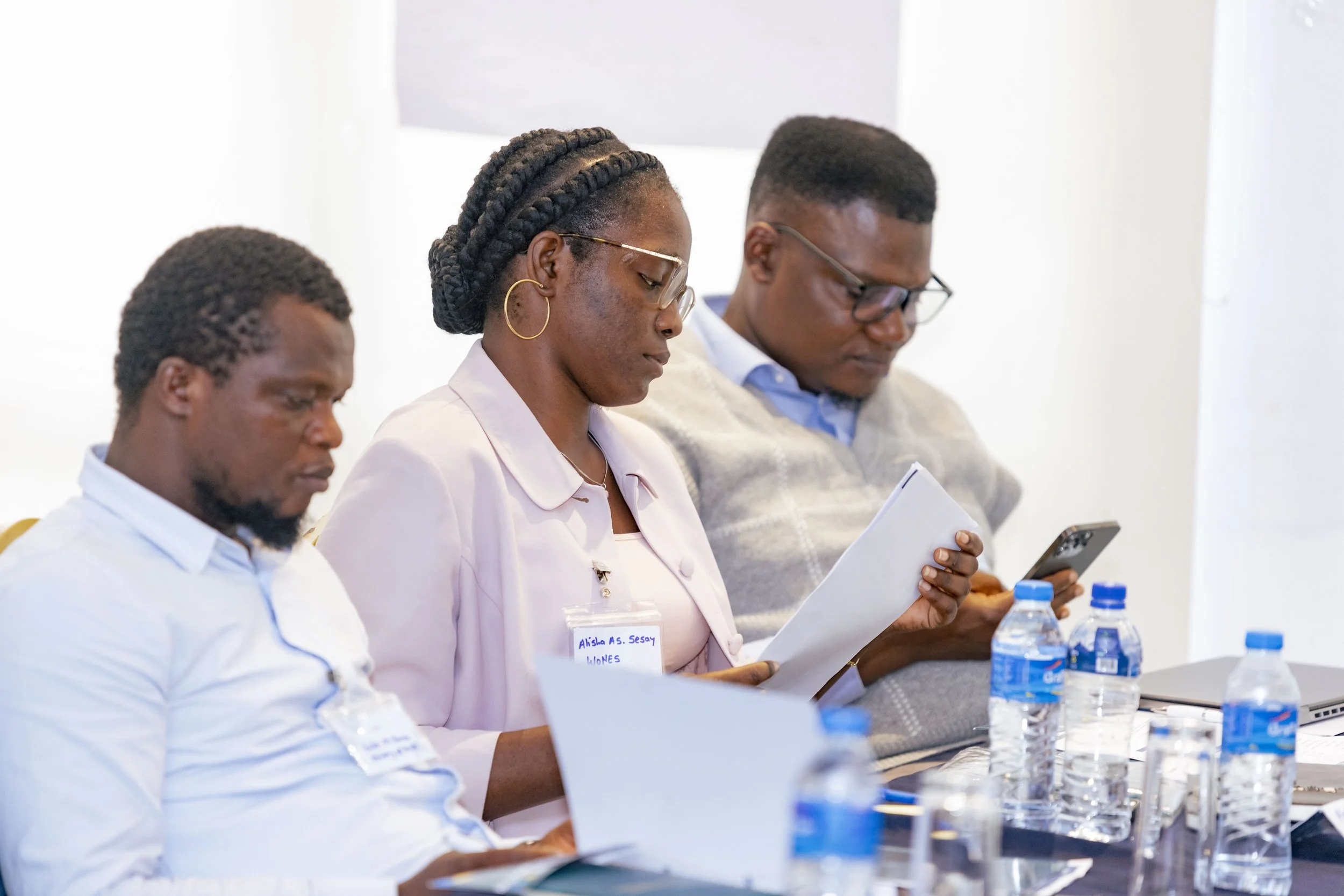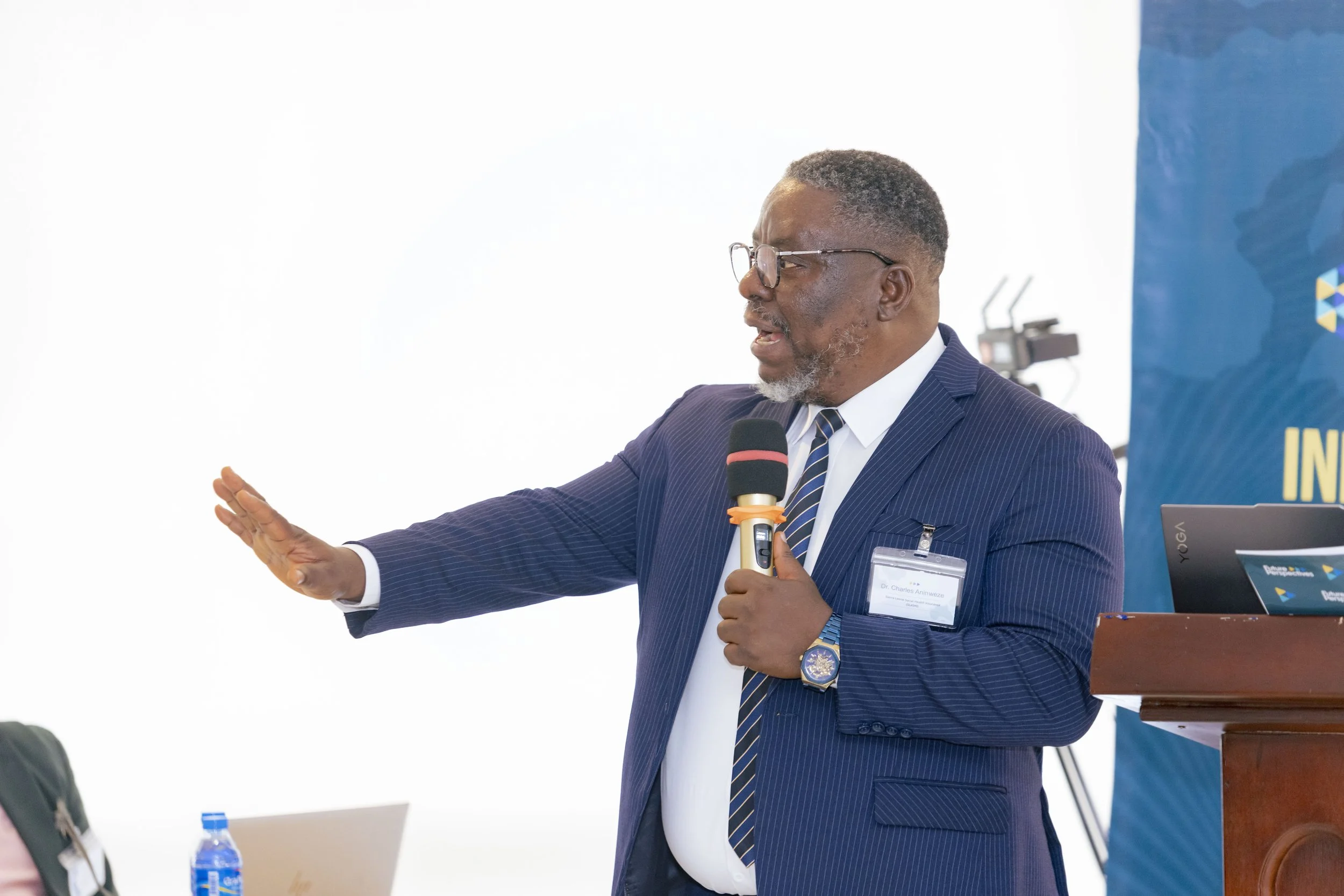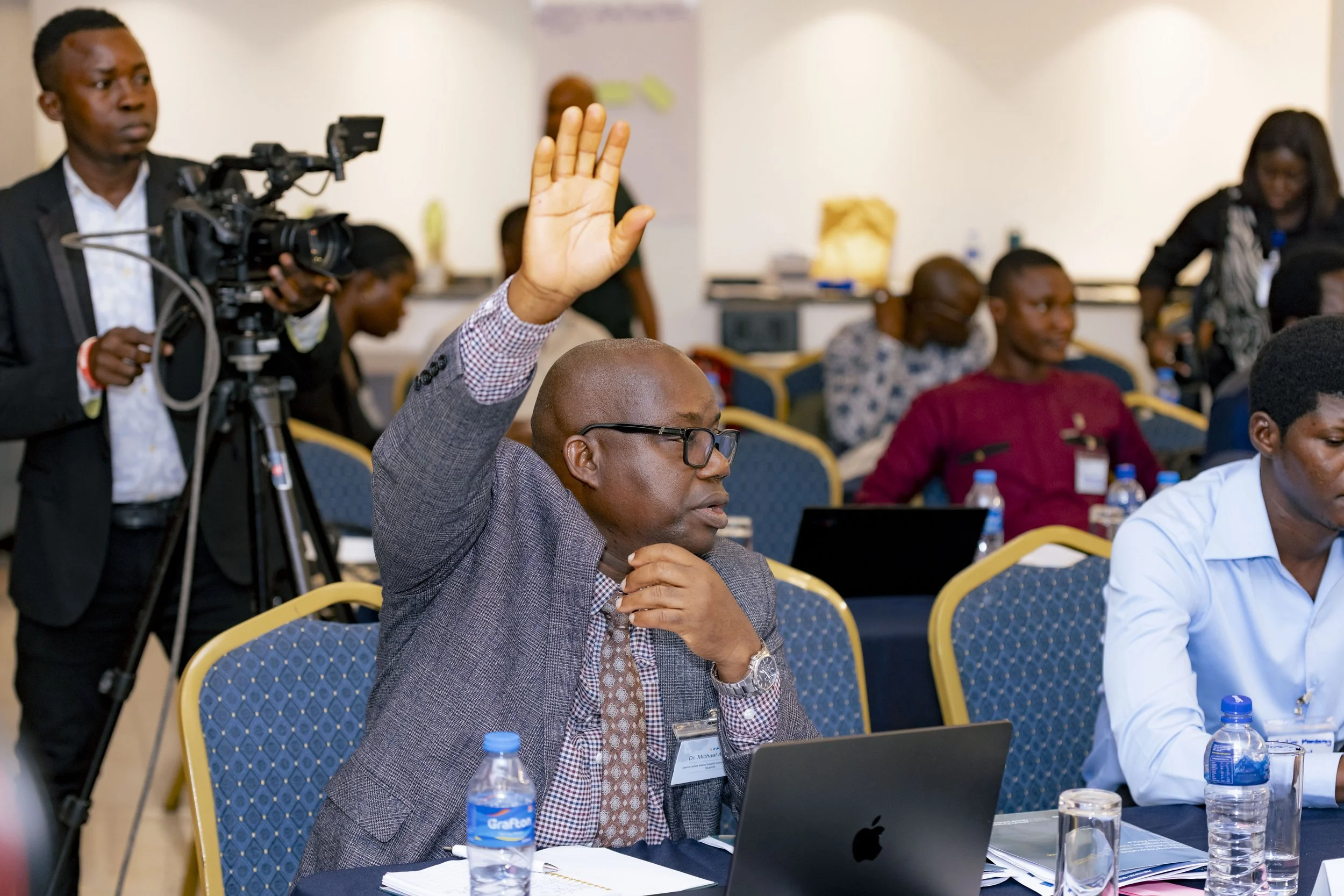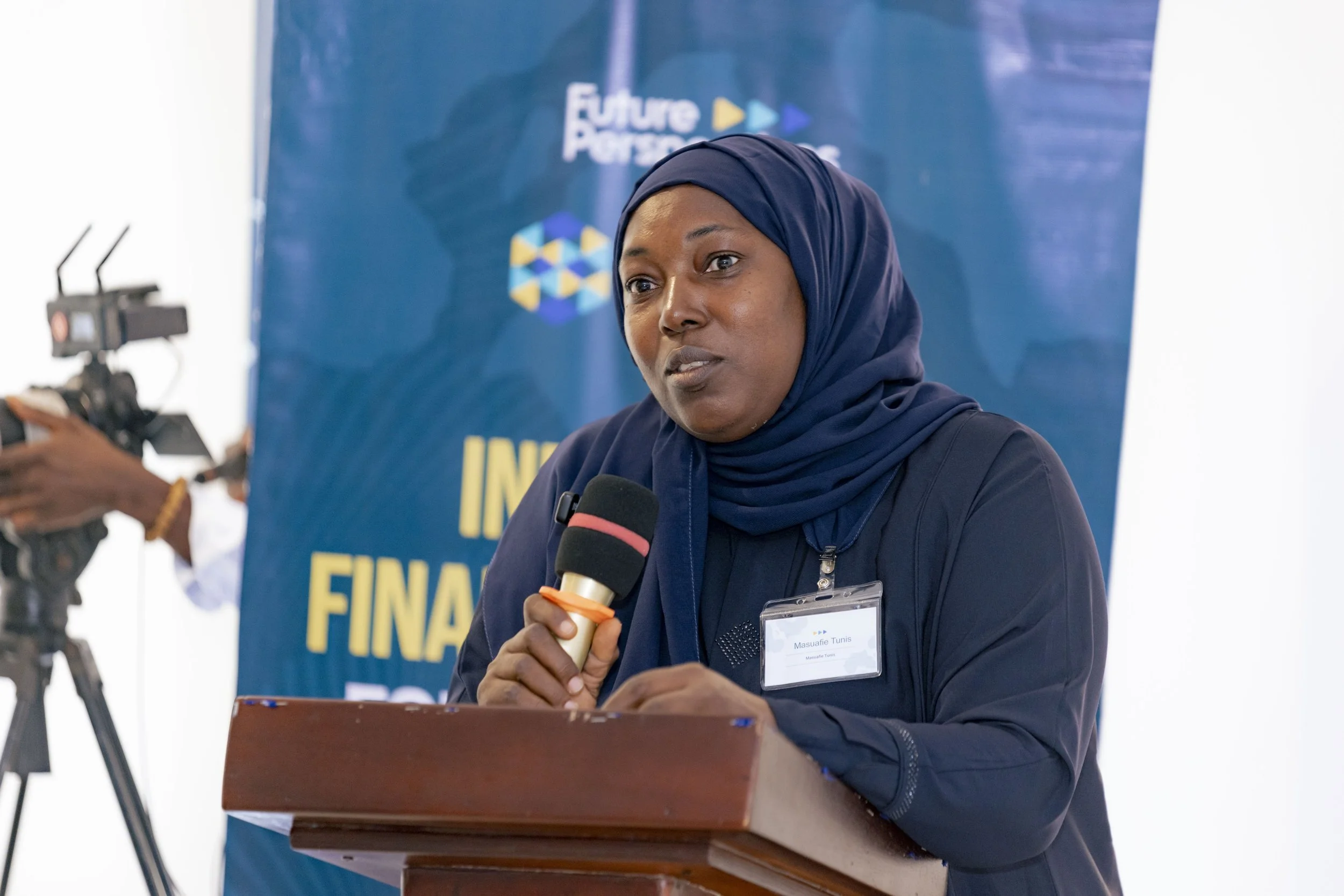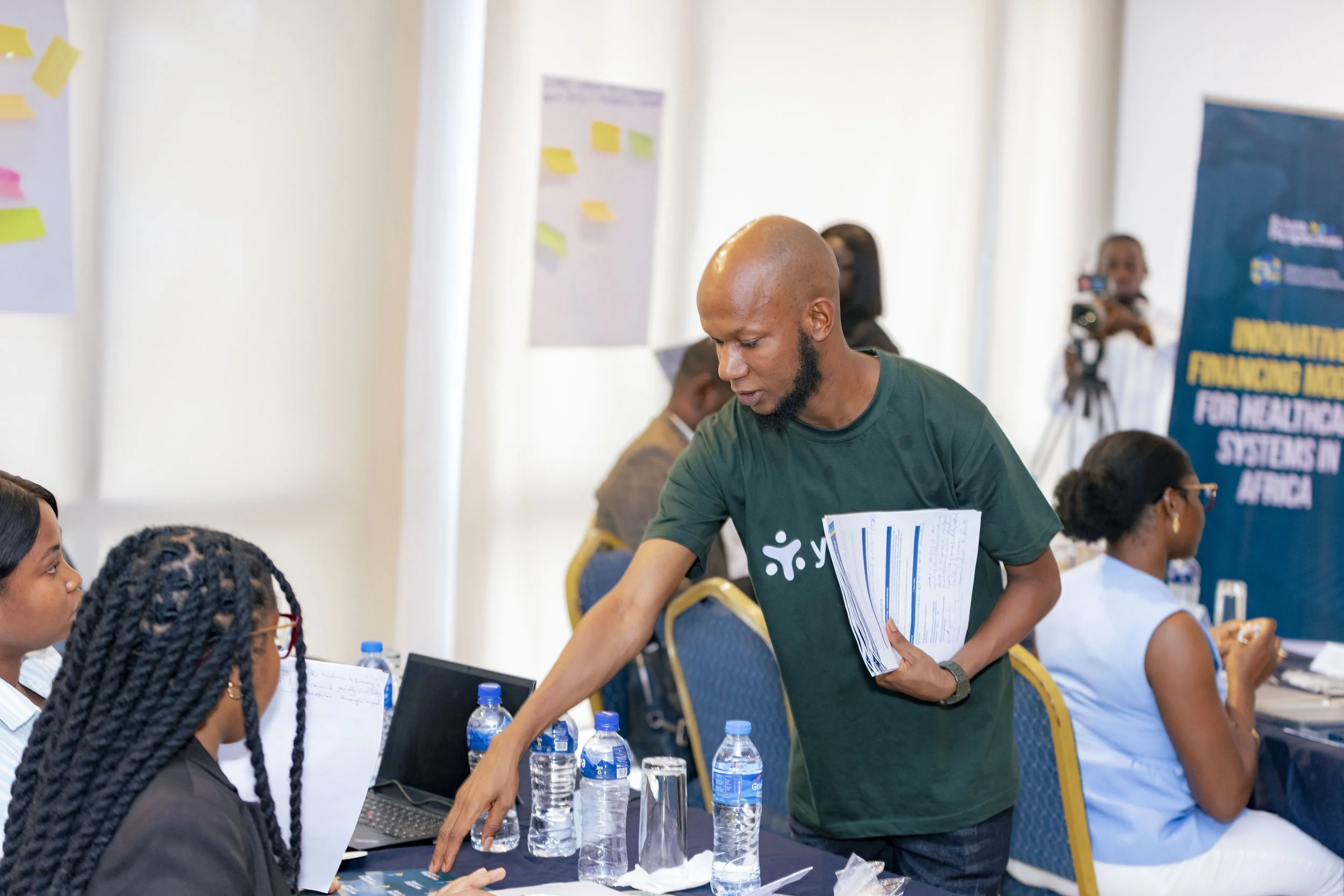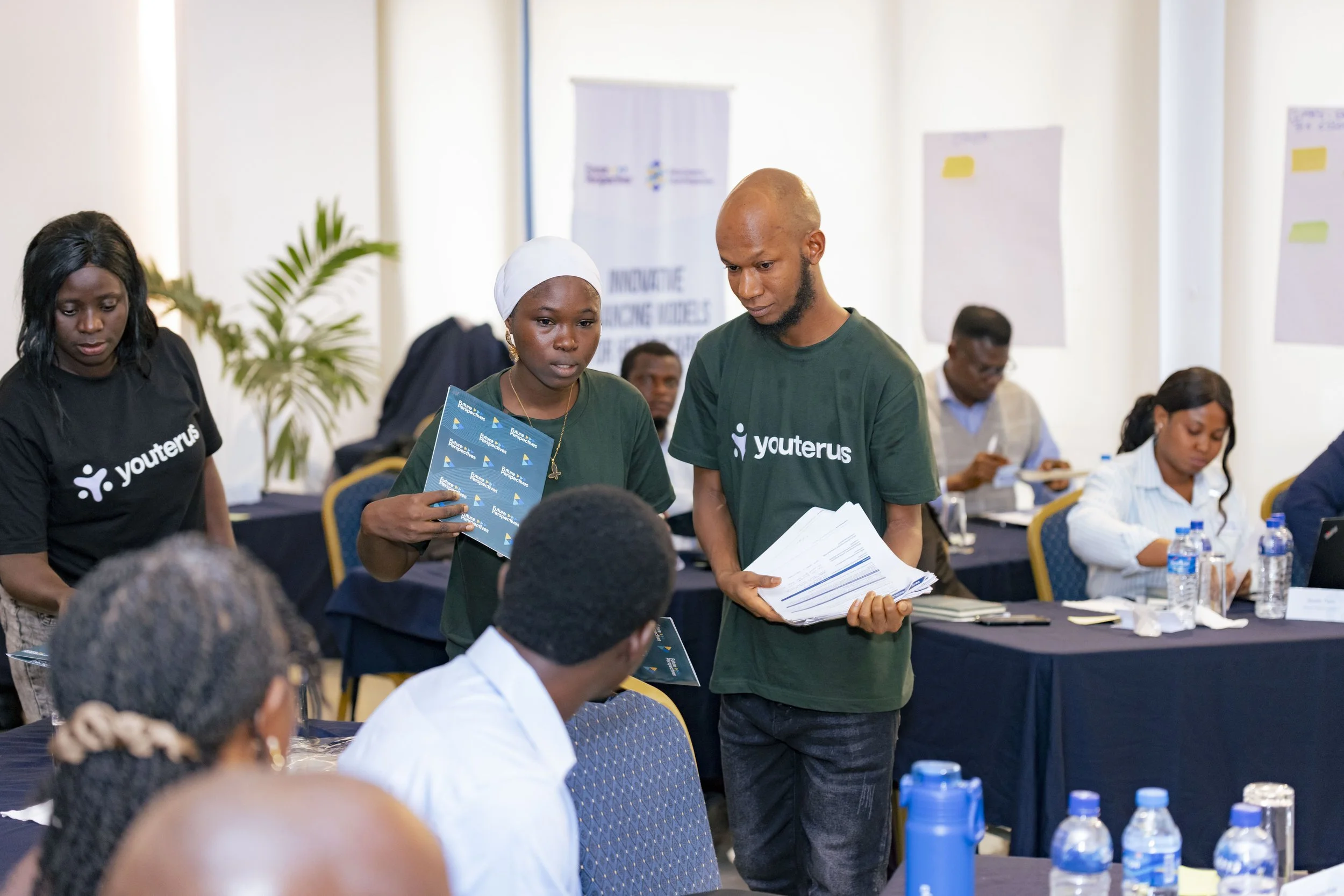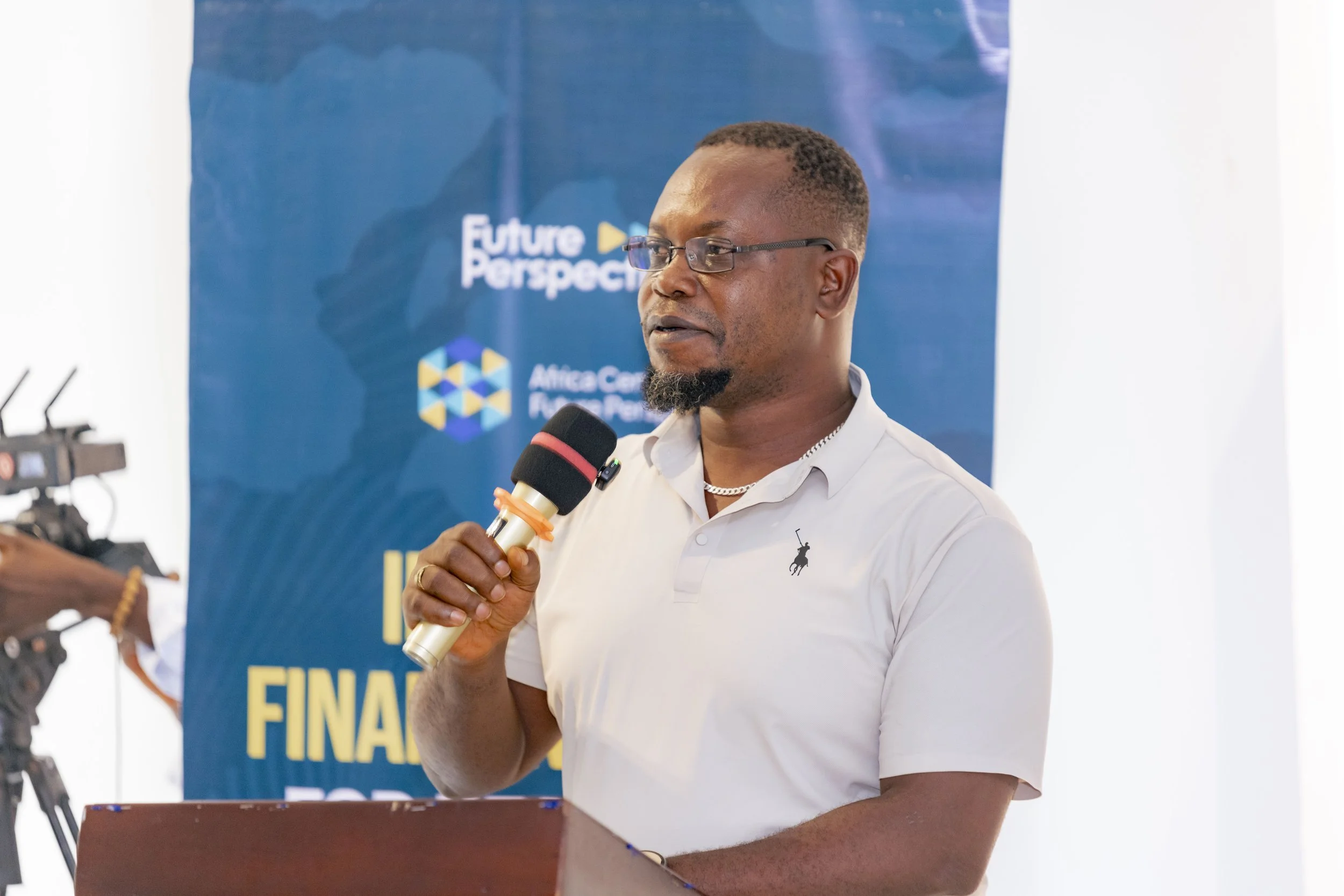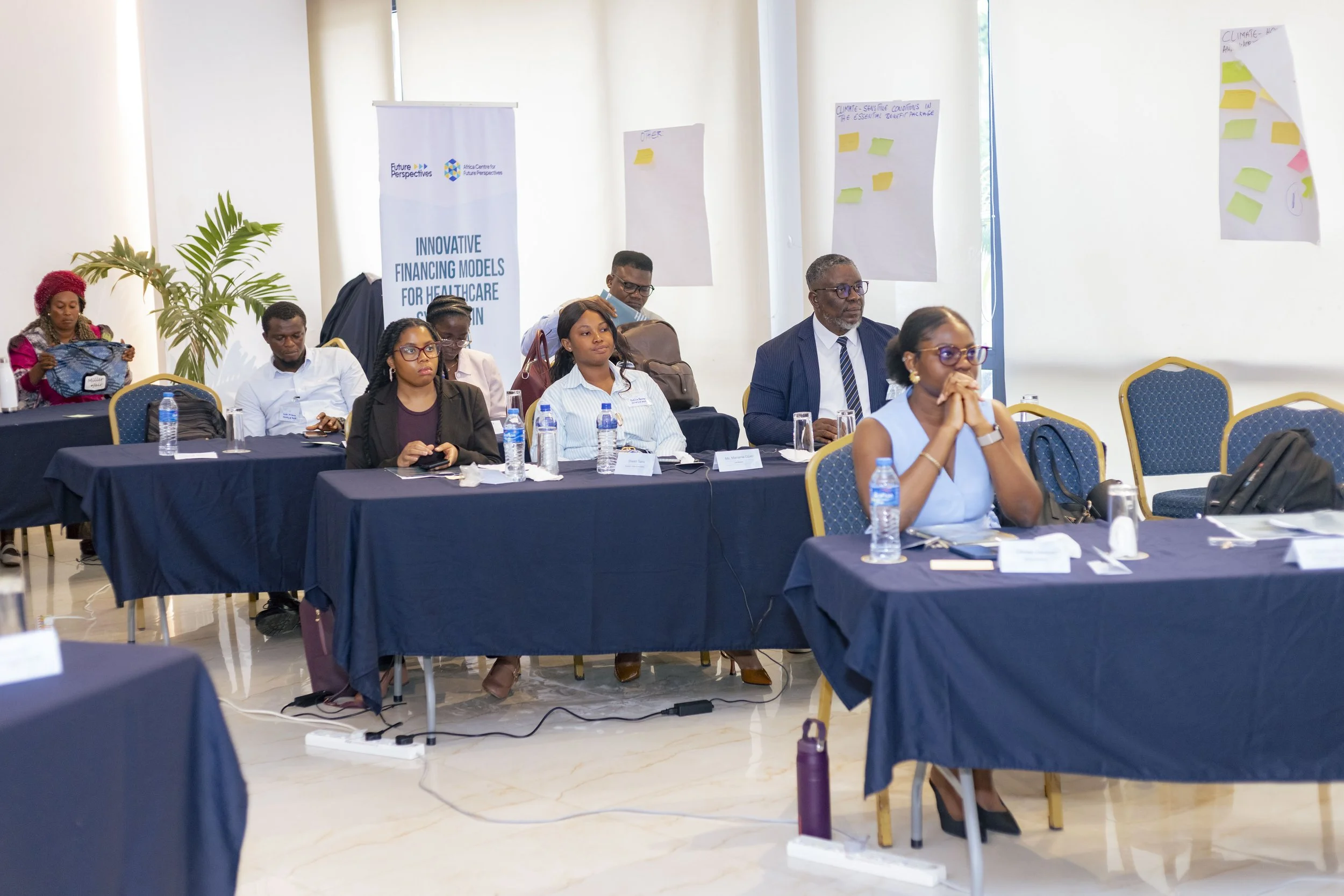
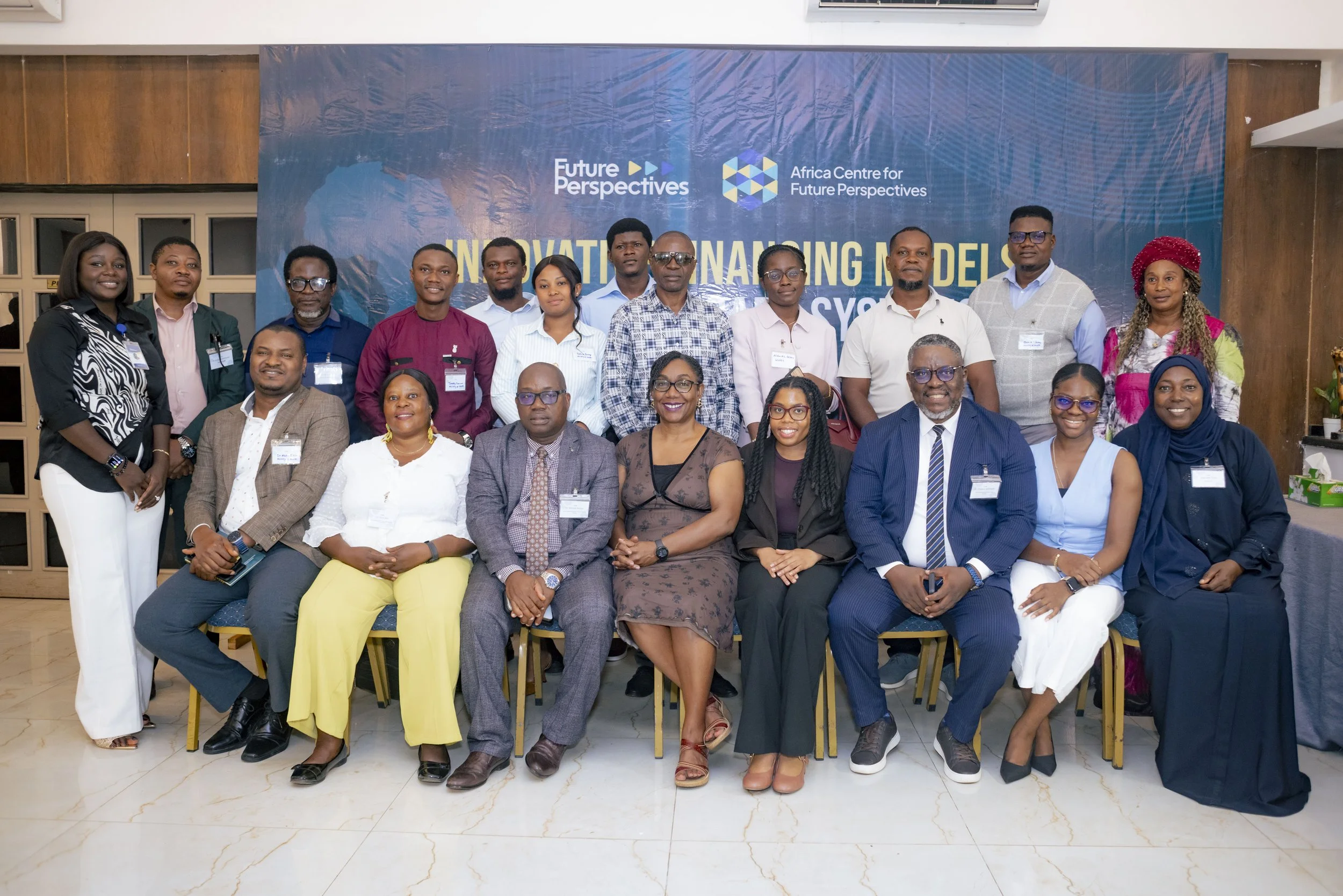
L-R: Dr. Abdul Jibril Njai (MoH), Dr. Doris Bah (MoH), Dr. Michael Amara (MoH), Dr. Lorraine Otoide (FP), Monica Anthony-Williams (MoF), Dr. Charles Aninweze (MoH), Chinwe Osuagwu (MoF), Suafiatu Tunis (Youterus Health)
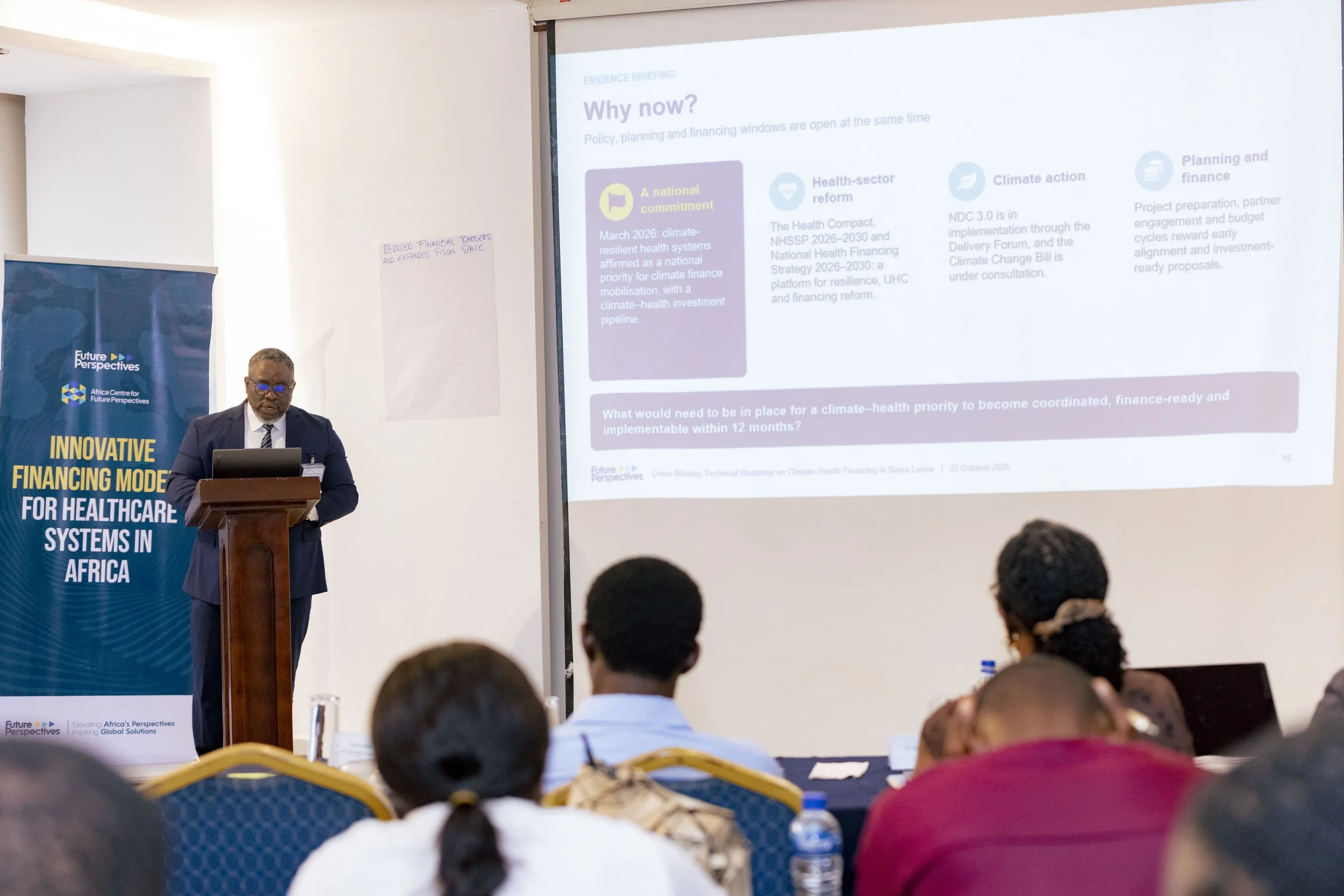
FREETOWN, SIERRA LEONE – Sierra Leone is advancing efforts to turn its climate and health priorities into coordinated, investment-ready action. On October 21, 2026, Future Perspectives (FP), in partnership with Youterus Health, convened an Inter-Ministerial Technical Workshop on Climate–Health Financing, bringing together approximately 25 representatives from government institutions, development partners and civil society to identify practical pathways for mobilizing financing and strengthening climate-resilient health systems. Read official Communiqué from all ministries involved.
The workshop focused on a critical question: How can Sierra Leone turn its existing health, climate and financing commitments into practical, costed and investment-ready solutions?
Participants represented the Ministry of Health, Ministry of Finance, Ministry of Environment and Climate Change, Ministry of Fisheries and Marine Resources, Presidential Initiative on Climate Change, Renewable Energy and Food Security (PI-CREF), Environmental Protection Agency, C40 Cities, Future Perspectives and Youterus Health.
“Sierra Leone already has important health, climate and financing commitments in place. The opportunity now is to turn those commitments into coordinated, investment-ready action. By bringing health, finance, environment and other key institutions around one table, we are building a practical pathway to mobilize financing for climate-resilient health systems and deliver better, more reliable healthcare for communities.”
From Climate–Health Challenges to Investable Solutions
The workshop examined how flooding, extreme heat, environmental degradation, household pollution and unreliable electricity affect health services, particularly within an environment of constrained fiscal space and pressures on households.
Participants recognized that Sierra Leone already has a strong foundation on which to build. Discussions drew on the National Health Sector Strategic Plan 2026–2030, National Health Financing Strategy, NDC 3.0, the National Compact, draft Climate Change Bill and Mission 300.
However, the workshop identified an important challenge: policies and commitments do not automatically translate into projects ready for financing and implementation. Participants highlighted fragmented implementation, inadequate data sharing, limited project-preparation capacity and unclear institutional interfaces as important barriers.
Moving from ambition to investment therefore requires clear ownership, credible data, realistic costing, measurable outcomes and strong institutional alignment.
A Clear Priority: Climate-Resilient, Solar-Powered Health Facilities
A major outcome of the workshop was the identification of climate-resilient, solar-powered health facilities as the leading priority for further development.
Reliable electricity is essential to maintaining routine and emergency health services. Participants identified solar energy as an opportunity to strengthen electricity reliability while supporting lower-carbon health-sector operations. Discussions also considered facilities exposed to flooding and coastal risks, as well as remote communities and populations facing difficulties accessing care.
The next step is to transform this priority into a credible investment proposition. This will require defining the facilities and communities to be covered, assessing infrastructure and energy requirements, understanding climate risks, developing costs and financing options, confirming institutional ownership, and establishing measurable health and resilience outcomes.
Unlocking Sustainable Financing
Financing discussions explored domestic resource mobilization, international climate finance, blended finance, carbon markets and private-sector participation. Potential mechanisms discussed included concessional finance, green bonds, debt-for-nature swaps and Green Climate Fund support.
A key message was the importance of domestic ownership. Participants discussed how an initial government contribution could help support project preparation, demonstrate commitment and create stronger conditions for mobilizing additional resources.
The workshop also built on Sierra Leone’s engagement as an early adopter under UNECA’s Transforming Health Financing in Africa initiative, creating an opportunity to strengthen collaboration across health, finance and climate institutions. Future Perspectives’ work in Sierra Leone is supported by the Gates Foundation.
Building on Sierra Leone’s Experience
The workshop highlighted practical examples demonstrating how cross-sector coordination can translate into action.
Aminata Wurie, Head of the Clean Cooking Delivery Unit, shared lessons from PI-CREF, which coordinates across energy, clean cooking, climate action and agriculture through cross-government working structures and project tracking.
Pius Nishimwe, Head of Coordination at the C40 Cities Co-Chair’s Office in Freetown, shared lessons from Freetown’s climate initiatives, including tree planting, heat adaptation and climate-health monitoring. Reported activities included training approximately 500 health workers to identify and respond to heat-related illness.
Together, these examples reinforced a practical principle: start with a manageable priority, establish ownership and evidence, demonstrate results, and build a foundation for scale.
A 90-Day Pathway from Dialogue to Action
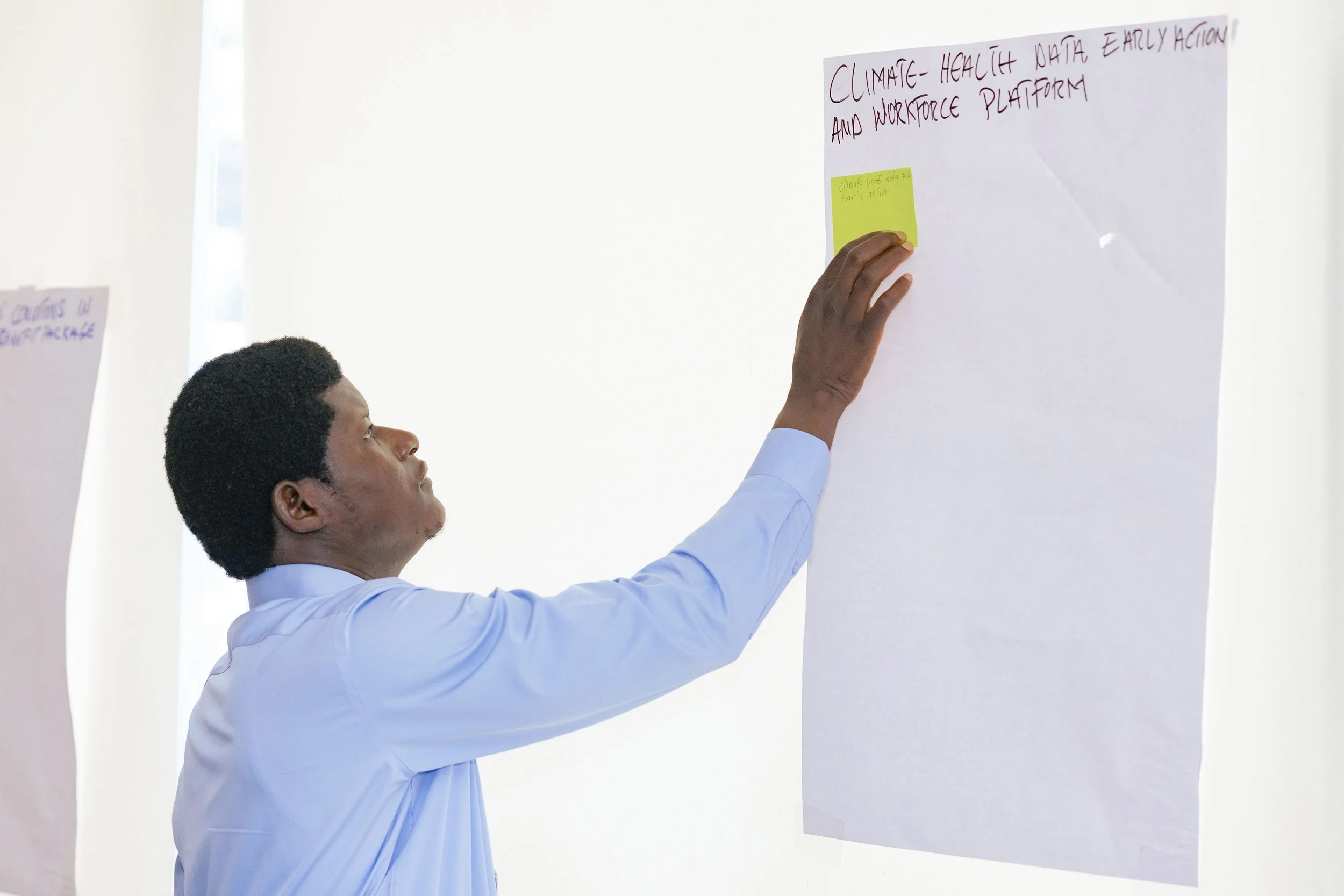
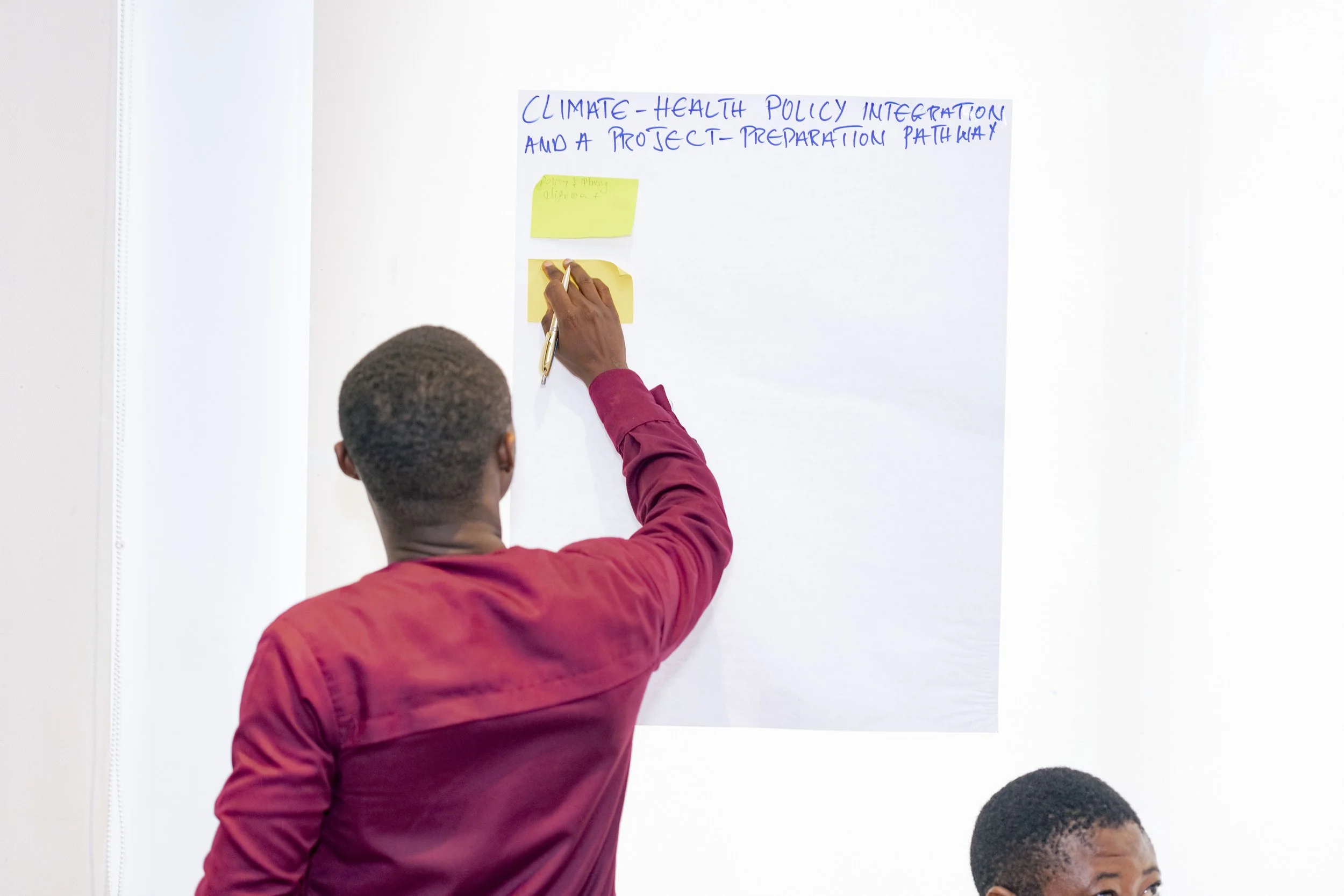
Importantly, the workshop did not end with identifying a priority. Participants proposed a 30–60–90-day technical pathway to advance the intervention.
Turning Coordination into Impact
The workshop reinforced that climate-health financing cannot be addressed by one institution alone. Health priorities must connect with climate evidence, infrastructure and energy planning, while technical proposals must connect with budgeting, financing and government decision-making processes.
Future Perspectives served as an independent facilitator, with participating ministries and agencies retaining authority over their respective mandates and internal processes. The workshop outputs are technical recommendations for government consideration.
The immediate priority is to confirm the scope and ownership of the proposed intervention, consolidate technical evidence, develop costs and financing options, and prepare a credible investment proposition through the appropriate government processes.
For Future Perspectives, the convening represents an important step in bridging the gap between policy ambition and investment-ready action, while strengthening the cross-ministerial collaboration needed to build more resilient, sustainable and accessible health systems.